
Yazılar

BBC Threatens Legal Action Against AI Startup Perplexity Over Content Scraping, FT Reports

The BBC has threatened to take legal action against AI startup Perplexity, accusing the company of using BBC content to train its “default AI model,” according to the Financial Times report on Friday. This marks the British broadcaster as the latest news organization to allege content scraping by the AI firm.

The BBC may seek an injunction unless Perplexity stops scraping its content, deletes any existing copies used for AI training, and submits “a proposal for financial compensation” to address the alleged misuse of its intellectual property, the FT said, citing a letter sent to Perplexity CEO Aravind Srinivas.

The broadcaster confirmed the report in a statement to Reuters.

Perplexity has faced similar accusations from other media outlets including Forbes and Wired for plagiarizing their content. In response, the startup has launched a revenue-sharing program aimed at addressing publishers’ concerns.

In October last year, the New York Times sent Perplexity a “cease and desist” letter demanding the company stop using its content for generative AI.

Since the rise of ChatGPT, publishers have expressed concerns about AI chatbots combing the internet to extract information and generate summarized content for users.

According to the FT report, the BBC said parts of its content were reproduced verbatim by Perplexity, and links to the BBC website have appeared in the AI startup’s search results.

Perplexity described the BBC’s claims as “manipulative and opportunistic,” stating that the broadcaster has “a fundamental misunderstanding of technology, the internet and intellectual property law,” in a statement to Reuters.

Perplexity’s service provides information by searching the internet, similar to ChatGPT and Google’s Gemini. The startup is backed by notable investors including Amazon founder Jeff Bezos, AI leader Nvidia, and Japan’s SoftBank Group.

The Wall Street Journal reported last month that Perplexity is in advanced talks to raise $500 million in a funding round that would value the company at $14 billion.

Nvidia-Backed SandboxAQ Generates Synthetic Data to Accelerate Drug Discovery

Artificial intelligence startup SandboxAQ, spun out of Alphabet’s Google and backed by Nvidia, unveiled a large synthetic dataset designed to speed up drug discovery by improving predictions of how drugs bind to proteins. This crucial step helps scientists determine whether a drug candidate will effectively target biological processes involved in diseases.

Although the dataset is rooted in real-world experimental science, SandboxAQ created it computationally using Nvidia’s powerful chips rather than through lab experiments. By combining traditional scientific computing with advanced AI, the startup generated approximately 5.2 million new three-dimensional molecular structures that have not been observed naturally but are scientifically plausible based on existing data.

This synthetic data is being released publicly to train AI models capable of rapidly and accurately predicting drug-protein interactions, a process that would otherwise take far longer to compute manually—even on the fastest computers. SandboxAQ plans to monetize its own AI models developed using this data, offering a faster, cost-effective alternative to lab experiments.

Nadia Harhen, SandboxAQ’s general manager of AI simulation, explained the breakthrough: “This is a long-standing problem in biology that the industry has been trying to solve. Our synthetic data is tagged with ground-truth experimental results, enabling models trained on this data to achieve unprecedented accuracy.”

The approach represents a promising intersection of scientific computation and AI, potentially accelerating the development of new medicines and improving outcomes in pharmaceutical research.

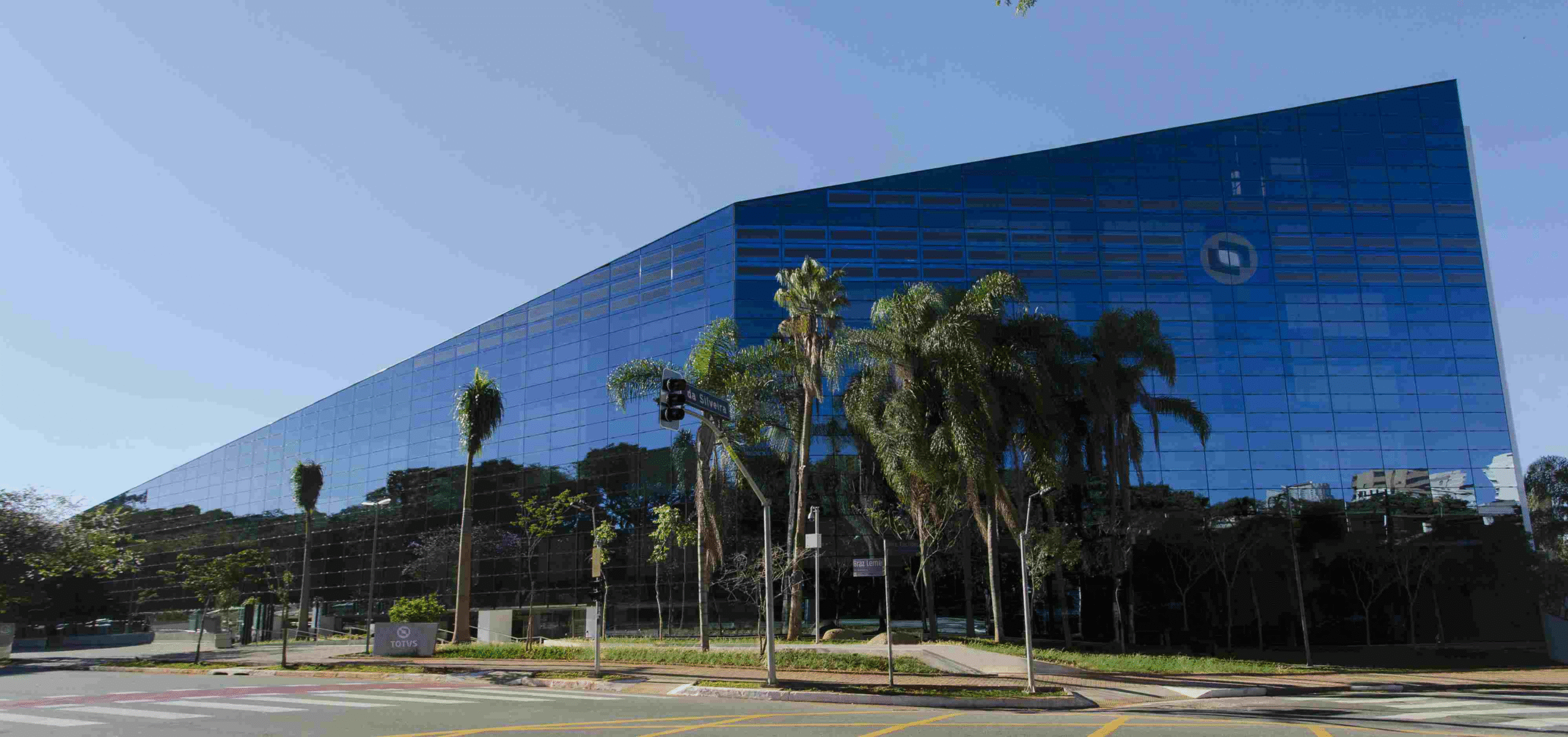
Totvs in Talks to Acquire Linx, Eyes Further Brazil Deals in 2025

Brazilian software company Totvs SA is actively negotiating to acquire Linx, the retail software unit of StoneCo, and is also exploring other acquisition opportunities within Brazil for 2025, CEO Dennis Herszkowicz told Reuters.

Totvs has pursued Linx since 2020, but StoneCo ultimately acquired the company in a 6.7 billion reais ($1.22 billion) deal. In April, Totvs entered exclusive talks to buy Linx from StoneCo. Herszkowicz said the acquisition would be beneficial given Linx’s leadership in retail software, but emphasized that closing the deal is not essential for Totvs’ growth.

“Totvs is very broad. And our portfolio is very wide. There isn’t one acquisition that solves everything we want to solve,” he said. The accelerating adoption of AI, cloud computing, and other digital technologies is creating multiple acquisition opportunities, which Totvs views as effective growth shortcuts.

While Totvs operates in several Latin American countries, its focus remains firmly on Brazil, which accounts for the majority of its business. Herszkowicz declined to comment on the timing or financial terms of the Linx negotiations or other potential deals.

The CEO also denied reports that Totvs plans to sell its stake in Dimensa, a fintech joint venture with Brazil’s stock exchange operator B3. He confirmed the company has not engaged advisors for such a sale and said no transaction is currently underway.

Totvs intends to fund acquisitions without needing to divest assets, underscoring the company’s strong financial position and strategic flexibility.