Yazılar

U.S. Data Center Construction Hits Record $40 Billion Amid AI Boom

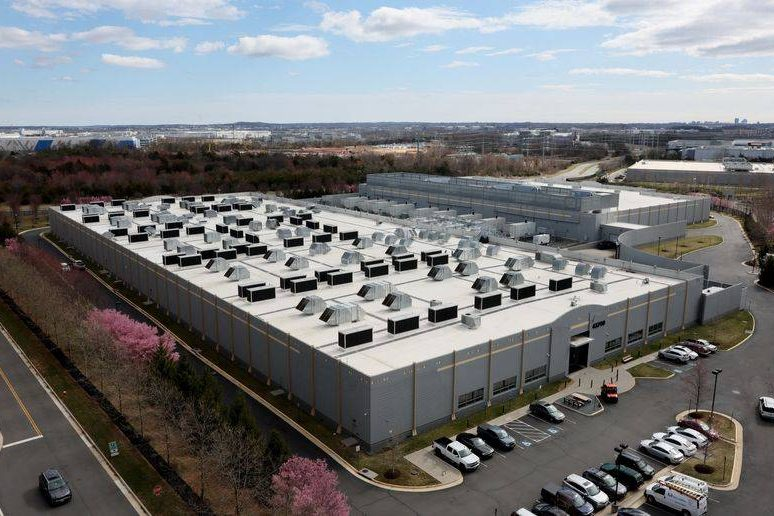
Construction spending on U.S. data centers hit a record $40 billion at a seasonally adjusted annual rate in June, according to a new report from the Bank of America Institute. The surge reflects the massive capital pouring into AI infrastructure by major technology companies.

By the Numbers

The $40 billion figure represents a 30% jump from last year, following an even steeper 50% surge in 2024, based on U.S. Census Bureau data.

Why It Matters

The explosive growth of generative AI and machine learning has triggered an unprecedented demand for computing power. Tech giants including Microsoft, Alphabet, and Amazon are investing billions to expand their hyperscale data centers, enabling them to run AI workloads at scale. This infrastructure boom has also fueled record sales for Nvidia, whose GPUs power much of the AI ecosystem and now account for the bulk of its revenue.

Key Quotes

Hyperscalers are a big part of the increased demand for power, but they’re not the whole picture,” Bank of America Institute economists led by Liz Everett Krisberg noted.
They emphasized that much of the projected growth in U.S. electricity demand through 2030 will also come from EV adoption, industrial reshoring, building electrification, and heating systems — highlighting how AI-driven infrastructure is just one force in a broader energy transformation.

Amazon Developing Consumer AR Glasses to Compete With Meta

Amazon is working on augmented reality (AR) glasses for consumers, according to a report from The Information. The project, internally codenamed “Jayhawk,” would mark Amazon’s first major step into the consumer AR market, setting up direct competition with Meta Platforms.

The AR glasses are expected to feature microphones, speakers, a camera, and a full-color display in one eye, with a planned rollout in late 2026 or early 2027. Amazon declined to comment on the report.

This initiative builds on Amazon’s earlier work with specialized AR eyewear for delivery drivers, revealed in a Reuters exclusive last year. That model, designed to provide turn-by-turn navigation on a small screen, is set for release as early as the second quarter of 2026, with an initial production of about 100,000 units.

Both the delivery glasses and the consumer version will share the same underlying display technology, but the consumer model will reportedly be sleeker and less bulky, offering a full-color experience tailored to everyday use.

The move positions Amazon directly against Meta, which has invested heavily in AR eyewear. Meta is expected to unveil a new version of its AR glasses at its Connect conference next week, building on the success of its Ray-Ban Meta line, developed with EssilorLuxottica’s Oakley, which has sold millions of units since its 2023 launch.

If Amazon delivers on its timeline, the consumer AR market could see a major clash between two of the world’s largest tech companies by 2027.

Amazon’s Zoox Robotaxi Debuts Free Rides on Las Vegas Strip

Amazon-owned Zoox has officially opened its robotaxi service to the public in Las Vegas, offering free rides on and around the Strip while awaiting regulatory approval to charge fares. The move positions Zoox against established rivals like Alphabet’s Waymo and Tesla in the race for autonomous ride-hailing dominance.

Key Details

  • Vehicle design: Unlike competitors, Zoox uses a purpose-built, fully autonomous pod with no steering wheel or pedals. Passengers sit facing each other, resembling a futuristic shuttle.

  • Free service: Current rides are complimentary to help familiarize the public and gather feedback.

  • Fleet: About 50 vehicles are in Zoox’s Las Vegas fleet, with thousands of riders each week during its casino-based test loop.

  • Expansion: Zoox plans to extend services soon to San Francisco, with future rollouts in Miami, Austin, Atlanta, and Los Angeles.

Industry Context

  • Waymo already runs paid robotaxi services in multiple U.S. cities with a fleet of around 2,000 vehicles.

  • Tesla operates a small number of robotaxis with safety drivers in Austin and has begun a Bay Area ride-hailing service.

  • Uber is also entering the space, integrating autonomous vehicles into its network through partnerships.

  • Commercializing robotaxis has been tough, with regulatory scrutiny, protests, and high costs forcing many startups to exit the field. Amazon acquired Zoox for $1.3 billion in 2020, betting on the long-term payoff.

Outlook

Zoox expects to begin charging fares within months once it secures regulatory approval. With its unique design and Amazon’s backing, Zoox could emerge as a serious challenger in the still-nascent robotaxi market, provided it scales safely and wins public trust.