Yazılar

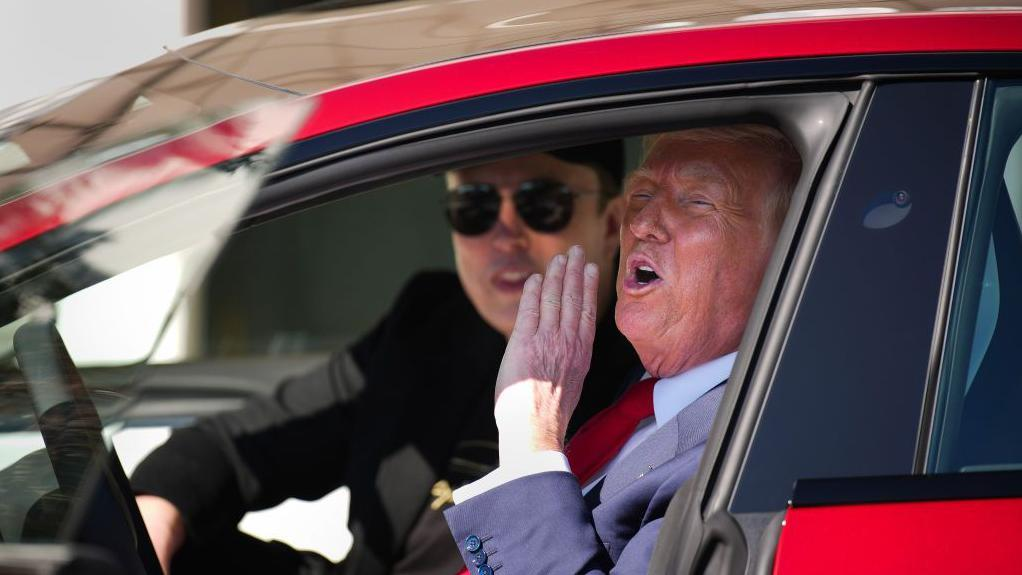
Trump-Musk Clash Triggers Scrutiny Fears Across Tesla, SpaceX, and Other Ventures

Former U.S. President Donald Trump’s call to review subsidies awarded to Elon Musk’s companies has sparked concerns of heightened regulatory scrutiny across the billionaire’s business empire, which spans automotive, space, energy, brain tech, and social media. The threat of government intervention may disrupt operations or stall innovation in several of Musk’s ventures. Here’s a breakdown of the U.S. agencies involved:

National Highway Traffic Safety Administration (NHTSA)
Tesla is under continued investigation by the NHTSA, especially concerning its advanced driver assistance systems. The agency is reviewing incidents involving Tesla’s robotaxi service in Austin, including videos showing vehicles misbehaving in traffic and in adverse weather. These inquiries extend broader probes into Tesla’s Full Self-Driving (FSD) technology, particularly related to safety during poor visibility.

Federal Communications Commission (FCC)
The FCC has begun reviewing its spectrum sharing policies, which could affect SpaceX’s Starlink satellite internet service. SpaceX is seeking new spectrum access to expand satellite coverage, but decades-old limits on signal power remain a barrier. The review could influence future Starlink deployments and broadband expansion goals.

Food and Drug Administration (FDA)
Neuralink, Musk’s brain implant startup, falls under the FDA’s oversight. After an initial rejection due to safety concerns, the FDA granted clearance for clinical trials, which are currently underway in the U.S. Neuralink is also exploring trials in Canada. The FDA will decide if Neuralink’s implants can eventually be marketed.

Environmental Protection Agency (EPA)
The EPA monitors SpaceX’s wastewater output at its Texas launch site and coordinates with other federal agencies under the National Environmental Policy Act. SpaceX’s rocket activities must pass environmental impact assessments to ensure compliance with land, water, and wildlife protection standards.

Federal Aviation Administration (FAA)
In September, the FAA proposed a $633,000 fine against SpaceX for violating licensing requirements before two 2023 launches. The FAA continues to investigate the company’s safety compliance, especially after repeated rocket explosions. Additional restrictions may follow.

Securities and Exchange Commission (SEC)
Musk is facing litigation from the SEC related to his 2022 acquisition of Twitter (now X). The agency has also probed Neuralink’s compliance and transparency, according to a December 2023 letter from Musk’s attorney, posted on X.

Federal Trade Commission (FTC)
The FTC oversees data and privacy protections at Musk’s social media platform, X. The agency is also investigating antitrust allegations, reviewing whether media watchdog groups coordinated an advertiser boycott that Musk claims is illegal.

Regulatory Risk Outlook
Trump’s renewed focus on Musk’s government support could pave the way for increased enforcement or changes to existing subsidies, affecting growth trajectories across his enterprises. With Musk already under the microscope at multiple agencies, the political escalation adds another layer of complexity.

Google Proposes Tweaks to Search Results to Avoid EU Fine Under Digital Markets Act

Google has offered new concessions to the European Union in an effort to avoid potentially steep antitrust penalties, according to documents reviewed by Reuters. The tech giant’s latest proposal seeks to address concerns that it has been unfairly favoring its own services—like Google Shopping, Google Hotels, and Google Flights—over those of competitors, in violation of the EU’s Digital Markets Act (DMA).

The DMA, which came into force earlier this year, establishes strict requirements for dominant tech companies—or “gatekeepers”—to ensure fair competition and increased consumer choice. The European Commission formally charged Google three months ago, citing anti-competitive practices in vertical search results.

In response, Google has suggested offering a dedicated box at the top of its search results page to showcase a selected third-party vertical search service (VSS), such as platforms specializing in hotel or flight searches. This VSS would be chosen using objective, non-discriminatory criteria and would display three direct links—such as to hotels, airlines, or transport services—formatted identically to Google’s own listings.

Other competing VSS platforms would still be displayed lower in the rankings, but only in expanded view if users click to see more results. Google stated in the documents that while it does not agree with the Commission’s preliminary findings, it is willing to make changes “on a without prejudice basis” to reach a resolution.

The European Commission has called for a feedback meeting with rivals on July 8. Some competing companies told Reuters—on condition of anonymity—that the proposed changes fall short and do not ensure genuine parity with Google’s own offerings.

This is not Google’s first encounter with the EU on similar grounds. In 2017, the company was fined €2.4 billion for giving illegal advantage to its comparison shopping service. The current proceedings under the DMA could result in further significant penalties if the EU deems Google’s remedies insufficient.

Google Faces Setback as EU Court Adviser Supports Antitrust Regulators

Alphabet’s Google encountered a potential setback on Thursday after an adviser to Europe’s highest court sided with EU antitrust regulators over a landmark €4.34 billion ($4.98 billion) fine imposed seven years ago.

The European Commission ruled in 2018 that Google had abused its dominant position by using its Android mobile operating system to block competitors. While a lower court upheld the ruling in 2022, it slightly reduced the fine to €4.1 billion. Google subsequently appealed to the Court of Justice of the European Union (CJEU).

Juliane Kokott, Advocate-General at the Luxembourg-based CJEU, issued a non-binding opinion recommending the court reject Google’s appeal and confirm the reduced fine. Kokott stated, “The legal arguments put forward by Google are ineffective.”

She dismissed Google’s claim that regulators should assess the situation by comparing Google with a hypothetical, equally efficient competitor. Kokott explained, “Google held a dominant position in several markets of the Android ecosystem and thus benefited from network effects that enabled it to ensure that users used Google Search.”

Judges typically follow the Advocate-General’s opinion in about 80% of cases. A final ruling is expected in the coming months.

Google responded by emphasizing Android’s role in creating choice and supporting businesses globally, expressing disappointment with the opinion. A spokesperson said, “If followed by the Court, [the opinion] would discourage investment in open platforms and harm Android users, partners, and app developers.”

The regulators’ investigation found Google had imposed illegal practices dating back to 2011, including requiring manufacturers to pre-install Google Search and Chrome browser alongside Google Play on Android devices. Google also paid manufacturers to pre-install only Google Search and prevented the use of rival Android systems.

Google’s Android runs on approximately 73% of the world’s smartphones, according to Statcounter.

This fine is part of a broader enforcement effort against Google, which has amassed €8.25 billion in penalties across three antitrust cases over the past decade, with additional investigations ongoing.

Case Reference: C-738/22 P Google and Alphabet v Commission