
Yazılar

Bones from the Tudor Warship Mary Rose Reveal Life of the Crew

The Mary Rose, the flagship of King Henry VIII’s fleet, has become a treasure trove for archaeologists exploring Tudor England’s maritime life. Built in 1512 and tragically lost in 1545 during a battle with the French fleet, the Mary Rose was preserved beneath the silt of the English Channel until its discovery and recovery in 1982. The unique preservation allowed historians to uncover items and remains from the shipwreck, offering rare insights into the lives of its crew.

Researchers have turned to examining the collarbones of 12 crew members, analyzing the bones for clues about their age, physical development, and even handedness. Findings revealed that these sailors predominantly relied on their right hands, likely due to social pressures, as left-handedness was linked to witchcraft in the Tudor period. Beyond historical insights, the study of these bones is also advancing modern medical research, especially in understanding how human bones change with age.

RELATED DISCOVERIES:

  • Ancient Fossil in New York: A 450-million-year-old arthropod fossil resembling a shrimp was uncovered in New York state, preserved in iron pyrite, or “fool’s gold.” CT scans revealed unique adaptations in its head and appendages, likened to a “biological Swiss army knife,” aiding survival.
  • Zombie Star Filaments: Astronomers have mapped the 3D structure of strange filaments radiating from a “zombie star” in Cassiopeia, left by a star explosion witnessed in 1181. The filaments, resembling dandelion wisps, could offer clues on the origins of cosmic structures.
  • 1627 Tombstone Analysis: The oldest tombstone in the United States, located in Jamestown, Virginia, has been linked to Belgium by analyzing microfossils. This costly black limestone slab was likely a high-status marker brought over for a prominent individual.
  • African Giant Rats Combat Wildlife Trafficking: Tanzania’s APOPO organization is training African giant pouched rats to detect ivory and rhino horns, often disguised by traffickers. Equipped with vests that trigger a beeping alert, the rats achieved an impressive 83% success rate in locating illegal wildlife products.

ADDITIONAL INTRIGUING DISCOVERIES:

  • Two Louisiana students proved a novel approach to the Pythagorean theorem using trigonometry.
  • NASA reestablished contact with Voyager 1 after a brief communication blackout.
  • LiDAR technology has helped locate thousands of previously unknown Maya structures, including the city of Valeriana.
  • Perseverance rover captured video of Phobos casting a “googly eye” shadow during a solar eclipse on Mars.
 

Ancient Silk Road Cities Unearthed in Uzbekistan’s Mountains

Recent archaeological findings in the eastern mountains of Uzbekistan have revealed the remains of two medieval cities, challenging existing narratives about the Silk Road trade routes. This discovery not only uncovers hidden settlements but also enriches our understanding of historical trade dynamics between East and West.

REWRITTEN TEXT

Archaeologists have made a groundbreaking discovery of two ancient cities in the high mountains of eastern Uzbekistan, a finding that could significantly alter our understanding of the legendary Silk Road. Traditionally, the Silk Road has been associated with lowland cities; however, the use of advanced remote sensing technology has led researchers to uncover at least two high-altitude settlements that played a crucial role along the trade routes.

The larger of the two cities, named Tugunbulak, covers over 120 hectares and is situated at an altitude of more than 2,000 meters (6,600 feet). This elevation, once considered inhospitable, has surprised researchers, marking Tugunbulak as a significant urban center from the 8th to the 11th centuries, during a period dominated by a powerful Turkic dynasty. Archaeologist Farhod Maksudov, part of the research team, stated, “The history of Central Asia is now changing with this finding.”

The discovery was made possible through a collaboration between Uzbekistan’s National Center of Archaeology and Washington University in St. Louis, led by Maksudov and Michael Frachetti. Their innovative approach employed drones and a remote-sensing tool called lidar, which utilizes reflected light to generate detailed three-dimensional mappings of the terrain. The research was recently published in the scientific journal Nature and has been hailed for its potential to illuminate the lives of nomadic communities in the region.

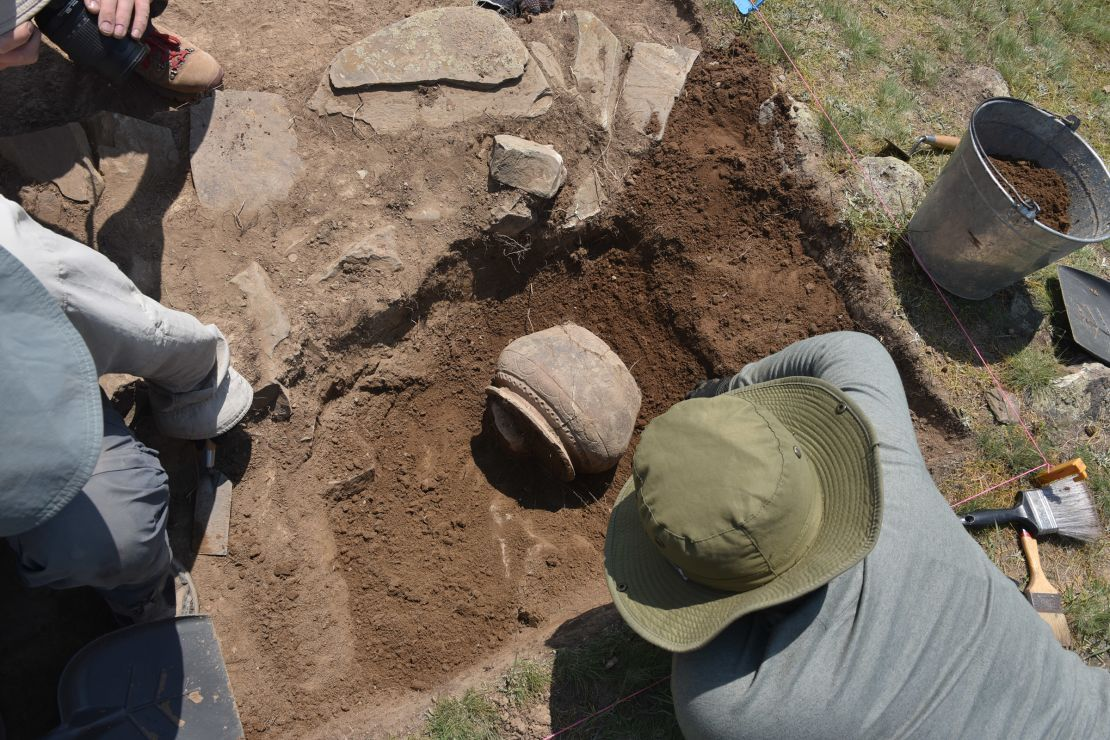
The team initially discovered the smaller city, Tashbulak, in 2011 during a trekking expedition. They unearthed burial sites and numerous pottery shards, indicating past habitation. While historical records hinted at cities in the area, the researchers were astonished to find a 12-hectare medieval settlement located at an elevation of about 2,200 meters. “We were kind of blown away,” Frachetti remarked, noting the rough conditions faced during their expeditions, including severe winds and logistical hurdles.

A pivotal moment came in 2015 when a local forestry administrator encouraged the team to explore another site near Tashbulak, revealing that his home was built atop a medieval citadel. “He was living on a huge city,” Frachetti recalled, highlighting the unexpected nature of their findings.

One of the significant challenges the team faced was convincing the academic community of the existence and extent of these highland cities. Frachetti described skepticism from peers, who were doubtful about the scale of their findings, often dismissing them as mere mounds or ruins of lesser significance.

In 2022, the team returned with a drone outfitted with a lidar sensor, allowing them to penetrate the surface and reveal structures such as walls, guard towers, and intricate architectural features in Tugunbulak. The researchers theorize that the communities may have settled in these cities to harness strong winds for iron smelting, as the region is rich in iron ore. Preliminary excavations have also uncovered production kilns, underscoring the area’s historical significance in metal production. “Whoever had iron in their hands in medieval times was very powerful,” Maksudov explained, although he cautioned that this resource exploitation may have contributed to environmental degradation, destabilizing the region.

Traditionally, scholars anticipated settlements to be found in lower valleys, making these high-altitude discoveries particularly remarkable. Professor Peter Frankopan from Oxford University described the findings as a “treasure trove,” revealing deep interconnections across Asia and the historical exploitation of natural resources.

High-altitude urban sites are extremely rare in archaeology due to the unique challenges communities face in such environments. Zachary Silvia, an archaeologist at Brown University, noted that the team’s work represents a significant advancement in our understanding of medieval urbanism in Central Asia, contributing valuable insights into the region’s complex history.


Polish Police Investigate Mysterious Discovery of Bronze Age Artifacts

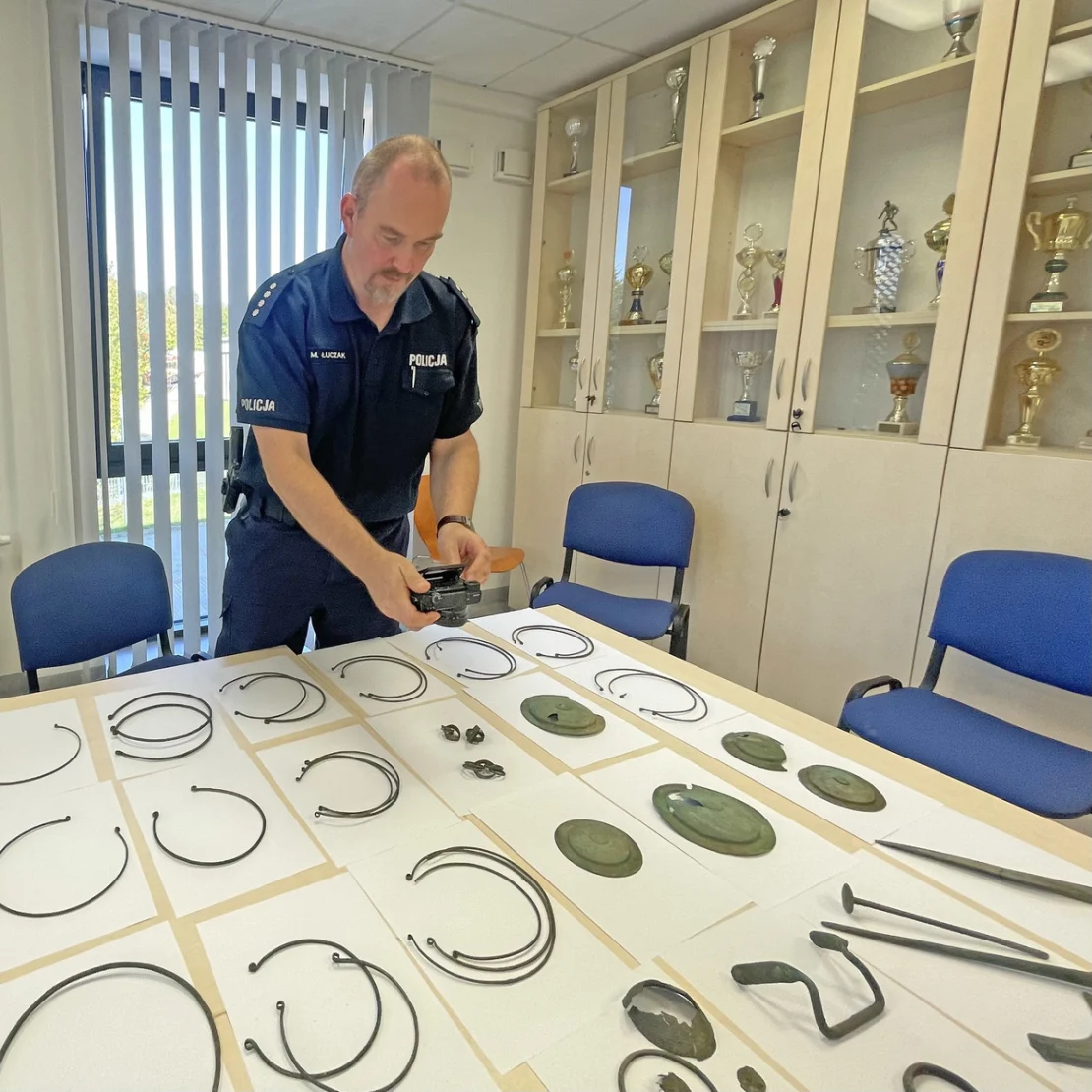
Authorities in Poland have initiated an investigation following the unexpected emergence of over 100 Bronze Age artifacts in the northwest region of the country. This remarkable collection includes weapons, bronze spearheads, necklaces, and shield bosses, all of which have raised questions about their origin and the circumstances of their discovery.

Discovery and Investigation

The investigation began when photographs of the artifacts were shared with the Provincial Heritage Protection Office in Szczecin. In a statement released by the West Pomeranian Police, it was revealed that an art-theft investigator located the individuals responsible for sharing the photos. They disclosed that the artifacts had been anonymously left outside a local historical association in the town of Gryfino.

Upon receiving the items, the historical association promptly transferred them to the Provincial Heritage Protection Office, which subsequently reported the case to the authorities, highlighting a potential crime of finding treasure without the required permissions.

Implications of the Discovery

According to police statements, the treasure was allegedly obtained through illegal searches, leading to its excavation and the complete loss of its archaeological context. This loss poses significant challenges for conducting accurate radiocarbon dating, hindering efforts to establish the artifacts’ historical timeline.

“This is one of the largest treasures found in Poland in recent years,” noted the police, emphasizing the significance of the find amidst the context of Polish archaeology.

Legal Consequences

The individuals responsible for the illegal excavation could face severe penalties, including up to eight years in prison. This case underscores the importance of adhering to legal protocols in archaeological discoveries and the protection of cultural heritage.

Current Status of the Artifacts

The artifacts have been transferred to the Provincial Heritage Conservator’s Office in Szczecin, which will ultimately determine the future housing and exhibition of these significant historical items.

Conclusion

The mysterious surfacing of these Bronze Age artifacts has not only sparked an investigation by Polish authorities but also raises awareness about the illegal excavation and the importance of preserving archaeological integrity. As the investigation unfolds, the fate of these artifacts remains uncertain, but their discovery serves as a reminder of the rich history lying beneath Poland’s surface.