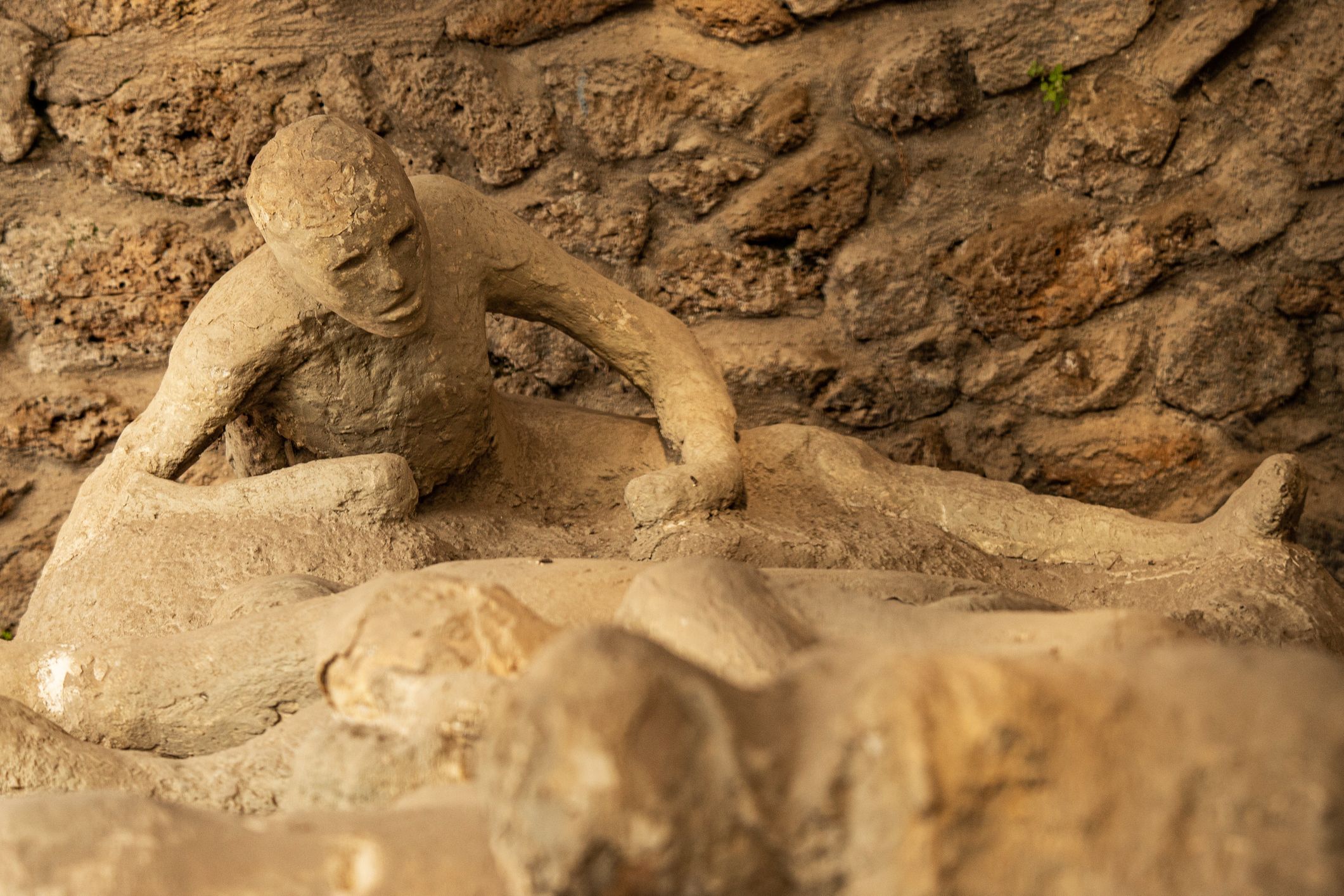

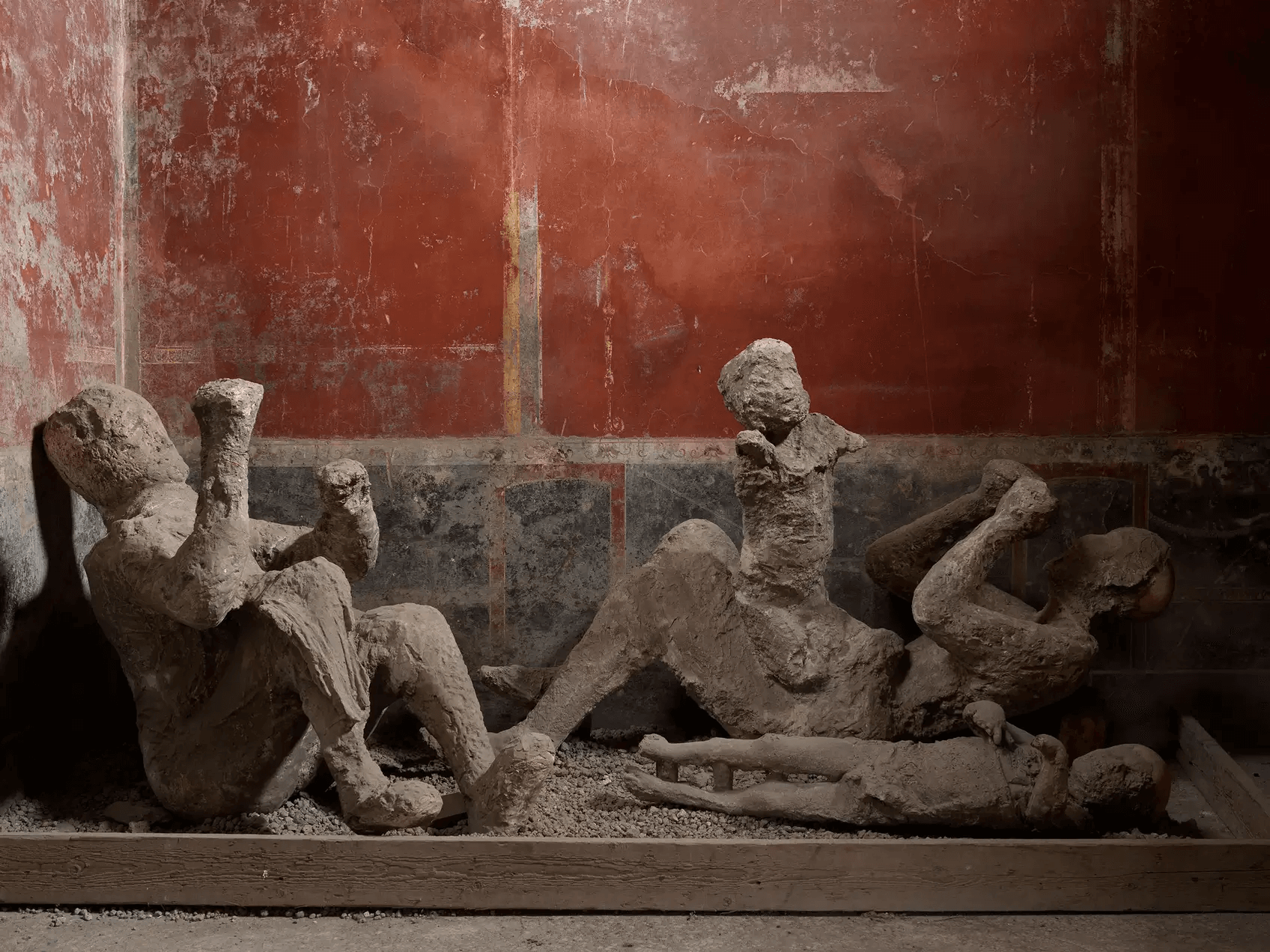
A groundbreaking DNA study conducted by researchers from the University of Florence, Harvard University, and the Max Planck Institute for Evolutionary Anthropology has revealed surprising new insights into the lives of Pompeii’s ancient population. The research, which challenges long-held assumptions about the social and familial structures of the city’s residents, revises historical perspectives based on previous visual evidence and physical remains. By extracting and analyzing DNA from 14 restored skeletal remains, the study has illuminated a much more complex social landscape than previously thought.
The eruption of Mount Vesuvius in 79 AD buried Pompeii under a thick layer of ash, preserving its population in an almost frozen moment in time. Prior to this DNA study, interpretations of Pompeii’s social dynamics were largely based on skeletal positions, grave goods, and other material artifacts like jewelry. These items suggested clear distinctions between gender roles and family structures. However, the genetic analysis uncovered discrepancies in these assumptions, revealing that kinship and gender roles in Pompeii may have been far more diverse and fluid than previously understood.
Professor David Caramelli, from the University of Florence’s Department of Anthropology, noted that the DNA evidence has provided surprising variations in family ties and gender, offering a richer, more nuanced view of Pompeii’s inhabitants. For instance, what was once thought to be a family group, such as a parent-child pair, was actually made up of unrelated individuals. These findings suggest that the social and familial bonds in Pompeii were not necessarily as rigid or traditional as once believed, and that personal relationships may have been more complex.
Further analysis, including the famous casts from the House of the Golden Bracelet, revealed that several individuals previously thought to be closely related were, in fact, not genetically connected at all. In addition, the study challenged traditional gender assumptions, with certain artifacts, once believed to be linked exclusively to women, being found alongside male remains. These revelations offer a new perspective on Pompeii, demonstrating a society that was far more diverse in its family structures and gender identities than historical records had suggested.
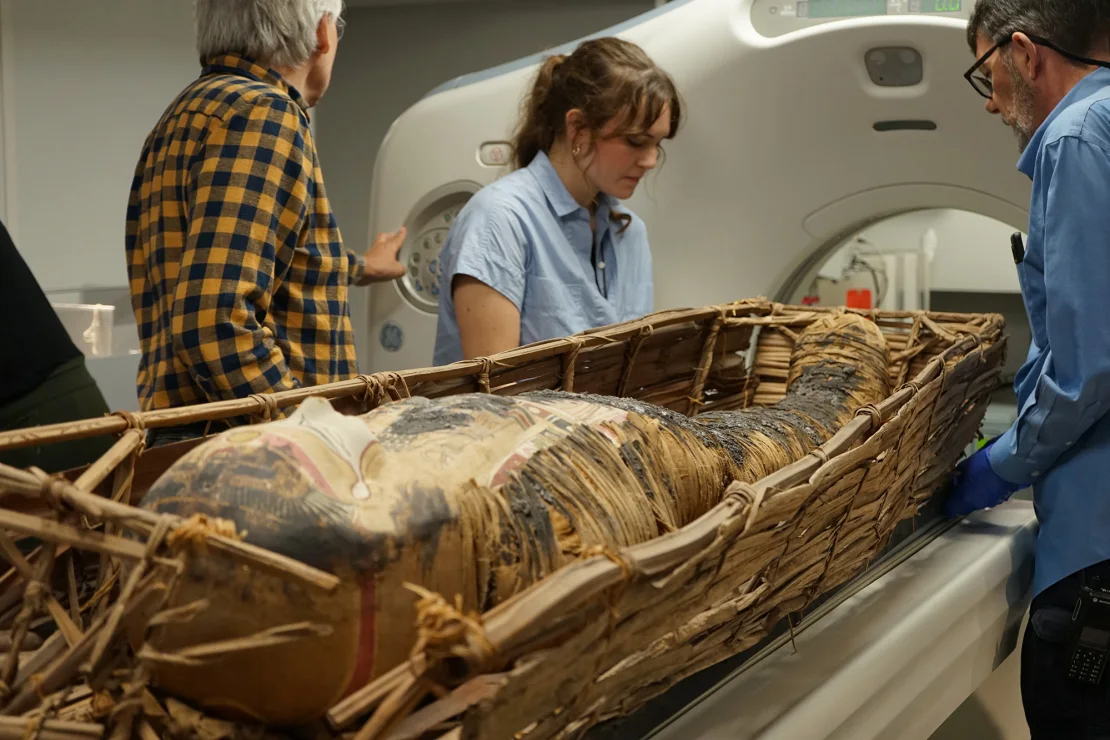
Scientists at Chicago’s Field Museum of Natural History recently used advanced CT scanning to study 26 Egyptian mummies without disturbing a single linen wrap. In a four-day procedure, museum staff transported the mummies on specially designed carts to a mobile CT scanner, capturing thousands of X-rays to produce detailed 3D images of each skeleton and artifact.
The scans are uncovering insights into Egyptian mortuary practices from over 3,000 years ago, such as the steps embalmers took to prepare bodies for the afterlife. Egyptians saw the body as essential for the soul’s journey, drying the corpse with salt and wrapping it in protective linen. Some embalmers even packed removed organs back into the body with wax statues representing the gods that safeguarded these organs.
The mummies offer individual glimpses into history. Lady Chenet-aa, a high-status woman from the 22nd Dynasty, received an elaborate burial, with prosthetic eyes placed in her sockets and her trachea filled to keep her neck intact. Her coffin, or cartonnage, was softened and molded around her upright-standing body before being laced shut. Harwa, another mummy, was likely a doorkeeper for a granary. Though his high status exempted him from hard labor, wear on his teeth suggests a life of sand-laden food in the desert.
One coffin, originally crafted for a priest, revealed a teenage boy inside, reflecting the reuse of coffins for those who could not afford personalized burial options.
These scans underscore a new respect in handling ancient remains. Museums now avoid unwrapping mummies, preserving them for further study and honoring their history. Conversations with Egyptian representatives about returning the mummies resulted in a request to keep them on display in Chicago, where visitors learn their stories. By sharing these narratives, the Field Museum aims to treat mummified remains not as art but as a dignified part of humanity’s history.