Yazılar

NASA’s Hubble Space Telescope Reveals Stunning Spiral Galaxy with Multiple Starburst Regions

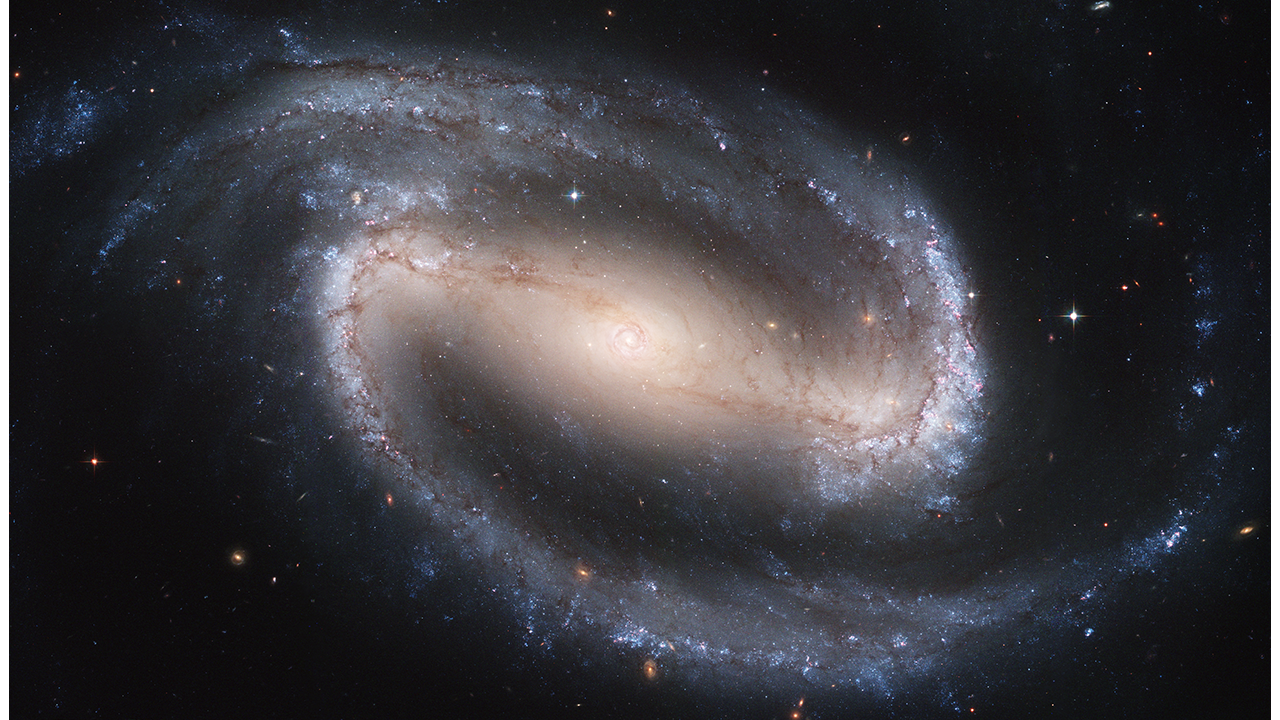
The Hubble Space Telescope has recently unveiled a stunning image of the spiral galaxy NGC 5248, located about 42 million light-years away from Earth in the constellation Boötes. Known as Caldwell 45, NGC 5248 is celebrated for its breathtaking spiral structure and vibrant starburst regions, which have made it a favorite subject for astronomers. This galaxy’s captivating features provide valuable insights into the processes of star formation and galactic evolution.

In the remarkable image captured by Hubble, NGC 5248 reveals its two prominent spiral arms that gracefully extend from a bright central region, almost reaching the edges of the frame. Dark reddish dust lanes weave through these arms, blocking some light and accentuating the intricate details of the galaxy’s structure. Scattered throughout the image are glowing points of bright pink, signifying areas where new stars are actively forming. These starburst regions contribute to the galaxy’s dynamic appearance, highlighting the ongoing processes of stellar birth and development.

Classified as a ‘grand design’ spiral galaxy, NGC 5248 features well-defined arms and a subtle bar structure at its core, although the bar is not fully visible in the Hubble portrait. The distinct morphology of this galaxy is crucial for understanding its evolutionary path. The well-defined spiral arms serve as pathways for the movement of gas and dust, influencing the dynamics within the galaxy and contributing to its star formation rates.

The dynamic flows of gas from the galaxy’s outer regions feed into the central star-forming areas, potentially directing material toward its central black hole. This interaction can facilitate the formation of an active galactic nucleus, a region of intense energy output at the core of the galaxy. As astronomers continue to study NGC 5248 and its intricate features, they gain deeper insights into the mechanisms of galaxy formation and the complex interplay between stars, gas, and dark matter in the universe. The Hubble Space Telescope’s observations of such galaxies not only enhance our understanding of the cosmos but also inspire awe and curiosity about the vastness of space.

Telescope with World’s Largest Digital Camera Set to Transform Astronomy

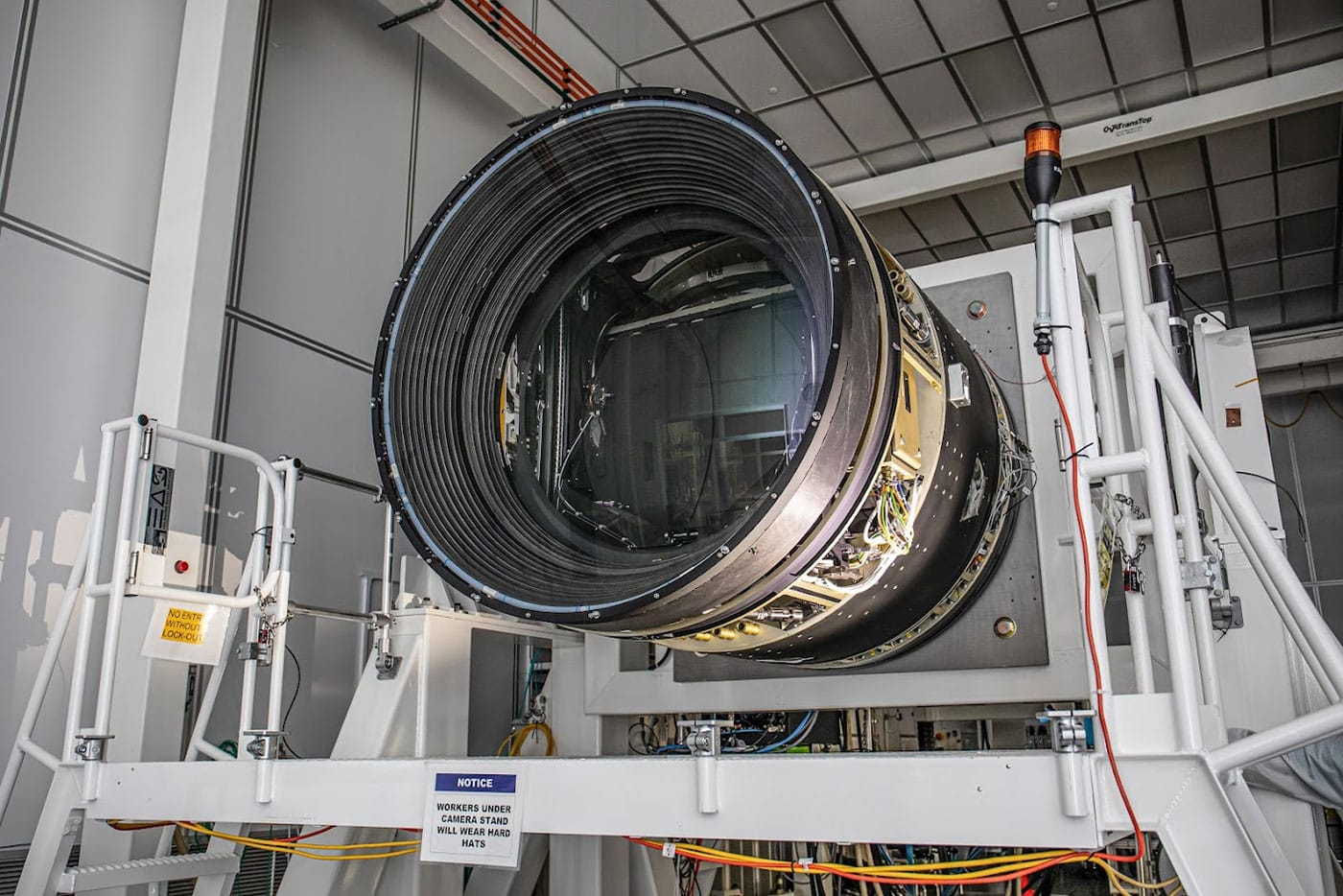
On a mountaintop in northern Chile, the world’s largest digital camera is gearing up for an ambitious mission: to photograph the entire night sky in unprecedented detail, unlocking some of the universe’s most profound secrets. This monumental project, housed within the Vera C. Rubin Observatory, is poised to revolutionize our understanding of the cosmos.

Overview of the Vera C. Rubin Observatory

Located on Cerro Pachón, a mountain standing 2,682 meters (8,800 feet) tall, the observatory features a groundbreaking camera with a resolution of 3,200 megapixels—equivalent to about 300 smartphones. Each image captured will encompass a sky area as large as 40 full moons.

The telescope aims to conduct a complete survey of the visible sky every three nights, generating thousands of images that will reveal celestial movements and brightness changes. Over its ten-year mission, the Vera Rubin Observatory expects to identify approximately 17 billion stars and 20 billion galaxies previously unseen.

“There’s so much that Rubin will do,” explains Clare Higgs, the observatory’s astronomy outreach specialist. “We’re exploring the sky in a way that we haven’t before, giving us the ability to answer questions we haven’t even thought to ask.”

Construction and Purpose

Under construction since 2015, the observatory is named after Vera Rubin, a pioneering American astronomer who confirmed the existence of dark matter before her passing in 2016. Initially funded through private donations from notable figures like Bill Gates and Charles Simonyi, the project later received support from the U.S. Department of Energy and the National Science Foundation.

The observatory’s location in the Chilean Andes is ideal for optical astronomy, with its high altitude, dry climate, and minimal light pollution enhancing the sensitivity of the instruments. Higgs notes, “You want a very still and well-understood atmosphere, and the quality of the night sky in Chile is exceptional.”

Expected to begin operations in 2025, the observatory is currently in its final construction stages. The team is working diligently to assemble and align all components, with plans to commence initial observations by late 2025, contingent on successful testing.

The Legacy Survey of Space and Time (LSST)

The primary mission of the Vera Rubin Observatory is the Legacy Survey of Space and Time (LSST). This ten-year project aims to capture the southern sky every night and repeat that every three nights, essentially creating a “movie” of the southern sky.

The camera can take an image every 30 seconds, generating an astonishing 20 terabytes of data daily. By the end of the survey, it is anticipated that more than 60 million gigabytes of raw data will be collected. Images will be transferred to California for analysis using AI and algorithms, resulting in about 10 million alerts per night for any observable changes in the sky.

Research Areas and Potential Discoveries

The data collected will cover four main research areas:

  1. Inventory of the Solar System: Including the search for Planet Nine.
  2. Mapping the Milky Way: Understanding our galaxy’s structure.
  3. Exploring Transients: Observing objects that change position or brightness over time.
  4. Understanding Dark Matter: Investigating the nature of this elusive substance.

Higgs notes, “We’ll go from a couple of observed events to statistically large samples, and the science impact of what that can do is huge.”

Excitement in the Astronomical Community

The astronomical community is abuzz with anticipation for the Vera Rubin Observatory. According to David Kaiser, a physics professor at MIT, the telescope will enable unprecedented mapping of dark matter through gravitational lensing, allowing for better understanding of how dark matter interacts with visible matter.

Professor Konstantin Batygin from Caltech adds that the observatory could provide critical insights into the Planet Nine hypothesis, helping astronomers to better understand the dynamics of the outer solar system.

Dr. Kate Pattle from University College London highlights that the observatory will make significant strides in studying astronomical transients, tracking supernova remnants, and monitoring high-energy gamma-ray bursts.

Conclusion

As the Vera C. Rubin Observatory prepares for its groundbreaking mission, astronomers are poised to gain insights that may redefine our understanding of the universe. With its advanced technology and ambitious goals, the observatory is not just a project; it is a potential game-changer for the field of astronomy.

Why Are We Seeing the Northern Lights So Often Lately?

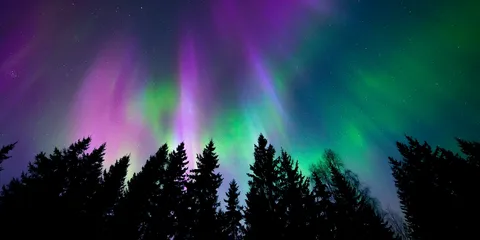
Once considered a rare spectacle seen only near the Arctic Circle, the Northern Lights, or Aurora Borealis, have become increasingly visible across various parts of the world, including much of the US. On Thursday night, these vivid colors were once again on display. Experts point to heightened solar activity as the main reason for the frequency of these sightings.

The Northern Lights are tied to the sun’s 11-year solar cycle, which governs solar activity. Currently, the sun is nearing the “solar maximum,” a phase of the cycle characterized by increased solar flares and eruptions. During this period, the sun’s magnetic poles flip, causing significant solar storms that affect Earth.

NASA explains that at the solar minimum, the sun is relatively calm, but at its maximum, bright solar flares and Coronal Mass Ejections (CMEs) occur, sending streams of charged particles, known as solar wind, hurtling toward Earth. When these particles interact with gases in Earth’s atmosphere, especially near the magnetic poles, they create the brilliant light displays we recognize as auroras.

The current solar cycle, the 25th since records began in 1755, started in 2019 and is expected to reach its peak in 2025. As the sun continues its active phase, the chances of witnessing these displays will remain high over the next several months.

The recent surge in auroral activity stems from an eruption on October 8, when a large sunspot sent charged particles towards Earth. As these particles collide with gases like oxygen and nitrogen in the atmosphere, light is emitted in various colors, forming the shimmering displays of green, pink, purple, and red.

While the Northern Lights are typically most visible near the Arctic Circle, increased solar activity can push the auroral zone farther south, allowing more people to witness the phenomenon. With a high number of sunspots and ongoing solar eruptions, scientists predict that more auroras are likely in the near future.

To catch a glimpse of the Northern Lights, it’s best to find a dark location, away from artificial light, and ensure the skies are clear of clouds. As solar activity remains strong, the beauty of the Northern Lights may continue to be more accessible to people across the globe in the coming months.