Yazılar

NASA’s Perseverance Rover Captures ‘Googly Eye’ Eclipse on Mars

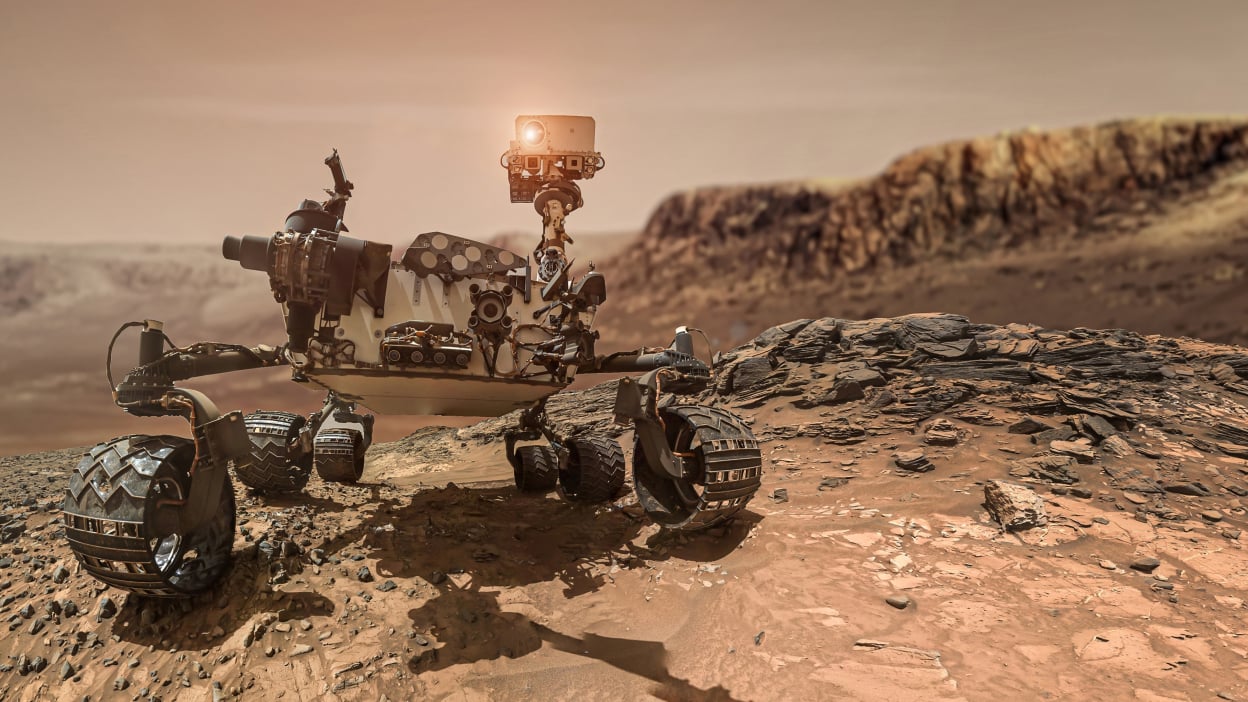
NASA’s Perseverance rover, stationed in Mars’ Jezero Crater, recently captured a stunning celestial event as the Martian moon Phobos passed across the Sun. This moment, observed on September 30, provided a rare glimpse into the Martian sky and featured an intriguing “googly eye” effect, which was recorded by the rover’s Mastcam-Z camera. The eclipse offered a unique visual of Phobos’ orbit and helped scientists gain valuable data about the moon’s trajectory as it continues to slowly move closer to Mars. The footage released by NASA showcases the intricate dance of Mars’ moons and the dynamic nature of the Martian system.

The event unfolded as Perseverance observed Phobos casting its shadow across the Sun, creating a brief and distinctive visual effect. This “googly eye” effect occurred when Phobos partially blocked the sunlight, leaving a silhouette that was especially noticeable against the Martian backdrop. The eclipse, occurring on the 1,285th Martian day (sol) of the Perseverance mission, highlighted the moon’s rapid orbit around Mars. Phobos takes just 7.6 hours to complete one orbit, a much faster motion compared to Earth’s moon, which results in quick transits across the sky that last only about 30 seconds. This provides a fleeting but beautiful spectacle that is rarely visible from Earth.

Phobos, the larger of Mars’ two moons, follows an increasingly tight orbit around the Red Planet. Measuring around 27 kilometers at its widest point, Phobos appears much smaller in the Martian sky compared to Earth’s moon, and its proximity to Mars means that it crosses the sky more frequently. However, this close orbit comes at a cost: Phobos is gradually moving closer to Mars over time, and scientists predict that within the next 50 million years, it will either crash into the Martian surface or break apart, forming a ring around the planet. The periodic eclipses caused by Phobos’ orbit, including those recorded by Perseverance and previous rovers like Curiosity and Opportunity, have provided crucial insights into the moon’s orbit and its eventual fate.

This recent observation of Phobos’ eclipse adds to a growing body of knowledge about Mars and its moons. Each eclipse captured by rovers helps scientists refine their understanding of Phobos’ path, and in turn, offers important clues about the evolution of Mars’ natural satellites. As Perseverance continues its mission on Mars, more such events are expected, providing scientists with deeper insights into the Martian system and the behavior of its moons. These observations not only enrich our understanding of Mars’ present but also offer a glimpse into the future of the Red Planet and its celestial companions
Earth’s Brief ‘Second Moon’ 2024 PT5 Set to Depart as It Leaves Earth’s Orbit

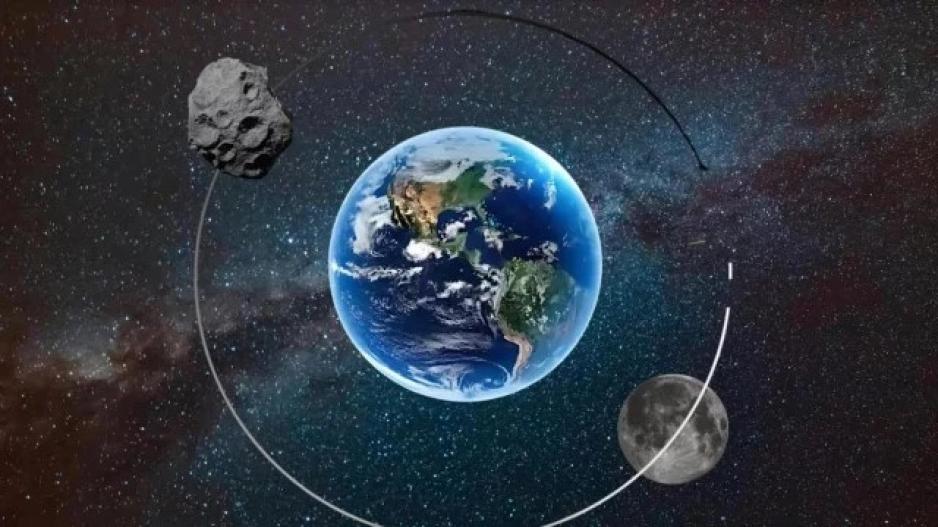
Earth has recently captured a small asteroid, 2024 PT5, temporarily turning it into a “second moon.” This rare occurrence, confirmed by teams from the Massachusetts Institute of Technology (MIT) and the Complutense University of Madrid, offers a fascinating glimpse into the phenomenon of “mini-moons”—tiny celestial objects that Earth occasionally snares into orbit for short periods. However, this temporary companion won’t remain for long. By mid-November 2024, 2024 PT5 is expected to escape Earth’s gravitational influence and continue its journey around the Sun.

The asteroid 2024 PT5 was first spotted on August 7, 2024, by NASA’s Asteroid Terrestrial-impact Last Alert System (ATLAS) at the Haleakala Observatory in Hawaii. Following this discovery, astronomers from the Complutense University conducted further observations using a high-powered telescope in Sutherland, South Africa. While Earth has captured such mini-moons before, these objects are often difficult to detect due to their small size and the brief nature of their orbits, making them elusive targets for astronomers.

Richard Binzel, a prominent astronomer at MIT, explained that advancements in telescope technology have made it easier to track these transient objects. “We’re only starting to observe these small objects with enough regularity to learn more about them,” Binzel said. This increasing ability to monitor mini-moons is a significant step forward in our understanding of near-Earth objects (NEOs), as it provides valuable data on how such bodies interact with Earth’s gravitational field. The brief capture of 2024 PT5 has generated significant interest among astronomers, eager to study the dynamics of small celestial bodies in Earth’s vicinity.

While the mini-moon’s visit is short-lived, it underscores the dynamic nature of Earth’s interaction with space objects. As astronomers continue to develop more advanced methods for detecting and tracking these transient moons, the scientific community is gaining deeper insights into the population of small asteroids that come close to Earth. This research could improve our understanding of the potential hazards posed by near-Earth objects and their role in the broader context of solar system dynamics.

Research Suggests Black Holes May Fuel the Expansion of the Universe

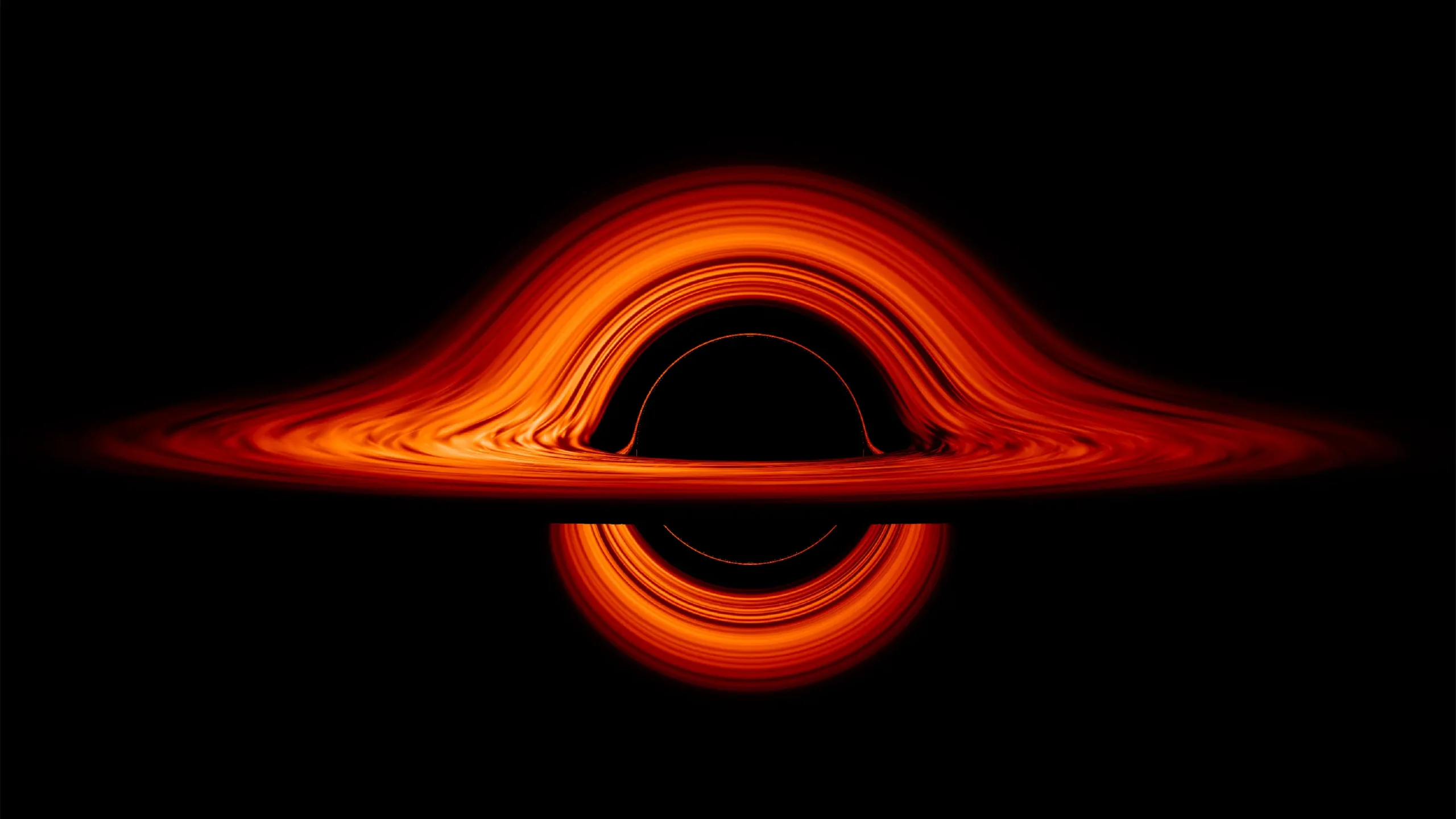
Astronomers are currently exploring a groundbreaking and controversial theory that black holes could be connected to the accelerated expansion of the universe, which is primarily attributed to dark energy. Dark energy, a mysterious force that makes up roughly 70 percent of the universe, has long been understood to cause the universe’s expansion by pushing galaxies apart. Since the discovery of dark energy, it has been assumed that it exists evenly throughout space, acting as a uniform force. However, a recent study published in the Journal of Cosmology and Astroparticle Physics presents a new perspective, suggesting a potential link between black holes and dark energy. This idea challenges traditional cosmological models and opens the door for further debate in the scientific community.

The research, led by a team using the Dark Energy Spectroscopic Instrument (DESI) at the Nicholas U. Mayall Telescope in Arizona, examined the relationship between black holes and dark energy. By analyzing data from deep space observations, the researchers sought to estimate the evolution of dark energy over cosmic history. Surprisingly, their results indicated a correlation between the growth of black holes and an increase in dark energy density over time. According to Dr. Gregory Tarlé, a professor of physics at the University of Michigan and co-author of the study, this relationship may suggest that the immense gravitational forces within black holes mimic the conditions that existed during the universe’s early stages. Tarlé likens this to a “reverse inflation” process, in which the collapse of a massive star could produce dark energy in a manner opposite to the Big Bang.

If this theory proves correct, it could help solve a major cosmological puzzle known as the “Hubble tension.” This refers to the observed discrepancies in the rate at which different regions of the universe expand, which current models struggle to reconcile. The idea that black holes might play a role in these variations in expansion offers a fresh avenue of exploration. Dr. Duncan Farrah, an associate professor of physics at the University of Hawaii and another co-author of the study, suggests that the evidence for a connection between black holes and dark energy is becoming increasingly plausible. If validated, this could lead to significant revisions in our understanding of cosmology and the forces shaping the universe’s evolution.

The implications of such a discovery would not only reshape theoretical physics but also have far-reaching consequences for future space exploration. If black holes are indeed contributing to the expansion of the universe, it would imply that their influence extends far beyond their immediate surroundings, potentially altering our perception of the role they play in the cosmos. This theory also calls for a reevaluation of dark energy itself, perhaps suggesting that it is not just a passive force but one actively involved in the cosmic processes that shape space-time. As research continues, the scientific community will undoubtedly continue to investigate this fascinating possibility, seeking answers to the most profound questions about the nature of the universe.