Yazılar

Intense Thunderstorms on Jupiter May Alter Its Colour and Visual Features

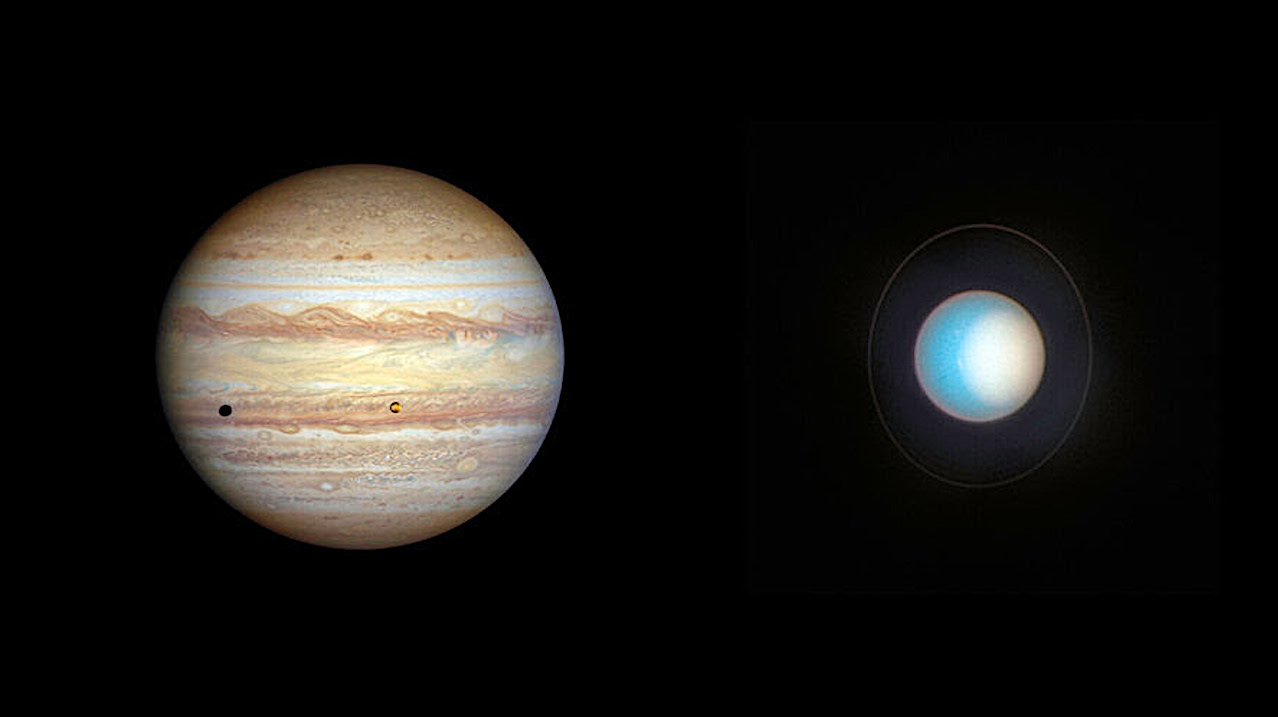
Newly captured images of Jupiter have revealed two enormous thunderstorms brewing within the planet’s Southern Equatorial Belt (SEB). These massive storms are expected to produce green lightning, a rare phenomenon on the gas giant, and may lead to significant changes in the belt’s distinctive reddish-brown colour. Observers speculate that the intensity of these storms could alter the visual appearance of Jupiter’s surface, adding to the already dynamic and ever-changing features of the planet. This latest discovery has sparked great interest among astronomers and space enthusiasts alike, as the effects of these storms unfold.

The images, taken by astrophotographer Michael Karrer on November 30 using an 8-inch Celestron telescope, offer a striking view of two prominent white patches within the SEB. These patches, identified as massive thunderstorms, have been the subject of discussion by John Rogers, an astronomer with the British Astronomical Association. According to Rogers, similar storms were observed on Jupiter between 2016 and 2017, but this new occurrence appears to be much larger in scale, making it a noteworthy event for planetary scientists.

The thunderstorms, which are believed to extend nearly 100 kilometers beneath Jupiter’s thick atmosphere, are among the largest and most intense ever recorded on the planet. While their exact size is still being studied, it is estimated that the storms’ widths are likely greater than the entire diameter of Earth. The storms not only bring extreme weather but also produce green lightning, a striking contrast to the blue lightning seen on Earth. This unusual lightning colour is a result of atmospheric ammonia on Jupiter, as opposed to the water vapour responsible for Earth’s blue lightning. NASA research has previously documented this phenomenon, further supporting its presence on the gas giant.

As the storms continue to rage within Jupiter’s atmosphere, their long-term effects on the planet’s appearance remain uncertain. The potential for the SEB’s reddish-brown hue to be diluted could lead to dramatic visual changes that would alter how we view the planet. With further observation and study, scientists hope to gain a deeper understanding of these storms and their broader implications for the atmospheric dynamics of Jupiter, a planet known for its fierce weather patterns and ever-shifting appearance.
How the James Webb Space Telescope Allows Us to See the Past

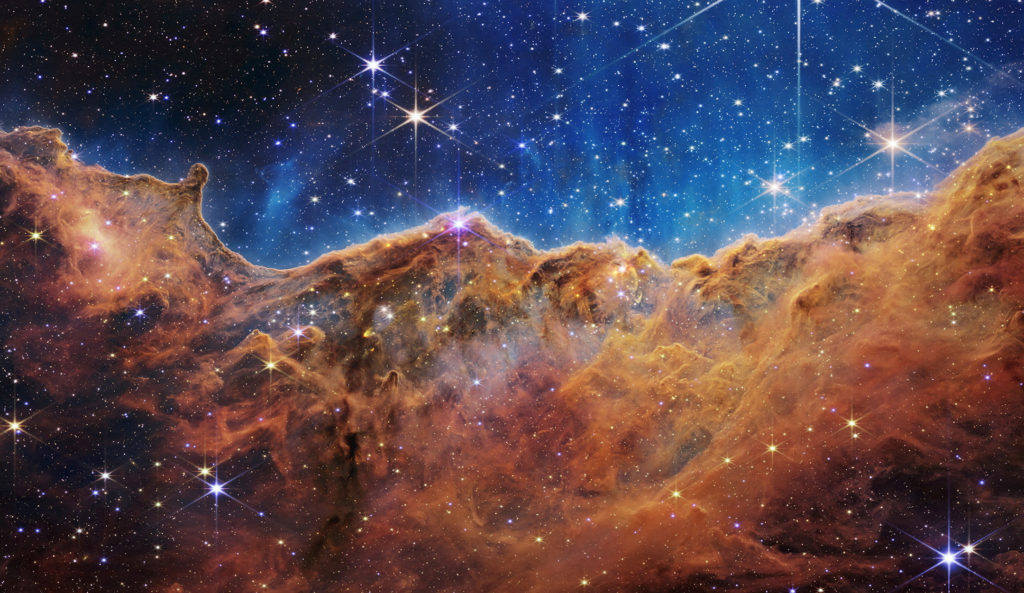
The ability to observe space allows scientists to essentially look back in time, thanks to the way light travels across vast distances in the universe. Telescopes like the James Webb Space Telescope enable us to capture light from distant celestial bodies, acting as time machines that reveal what the universe looked like in the past. This phenomenon is rooted in the fact that light, despite traveling at incredible speeds, still requires time to travel across the vast expanses of space.

Light travels at approximately 186,000 miles (300,000 kilometers) per second, which is incredibly fast in human terms. However, even at this speed, the immense distances between objects in space mean that the light we see today actually left those objects millions or even billions of years ago. For example, light from the Moon takes just 1.3 seconds to reach Earth, while light from Neptune, the furthest planet in our solar system, takes about four hours. This delay in light’s arrival means that when we observe these objects, we are seeing them as they were in the past, not as they are right now.

When we look beyond our solar system, the distances become even more staggering. Within our galaxy, the Milky Way, distances are often measured in light-years—the distance that light travels in one year. For instance, Proxima Centauri, the closest star to Earth after the Sun, is over four light-years away. That means when we observe Proxima Centauri, we are actually seeing it as it was over four years ago. The light that reaches us today from that star began its journey back in time, traveling through space at a constant speed.

The James Webb Space Telescope, with its advanced instruments and capabilities, is able to observe objects that are far further away than ever before. By studying the light emitted from galaxies, stars, and other celestial bodies billions of light-years away, Webb allows scientists to peer into the distant past of the universe. The further the light travels, the further back in time we are able to see, offering a glimpse into the early stages of the universe, helping us understand its origins and evolution over time.

Astronomers Discover Black Hole Devouring Matter at 40 Times Its Theoretical Limit

Astronomers Detect Record-Breaking Black Hole Consuming Matter at Unprecedented Rate
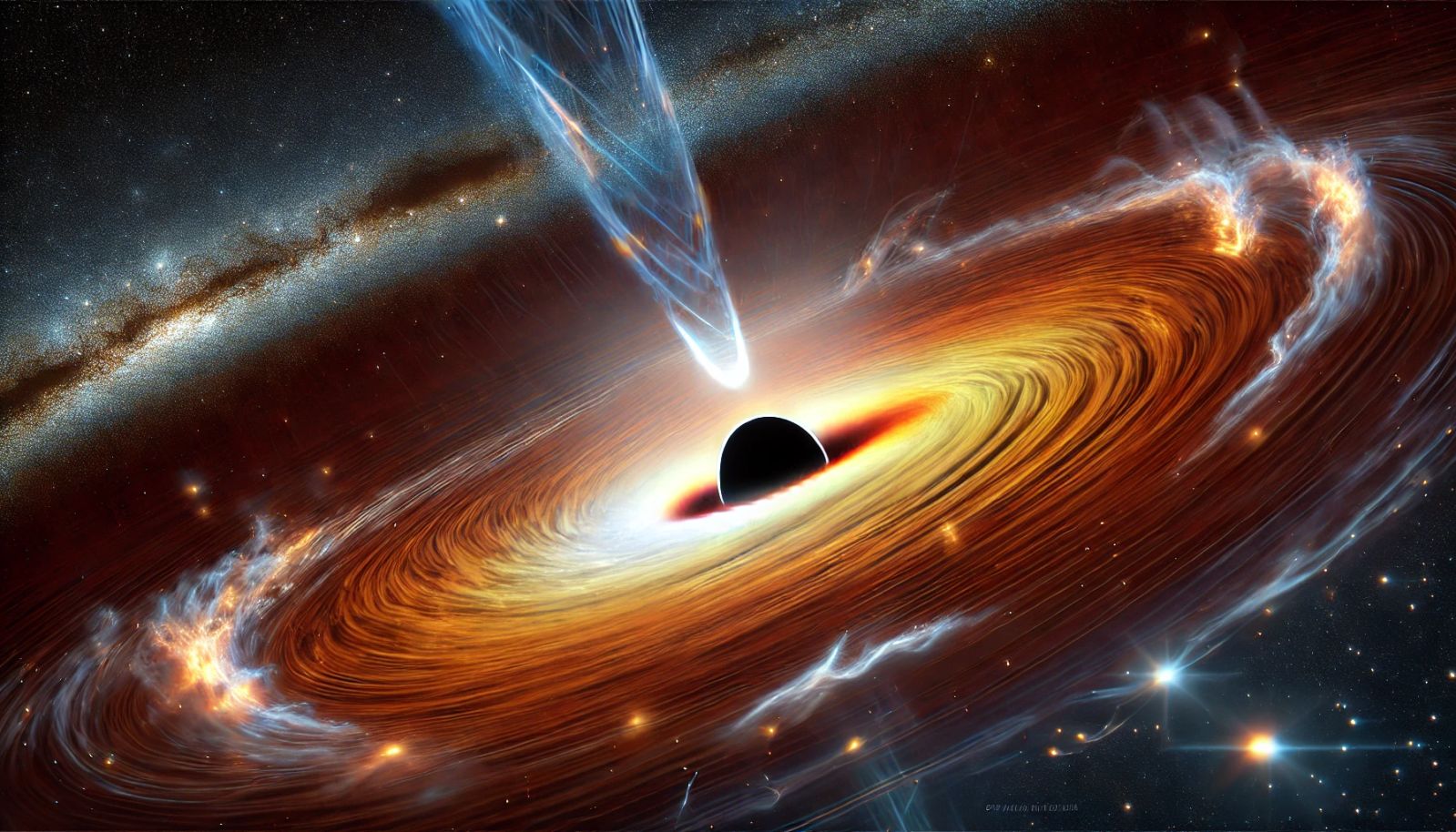
A team of astronomers, utilizing data from NASA’s James Webb Space Telescope (JWST) and the Chandra X-ray Observatory, has identified a black hole that is consuming matter at an astonishing rate, far exceeding theoretical limits. The black hole, named LID-568, is located in a galaxy formed just 1.5 billion years after the Big Bang, offering a rare glimpse into the early universe. This discovery challenges existing models of black hole growth, suggesting that supermassive black holes may have formed much more rapidly than previously thought.

Revolutionary Observation Technique Offers New Insights
The breakthrough was led by Dr. Hyewon Suh from the International Gemini Observatory at NSF NOIRLab, with the team identifying LID-568 within a cluster of galaxies that emit bright X-rays despite being faint in the visible spectrum. In a departure from traditional observational methods, the researchers employed JWST’s integral field spectrograph in the Near Infrared Spectrograph (NIRSpec) to capture data from every pixel in the target area. This innovative approach allowed for precise positioning of the black hole, revealing significant gas outflows surrounding it.

Intense Feeding and Rapid Growth
The outflows detected around LID-568 suggest that the black hole is likely undergoing periods of rapid, short-lived feeding, contributing to its extraordinary growth rate. Dr. Emanuele Farina, a co-author of the study, emphasized the importance of the new technique, noting that it was essential to capture the faint signals coming from such a distant and early cosmic object. These findings could redefine our understanding of how supermassive black holes form and evolve, providing key insights into their growth in the early universe.

Implications for Understanding Early Universe Phenomena
The discovery of LID-568 challenges existing theories of black hole formation, particularly how these massive objects could grow so quickly in the early stages of the universe. As astronomers continue to study this and other similar galaxies, they may uncover new mechanisms that explain the rapid growth of supermassive black holes. This research not only pushes the boundaries of astrophysics but also sheds light on the processes that shaped the universe as we know it.