Yazılar

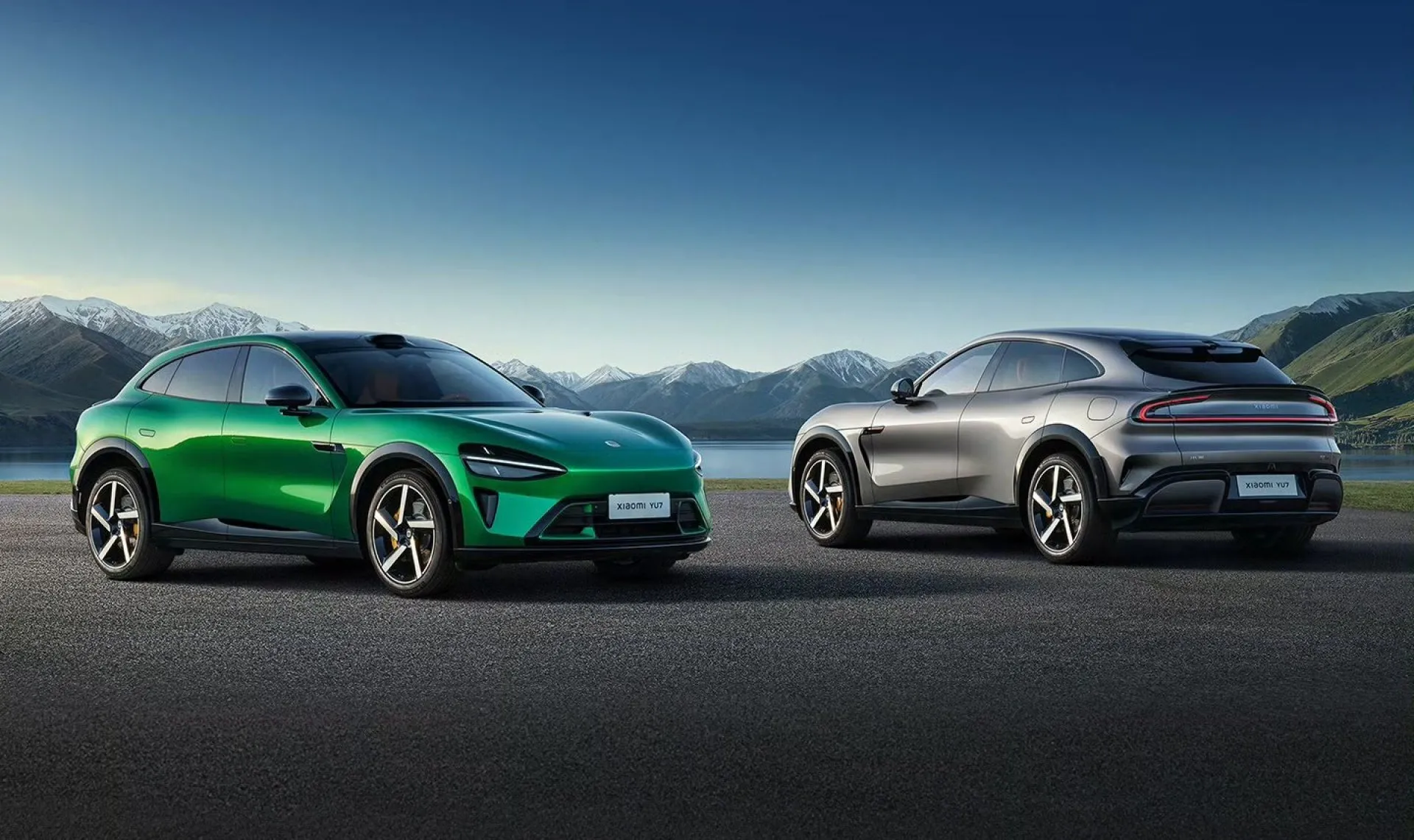
Xiaomi to Launch YU7 Electric SUV in July, Aims to Challenge Tesla’s Model Y in China

Xiaomi, China’s tech giant and the world’s third-largest smartphone maker, announced Thursday that it will begin sales of its second electric vehicle — the YU7 SUV — in July, positioning it as a direct challenger to Tesla’s Model Y, the best-selling EV SUV in China.

The YU7 boasts a driving range of up to 835 kilometers (519 miles) per charge, surpassing Tesla’s redesigned Model Y, which has a maximum range of 719 kilometers (447 miles). Xiaomi did not disclose pricing or begin pre-orders but hinted that, based on configuration, the YU7 could be priced 60,000–70,000 yuan ($8,300–$9,700) higher than the Model Y’s base price of 263,500 yuan ($36,574).

“But we’ll talk about the price in July,” said Xiaomi founder and CEO Lei Jun during the product launch event.

Competitive Edge and Market Context

  • The YU7 is Xiaomi’s second EV following the SU7, a sporty electric sedan that launched last year with design cues from Porsche and competitive pricing under Tesla’s Model 3.

  • Since December, the SU7 has consistently outsold Tesla’s Model 3 in China.

  • Xiaomi has delivered over 258,000 SU7 units since launch, according to Lei.

Headwinds and Safety Concerns

Xiaomi’s growing EV business faces scrutiny after a fatal highway crash in March involving an SU7 in driving-assistance mode. The company has also apologized for unclear marketing practices that led to allegations of false advertising.

“We apologize for marketing that was not clear enough,” Lei acknowledged, amid efforts to restore consumer trust.

Beyond EVs: Xiaomi Chips Up Its Game

Alongside the YU7 announcement, Xiaomi unveiled its second self-developed chip, the Xring T1, following the earlier launch of its Xring O1. Lei claimed the Xring O1 rivals Apple’s A18 chip in performance — signaling Xiaomi’s deeper push into semiconductor self-sufficiency and hardware-software integration.

The simultaneous launch of smartphones, tablets, and EV innovations reflects Xiaomi’s ambition to become a vertically integrated tech powerhouse, blending consumer electronics, mobility, and AI-powered smart hardware into a unified ecosystem.
Tesla Pauses Full Self-Driving Trial in China Pending Regulatory Approval

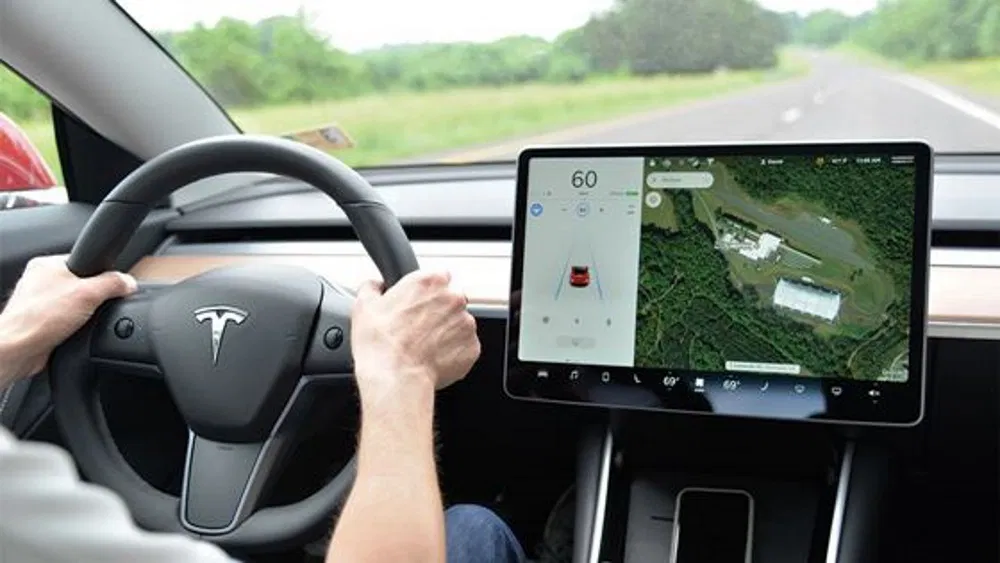
Tesla announced on Monday that it would halt its limited-time free trial of the Full Self-Driving (FSD) feature in China, pending the completion of regulatory approval. The pause follows complaints regarding the trial, which was initially scheduled to run from March 17 to April 16.

Tesla’s customer support addressed the issue on the social media platform Weibo, where they stated that all parties involved are working to advance the relevant approval processes. They assured customers that the feature would be released once regulatory conditions are met and urged patience.

FSD is a suite of driving-assistance technologies powered by generative artificial intelligence, designed to handle complex traffic conditions. Tesla is targeting a full rollout of FSD later this year and is collaborating with Chinese tech giant Baidu to enhance the system’s performance.

While Tesla has successfully offered such trials in the U.S. without requiring up-to-date navigation maps—relying instead on local AI training from its 2 million EVs—the company faces challenges in China due to strict data laws that prevent the system from being trained using local data. Additionally, China’s industry ministry implemented new rules in February mandating that autonomous driving-related over-the-air software updates be approved by regulators before they can be deployed.

Explainer: What Autonomous Driving Features Are Available in China?

China, the world’s largest auto market, is seeing significant advancements in autonomous driving features, with several companies introducing innovative technologies in their vehicles. Chinese electric vehicle (EV) maker BYD recently launched its proprietary advanced driver-assistance system, “God’s Eye,” in a range of models, signaling the start of a potential price war in a highly competitive market.

BYD’s Autonomous Driving Features:

BYD’s “God’s Eye” system is a three-tier platform based on computing power. The most affordable entry-level version, the C model, is available on vehicles priced between 69,800 yuan ($9,500) and 219,800 yuan, under the Dynasty and Ocean series. The system includes features such as:

  • Automatic highway ramp exit/entry
  • Lane keeping and cruise driving
  • Autonomous lane changes and obstacle avoidance
  • Autonomous emergency braking and self-parking upon exit
  • Remote parking

This version of the system uses 12 cameras, five-millimeter wave radars, and 12 ultrasonic radars. Higher-end variations of the system, God’s Eye A and B, are available on more premium models such as Denza and Yangwang brands, utilizing advanced computing and lidar to create 3D images of a vehicle’s surroundings, assisting in navigation around obstacles.

Tesla’s Full-Self Driving (FSD):

Tesla offers its full self-driving (FSD) software for subscription in China, though the features are limited compared to other markets. Tesla vehicles come with basic autopilot features, such as traffic-aware cruise control and in-lane autosteer.

  • Enhanced autopilot, priced at 32,000 yuan, includes auto lane change and auto parking.
  • FSD, priced at 64,000 yuan, will soon allow navigation on city streets and recognition of traffic lights and stop signs, with plans for a release later this year.

Huawei-backed AITO:

AITO, another key player in China’s EV space, equips its M7 model with two versions of Huawei’s advanced driving system. The base version includes navigation on highways, auto ramp entry/exit, and partial auto lane changes, priced at 249,800 yuan. The advanced version, priced at 289,800 yuan, includes lidar-powered features, such as city street navigation and automatic emergency braking for special-shaped obstacles.

AITO’s advanced driving software is also available for subscription on EVs from other brands, including Changan’s Avatr, for approximately $4,100.

Xpeng’s MONA Series:

Xpeng introduced its most affordable EV with advanced autonomous driving capabilities through its MONA sub-brand. The MONA M03 Max, priced from 155,800 yuan, includes a vision-only solution with lane-keeping control, adaptive cruise control, navigation on highways, and smart parking. The vehicle will also feature smart exit from parking spaces.

Xiaomi’s Autonomous Driving System:

Xiaomi has introduced its own smart driving system in the SU7 EVs, priced from 215,900 yuan. The lower-end version of the system includes auto parking and highway navigation. The higher-end version, equipped with lidar, enables additional features like urban navigation, collision avoidance, and special vehicle recognition, available in SU7 trims priced above 245,900 yuan.