Yazılar

Philippines to Continue Vessel Deployment in Contested South China Sea Shoal

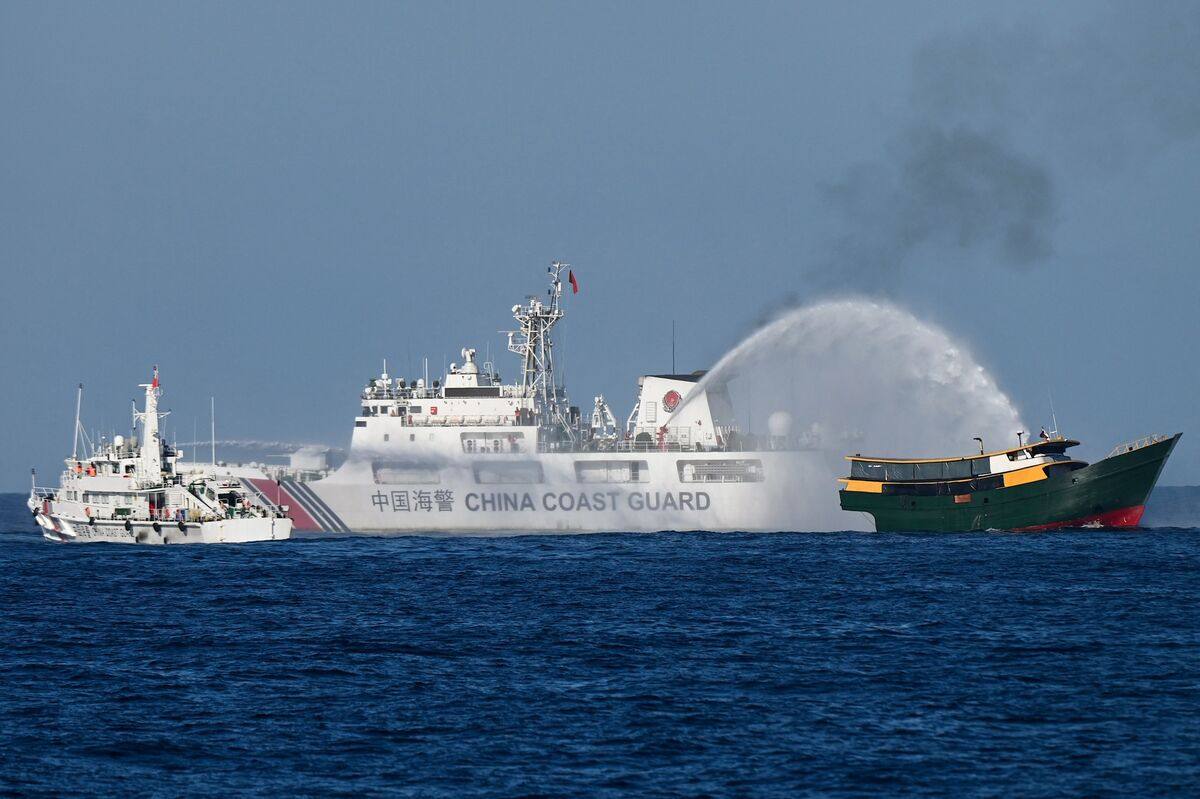
The Philippines will maintain a persistent presence in the contested Sabina Shoal in the South China Sea, according to a statement by its coast guard on Monday. This comes after the Philippine vessel Teresa Magbanua returned to port following a five-month deployment in the area.

Philippine Coast Guard Spokesperson Jay Tarriela emphasized that the country will continue to deploy vessels in these waters, reinforcing the nation’s stance amid concerns over China’s activities. The Teresa Magbanua was initially sent to the shoal in April to monitor what the Philippines suspects are small-scale land reclamation operations by China. The ship’s return on Sunday was due to the need for repairs and to address crew medical needs, and not in response to any demands from China, according to Tarriela.

Sabina Shoal, referred to by China as Xianbin Reef and by the Philippines as Escoda Shoal, is located west of the Philippine province of Palawan, within the country’s exclusive economic zone (EEZ). Despite China’s claims, the Philippines is committed to ensuring a coast guard presence at all times, regardless of the size or number of vessels, Tarriela assured during a press conference.

China’s coast guard responded on Sunday, stating it will continue its law enforcement activities within the waters it claims as its jurisdiction, in line with Beijing’s laws, to protect its territorial sovereignty and maritime interests.

China asserts sovereignty over most of the South China Sea, leading to territorial disputes with several Southeast Asian nations, including Brunei, Indonesia, Malaysia, the Philippines, and Vietnam. However, in 2016, an international arbitration tribunal in The Hague ruled against China’s extensive territorial claims, a decision that Beijing has repeatedly rejected.


China’s Local Government Debt Problems Are a Hidden Drag on Economic Growth

China’s persistent consumption slowdown is increasingly linked to the country’s real estate slump, which has deep financial ties to local governments and their growing debt. Over the past two decades, much of Chinese household wealth was funneled into real estate, but since Beijing began cracking down on developers’ high reliance on debt in 2020, property values have fallen. This has, in turn, cut into local government revenues, especially from land sales—a crucial source of funding.

According to analysts at S&P Global Ratings, local government finances may take three to five years to recover, but delays in revenue recovery could exacerbate the already growing debt levels. Wenyin Huang, director at S&P Global Ratings, highlighted how macroeconomic challenges continue to weaken the revenue-generating capacity of local governments, particularly when it comes to taxes and land sales. Over the last two or three years, the drop in land sale revenues and tax cuts dating back to 2018 have further reduced operating revenue by an average of 10% across China.

Local governments are scrambling to reclaim lost revenue, putting additional strain on businesses already hesitant to expand or raise wages amid ongoing economic uncertainty. This pressure has led to an increase in back-tax collection efforts, with some companies reporting notices to repay taxes for operations dating back decades. These unexpected financial demands have further damaged fragile business confidence, with the CKGSB Business Conditions Index reflecting a contraction in August.
Picture background

In an effort to diversify revenue streams, certain provinces such as Jiangsu, Shandong, Shanghai, and Zhejiang have seen non-tax revenue growth exceeding 15% in 2024. However, this shift has done little to alleviate the underlying challenges. Camille Boullenois, an associate director at Rhodium Group, noted that the aggressive tax collection “shows how desperate [local governments] are to find new sources of revenue.”

The Chinese government has denied any widespread or targeted tax inspections but acknowledged that local governments have issued notices in compliance with existing laws. Despite these claims, the strain on local government budgets remains evident, as essential services like education and civil servant salaries cannot be cut, leaving limited room to reduce spending.

Efforts to spur growth by pivoting toward consumption-based models have struggled to take hold. Analysts have pointed out that the investment-led approach is not delivering the desired nominal GDP growth, which is contributing to higher debt ratios. Since 2021, China’s debt-to-GDP ratio has risen by 30 percentage points, reaching 310% in the second quarter of 2024, and is projected to rise further by year-end. Growth, meanwhile, is expected to lag behind the official target, with GDP projected to rise by just 4.5% in the third quarter, shy of the government’s 5% goal.

Local government financing vehicles (LGFVs), which have taken on substantial debt for public infrastructure projects, now pose a significant risk to the banking sector. Experts like Alicia Garcia-Herrero, chief economist for Asia-Pacific at Natixis, believe LGFVs are an even greater risk than the real estate sector, describing them as a “grey rhino” — a metaphor for high-probability, high-impact risks that are being ignored. Chinese banks are now more exposed to LGFV loans than to real estate developers, creating a precarious situation for the financial system.

S&P Global Ratings’ Laura Li warned that while the government is trying to manage liquidity issues to maintain stability, there are no quick fixes to the mounting debt problem. The central and local governments simply do not have enough resources to address the issue all at once, leaving the country’s economic recovery and long-term growth prospects under threat.

 

Russia Develops Kamikaze Drone Using Chinese Engine for Ukraine War

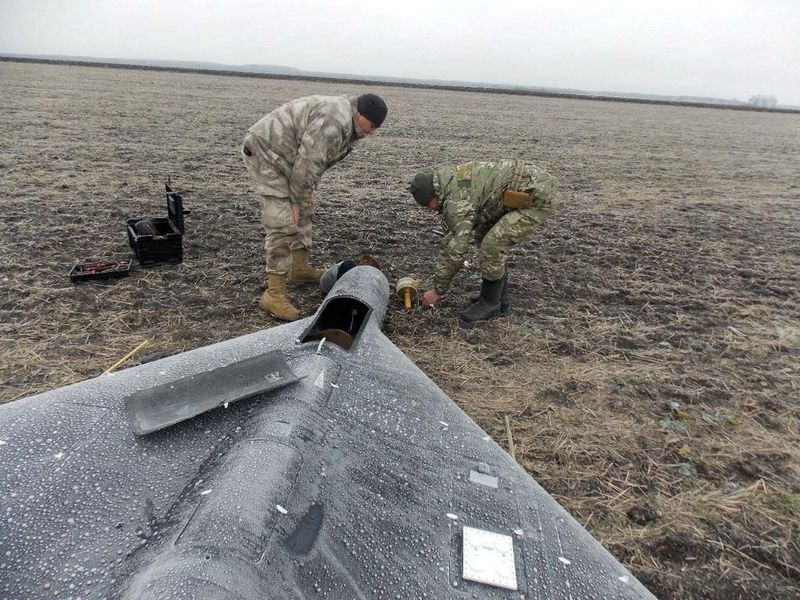
Russia has developed a new long-range kamikaze drone named Garpiya-A1, utilizing Chinese-made engines and components. According to European intelligence sources and documents reviewed by Reuters, the drone has been deployed in the ongoing conflict in Ukraine. The production of over 2,500 Garpiyas from July 2023 to July 2024 marks a shift away from Russia’s previous reliance on Iranian drone designs. The drones have been used to target military and civilian infrastructure, causing significant damage and casualties.

The drone is produced by IEMZ Kupol, a subsidiary of Almaz-Antey, Russia’s state-owned weapons manufacturer, using Chinese engines supplied by Xiamen Limbach. The engine, originally of German design, is now manufactured in China. A former cement factory in Izhevsk, Russia, is being used as the primary production facility, with the plant reportedly churning out thousands of drones in recent months.

China’s Role and International Concerns

The Garpiya-A1 bears similarities to Iran’s Shahed-136 drone but features distinct design elements like bolt-on fins and Chinese-made Limbach L-550 E engines. Although China has officially denied involvement in supporting Russia’s military activities, the export of components with potential military applications, including drones, has drawn international scrutiny. U.S. and European authorities are particularly concerned about Chinese companies continuing to supply critical parts that enable Russia to manufacture these kamikaze drones.

In July 2023, Beijing announced stricter regulations on drone exports, effective from September, while maintaining that its trade with Russia is not restricted under international law. However, NATO Secretary General Jens Stoltenberg and Western officials have urged China to halt its indirect support of Russia’s military efforts, warning that Chinese technology has prolonged the conflict.

Production and Deployment

Production of the Garpiya-A1 began in early 2023, with Kupol securing a contract worth over 1 billion rubles (€10 million) to set up the factory. Initial prototypes were tested in early 2023, with output reaching 2,000 drones in the first half of 2024. Intelligence sources identified several Chinese suppliers, including Juhang Aviation Technology and Redlepus Vector Industries, both based in Shenzhen, for providing essential parts. Juhang has been under British and U.S. sanctions for supplying drone equipment to Russia.

Customs records show that Russia imported over $36 million worth of drone-related components from Chinese suppliers between April 2022 and December 2023, fueling concerns that these imports were marked for civilian use but repurposed for military applications.

Western Reactions and Sanctions

Washington has imposed several sanctions aimed at curbing Moscow’s access to technology for military use, warning Beijing of potential consequences for continuing to support Russia’s defense sector. Despite the sanctions, the Garpiya-A1 drone is the latest example of how Russia has managed to maintain drone production using external support, raising concerns over global arms control.

With a take-off weight under 300 kilos and a range of 1,500 kilometers, the Garpiya-A1 matches the capabilities of Iran’s Shahed-136, a drone that Russia has used extensively in Ukraine. The ability to produce such drones domestically marks a significant advancement in Russia’s drone capabilities, posing new challenges for Ukraine’s defense forces.