Yazılar

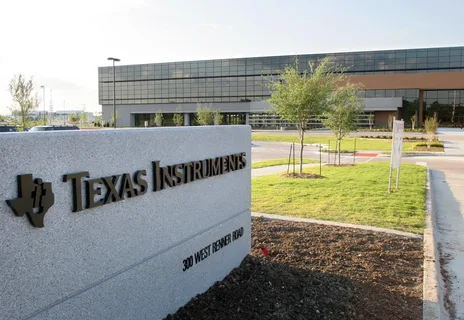
Texas Instruments Warns of Cooling Demand After Tariff-Driven Surge

Texas Instruments (TXN.O) said on Thursday that customer demand has slowed following a sharp spike in April, when buyers rushed to place orders ahead of U.S. President Donald Trump’s “Liberation Day” tariff announcement. Shares of the chipmaker fell nearly 4% after the update, delivered at the Citi Global TMT Conference by Chief Financial Officer Rafael Lizardi.

Lizardi explained that January-to-April demand was temporarily lifted by tariff-related market dynamics but noted that “things did slow down after April, or at least didn’t grow as they normally would have.”

The finance chief also addressed speculation about potential government stakes in semiconductor firms, clarifying that TI has not been approached about equity participation in exchange for CHIPS Act incentives. The Trump administration’s decision to take a 9.9% stake in Intel (INTC.O) has fueled debate about government involvement in the industry, but Lizardi said, “Nothing along those lines has been discussed or proposed” for TI.

Under the CHIPS and Science Act, the Commerce Department has earmarked up to $1.6 billion in funding for Texas Instruments. Lizardi said the agreement, initially signed under the Biden administration and later adjusted under Trump, saw only “minor, favorable changes.”

TI’s free cash flow remains under pressure from elevated capital expenditure, with share repurchases continuing but at a reduced pace. In July, the company issued a profit forecast that signaled weaker-than-expected demand for its analog chips, particularly from the automotive sector, which has been slow to rebound. Despite challenges, TI reiterated that four of its five end markets are showing recovery, with autos lagging due to broader economic uncertainty.

Texas Instruments to Invest $60 Billion in U.S. Chip Manufacturing Amid Political Pressure

Texas Instruments (TI) announced plans on Wednesday to invest over $60 billion to expand its semiconductor manufacturing facilities in the United States. This move comes amid ongoing pressure from the Trump administration to reshore the country’s semiconductor supply chain.

The Biden administration finalized a $1.61 billion subsidy for TI in December to support the construction of three new facilities, part of the broader $52.7 billion CHIPS and Science Act. TI’s investment plan includes building or expanding seven chip-making plants across Texas and Utah, with two new sites planned in Sherman, Texas. The company said this investment would create 60,000 jobs, calling it the largest foundational semiconductor manufacturing investment in U.S. history.

TI expects to spend up to $40 billion on its Sherman operations and approximately $21 billion on facilities in Utah and other parts of Texas. While no exact timeline was provided, TI confirmed its long-term capital expenditure plans remain unchanged.

Unlike AI-focused chipmakers Nvidia and AMD, TI specializes in analog chips used in everyday electronics such as smartphones, cars, and medical devices. This gives TI a broad client base, including Apple, SpaceX, and Ford.

The $60 billion investment follows similar announcements from other semiconductor companies. For example, Micron recently revealed it would increase its U.S. investment by $30 billion, bringing its total planned spending to $200 billion.

Some analysts interpret these spending announcements as efforts to gain favor with former President Donald Trump, who has threatened to block the CHIPS Act funding and impose tariffs on semiconductor imports.

U.S. Commerce Secretary Howard Lutnick praised the investment, stating it would support “foundational semiconductors that go into the electronics people use every day” and sustain U.S. chip manufacturing for decades.

TI’s announcement also includes previously allocated funds for facilities already under construction or scaling up production.

Micron Expands US Investment by $30 Billion Amid Trump’s Onshoring Push

Micron Technology announced on Thursday a significant expansion of its U.S. investment plans, adding $30 billion to its existing commitments as President Donald Trump intensifies efforts to bring semiconductor manufacturing back to American soil. The memory chip maker now projects total investments of $200 billion, up from previous plans of approximately $125 billion.

The new funding will support the construction of a second cutting-edge memory fabrication facility in Boise, Idaho, and the expansion of its manufacturing site in Manassas, Virginia. “These investments are designed to allow Micron to meet expected market demand, maintain share and support Micron’s goal of producing 40% of its DRAM in the U.S.,” the company stated.

Micron’s DRAM chips are widely used in personal computers, automotive systems, industrial equipment, wireless communications, and artificial intelligence. The company’s High-Bandwidth Memory (HBM) products are seen as essential for powering next-generation AI models. About $50 billion of Micron’s total investment will be dedicated to research and development.

President Trump’s administration has pushed hard for semiconductor onshoring, with Trump threatening new tariffs on chip imports and reconsidering previous subsidies granted under former President Joe Biden. In December, Micron secured nearly $6.2 billion in government subsidies through Biden’s $52.7 billion 2022 CHIPS and Science Act. Trump’s administration is now renegotiating some of those grants, according to Commerce Secretary Howard Lutnick.

The expansion aligns with broader trends in the U.S. semiconductor industry. Nvidia, a key customer of Micron, announced plans in April to build AI servers worth up to $500 billion in the U.S. over the next four years, in partnership with firms such as Taiwan’s TSMC. “Micron’s investment in advanced memory manufacturing and HBM capabilities in the U.S., with support from (the) Trump administration, is an important step forward for the AI ecosystem,” said Nvidia CEO Jensen Huang.

Micron also finalized a $275 million direct funding award under the CHIPS Act to further support its Manassas facility expansion.