
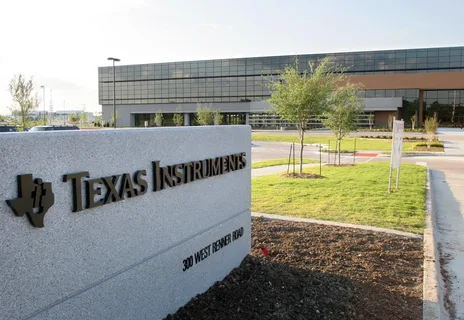
Texas Instruments (TXN.O) said on Thursday that customer demand has slowed following a sharp spike in April, when buyers rushed to place orders ahead of U.S. President Donald Trump’s “Liberation Day” tariff announcement. Shares of the chipmaker fell nearly 4% after the update, delivered at the Citi Global TMT Conference by Chief Financial Officer Rafael Lizardi.
Lizardi explained that January-to-April demand was temporarily lifted by tariff-related market dynamics but noted that “things did slow down after April, or at least didn’t grow as they normally would have.”
The finance chief also addressed speculation about potential government stakes in semiconductor firms, clarifying that TI has not been approached about equity participation in exchange for CHIPS Act incentives. The Trump administration’s decision to take a 9.9% stake in Intel (INTC.O) has fueled debate about government involvement in the industry, but Lizardi said, “Nothing along those lines has been discussed or proposed” for TI.
Under the CHIPS and Science Act, the Commerce Department has earmarked up to $1.6 billion in funding for Texas Instruments. Lizardi said the agreement, initially signed under the Biden administration and later adjusted under Trump, saw only “minor, favorable changes.”
TI’s free cash flow remains under pressure from elevated capital expenditure, with share repurchases continuing but at a reduced pace. In July, the company issued a profit forecast that signaled weaker-than-expected demand for its analog chips, particularly from the automotive sector, which has been slow to rebound. Despite challenges, TI reiterated that four of its five end markets are showing recovery, with autos lagging due to broader economic uncertainty.