Yazılar

GameStop’s Crypto Pivot Boosts Shares of One-Time Retail Investor Favorite

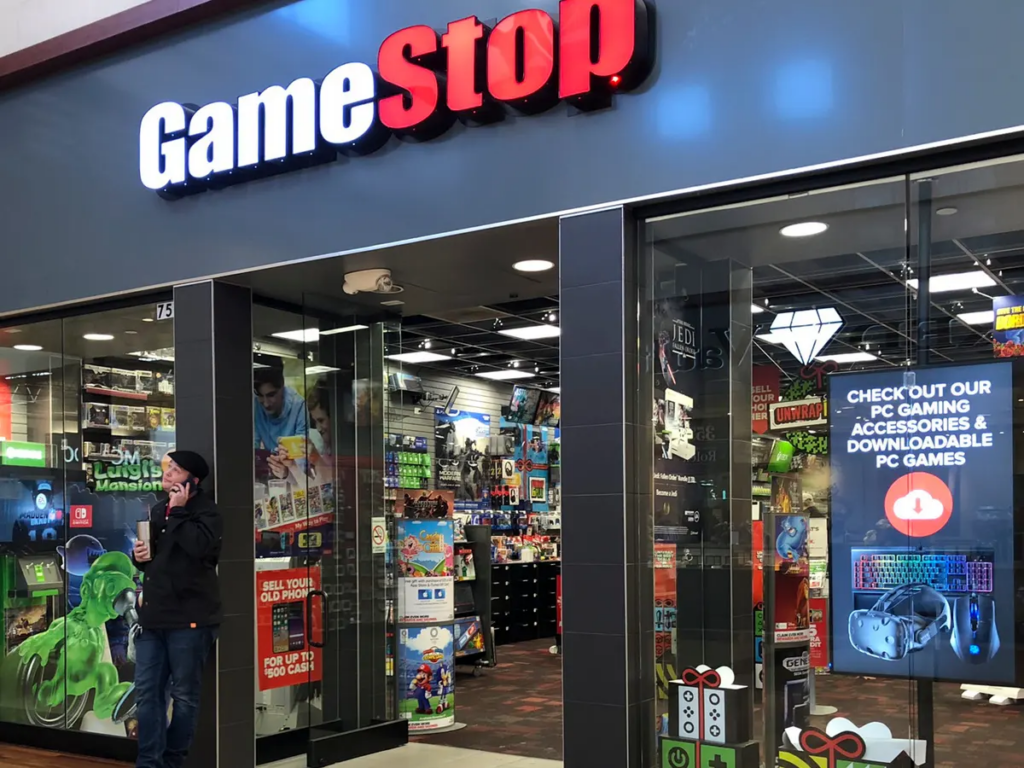
GameStop’s decision to invest in bitcoin has sparked renewed interest in the company, leading to an 11.6% surge in its shares to $28.36. The move comes as GameStop’s core brick-and-mortar business faces challenges in attracting customers, but its crypto pivot has brought retail investors back to the stock, once a meme stock favorite.

GameStop’s Bitcoin Investment Strategy

GameStop revealed its new investment strategy on Tuesday, declaring that it would hoard bitcoin as part of its treasury reserve assets. This aligns with the strategy of other companies, such as exchange operator Strategy, which holds a substantial amount of bitcoin. The announcement coincided with increased attention on digital assets, particularly cryptocurrencies, fueled by U.S. President Donald Trump’s focus on the sector.

Despite the positive reaction from retail investors, GameStop’s announcement of a $1.3 billion offering of five-year convertible notes to fund the bitcoin purchase led to a 5.5% drop in its stock during after-hours trading.

Analysts Weigh in on Bitcoin’s Impact

Analysts are skeptical about the long-term impact of the bitcoin investment on GameStop’s share price. Wedbush’s Michael Pachter argued that while the move appeals to retail investors who want GameStop to invest in cryptocurrencies, it is unlikely to drive a substantial increase in the company’s stock value. He pointed out that while companies like Strategy have seen their stock value closely align with their bitcoin holdings, GameStop trades at a higher multiple relative to its cash reserves, which raises questions about the sustainability of this approach.

Despite the volatility of bitcoin, which has seen its price fall from a six-figure high earlier this year, GameStop’s decision to invest in digital assets could lead to increased market fluctuations, according to analysts like Daniela Hathorn from Capital.com.

The Bigger Picture

GameStop’s recent moves, including aggressive cost-cutting measures and store closures, helped the company more than double its net income in the last quarter, although sales dropped by about 30%. These efforts have provided some financial stability for the company, but it remains to be seen whether its pivot to digital currencies will provide sustained growth.
Ripple Labs Settles with SEC, Pays Reduced $50 Million Fine

Ripple Labs has reached a settlement with the U.S. Securities and Exchange Commission (SEC) regarding a civil lawsuit over the sale of unregistered securities. The settlement stipulates that Ripple will pay $50 million of the previously imposed $125 million fine, marking a significant resolution in one of the SEC’s most high-profile cryptocurrency cases. The settlement signals a potential shift in the SEC’s approach to regulating the cryptocurrency industry.

Settlement Details and Legal Outcomes

Ripple’s Chief Legal Officer, Stuart Alderoty, confirmed the settlement in a post on X, stating that the SEC will retain $50 million of the $125 million fine imposed by U.S. District Judge Analisa Torres in August. This amount will be held in escrow, accruing interest. The settlement is contingent on approval by both the SEC and Judge Torres. Ripple emphasized that the settlement does not involve an admission of wrongdoing on the company’s part.

The SEC declined to provide any comment on the settlement.

Implications for Ripple and the Cryptocurrency Industry

This settlement follows the SEC’s decision to drop its appeal of Judge Torres’ ruling from July 2023, which determined that XRP, the token sold by Ripple on public exchanges, does not meet the legal definition of a security. However, Ripple had initially appealed another part of Torres’ decision, which ruled that $728 million worth of XRP sales to institutional investors should have complied with securities laws. Alderoty announced that Ripple will now cease this appeal.

XRP remains the fourth-largest cryptocurrency by market value, trailing behind Bitcoin, Ethereum, and Tether.

Broader Regulatory Context

The settlement comes amid broader regulatory shifts in the U.S. cryptocurrency industry, especially since the return of President Donald Trump to the White House. The SEC has closed civil lawsuits against major crypto exchanges, including Coinbase and Kraken, and has signaled that it may resolve a civil fraud case against Chinese entrepreneur Justin Sun, who is also an adviser to a Trump-backed crypto project.

Furthermore, President Trump nominated Paul Atkins, a Washington lawyer with a history of supporting the crypto industry, to head the SEC. Atkins’ confirmation hearing before the U.S. Senate is scheduled for Thursday, potentially influencing the future regulatory landscape for cryptocurrencies.

Conclusion

Ripple’s settlement with the SEC and the reduced fine marks a significant moment in the ongoing regulatory scrutiny of the cryptocurrency market. The case has set a precedent for how the SEC may handle future disputes with crypto firms. As the SEC shifts its stance, the regulatory environment for the cryptocurrency industry may see further changes in the near future.

GameStop Doubles Down on Bitcoin as a Treasury Reserve Asset and Plans More Store Closures

GameStop (GME.N) announced on Tuesday that its board has approved the addition of bitcoin as a treasury reserve asset, a move that mirrors the strategy of corporate bitcoin giant MicroStrategy (MSTR.O). The decision highlights GameStop’s shift toward embracing cryptocurrency as a core component of its business operations.

GameStop’s Strategic Shift Toward Bitcoin

The move to add bitcoin to its treasury comes shortly after a similar rebranding by MicroStrategy, which removed “Micro” from its name in February to emphasize its focus on the cryptocurrency. MicroStrategy, known for being the largest corporate holder of bitcoin, has integrated the cryptocurrency into the heart of its operations.

GameStop has stated that it will use a portion of its cash, future debt, or equity issuances to invest in bitcoin, though it did not specify the maximum amount it plans to acquire. This strategic shift follows a broader push to diversify the company’s financial strategies in the face of continued challenges in its core retail business.

Performance and Challenges in Retail Business

Despite the addition of bitcoin to its reserves, GameStop continues to face difficulties in its primary business of retailing videogame hardware and merchandise. The company reported a significant rise in fourth-quarter profit, which more than doubled to $131.3 million from $63.1 million the previous year, largely due to cost-cutting efforts. GameStop also posted quarterly revenue of $1.28 billion, down from $1.79 billion in the same period last year.

The company, which became a focal point during the “meme stock” trading craze, has struggled with the shift toward digital downloads, game streaming, and e-commerce, contributing to a decline in physical retail sales.

Future Outlook and Store Closures

In response to these challenges, GameStop has aggressively reduced its retail footprint, closing 590 stores in the U.S. in fiscal 2024. The company expects to close a “significant number” of additional stores in fiscal 2025 as part of its ongoing efforts to streamline operations and adapt to the changing gaming landscape.

Broader Cryptocurrency Adoption and Strategic Moves

GameStop’s decision to invest in bitcoin aligns with broader trends of increasing institutional adoption of cryptocurrencies. This move follows U.S. President Donald Trump’s recent executive order to establish a strategic reserve of cryptocurrencies, further reflecting growing interest in digital assets.