Yazılar

Brazil’s WEG invests $77M to expand U.S. transformer plant amid AI-driven demand

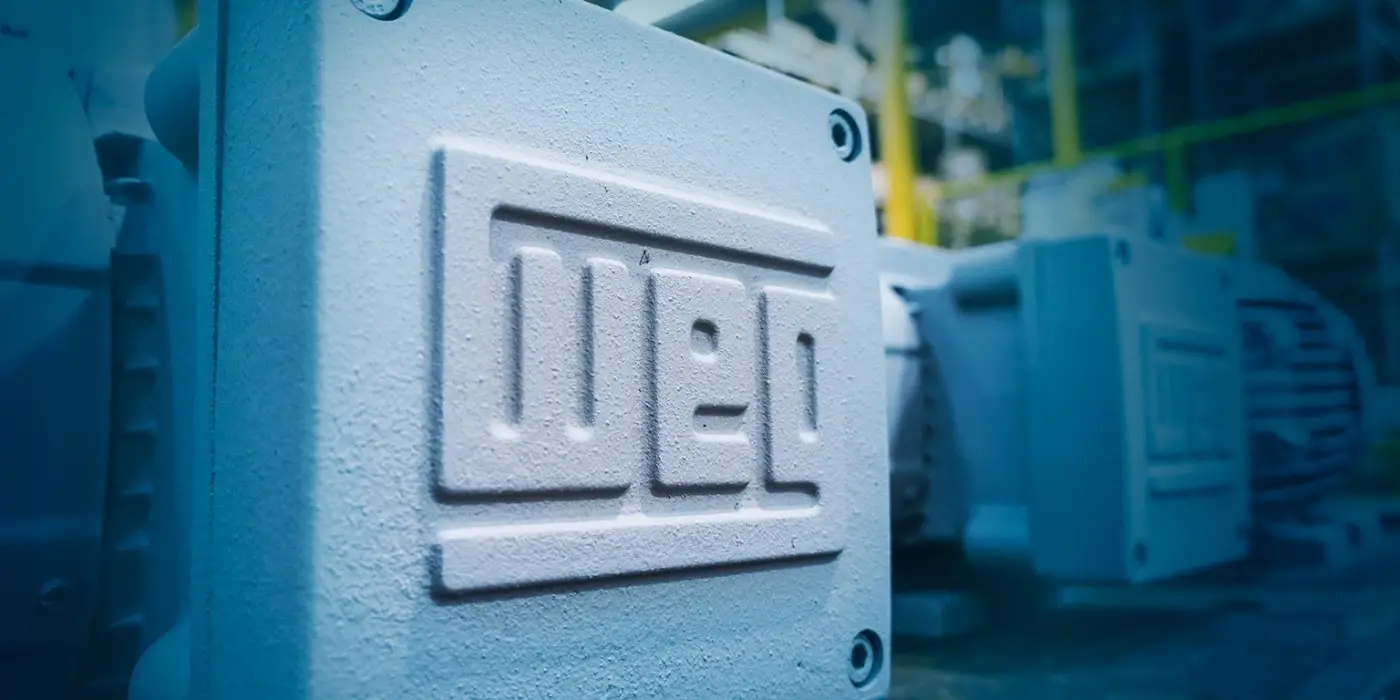
Brazilian motor manufacturer WEG announced Tuesday it will invest $77 million to expand its Washington, Missouri specialty transformer plant, aiming to increase production capacity by 50% as demand surges from AI data centers, industrial manufacturing, and U.S. grid stability needs.

The investment, to be deployed over three years, will bring the additional capacity online no later than 2028, WEG U.S. managing director Peter Barry told Reuters. While the facility previously focused on renewable energy applications like wind power, Barry said the shift toward AI and data center infrastructure is now driving growth.

Despite President Donald Trump’s 50% tariff on Brazilian imports, Barry said the company’s decision was unaffected, citing strong and sustained growth in the North American market. “The North American growth for WEG over the last number of years has been very strong, and I would see that continuing,” he noted.

Key points from the plan:

  • Capacity expansion will be pre-sold, reflecting strong forward demand.

  • Investment will emphasize automation, though around 50 new jobs will still be created.

  • WEG remains open to additional U.S. investments as the AI and energy markets evolve, stressing a strategy of flexibility.

The expansion underscores how the AI boom is reshaping industrial supply chains, with transformers becoming critical components for powering vast data centers and stabilizing electricity grids.

Microsoft raises Wisconsin data center investment to $7 billion with new AI hub

Microsoft (MSFT.O) announced Thursday that it will build a second large-scale artificial intelligence data center in Wisconsin, boosting its total investment in the state to more than $7 billion.

The $4 billion facility will be built alongside a $3.3 billion data center in Mount Pleasant, unveiled last year. The first site remains on track to open in 2026, employing about 500 people at its peak. Once the second center is completed, total employment is expected to reach about 800.

Microsoft said the expanded site will ultimately host the world’s most powerful AI supercomputer, linking together hundreds of thousands of Nvidia (NVDA.O) chips.

The Racine County location, between Milwaukee and Chicago, has been a political focal point since former President Donald Trump promoted Foxconn’s plan for a $10 billion factory there—a project later drastically downsized. At the launch of Microsoft’s first data center last year, President Joe Biden pointed to Foxconn’s retreat while emphasizing Microsoft’s long-term commitment.

To support the new project, Microsoft said it will pre-pay for electrical infrastructure to prevent higher utility rates in the region. The company will also deploy a state-of-the-art cooling system that leverages Wisconsin’s cool climate, reducing annual water consumption to that of an average restaurant. Solar power will be built elsewhere in the state to offset the data centers’ electricity use, though Microsoft President Brad Smith acknowledged that new fossil fuel generation, including liquefied natural gas, will also be required.

Smith said while permanent jobs will number in the hundreds, construction will create thousands of positions for skilled workers such as electricians and pipefitters. “All the things that we build need to be operated,” he told Reuters. “It needs to be maintained. These are good jobs.”

U.S. Data Center Construction Hits Record $40 Billion Amid AI Boom

Construction spending on U.S. data centers hit a record $40 billion at a seasonally adjusted annual rate in June, according to a new report from the Bank of America Institute. The surge reflects the massive capital pouring into AI infrastructure by major technology companies.

By the Numbers

The $40 billion figure represents a 30% jump from last year, following an even steeper 50% surge in 2024, based on U.S. Census Bureau data.

Why It Matters

The explosive growth of generative AI and machine learning has triggered an unprecedented demand for computing power. Tech giants including Microsoft, Alphabet, and Amazon are investing billions to expand their hyperscale data centers, enabling them to run AI workloads at scale. This infrastructure boom has also fueled record sales for Nvidia, whose GPUs power much of the AI ecosystem and now account for the bulk of its revenue.

Key Quotes

Hyperscalers are a big part of the increased demand for power, but they’re not the whole picture,” Bank of America Institute economists led by Liz Everett Krisberg noted.
They emphasized that much of the projected growth in U.S. electricity demand through 2030 will also come from EV adoption, industrial reshoring, building electrification, and heating systems — highlighting how AI-driven infrastructure is just one force in a broader energy transformation.