Yazılar

Trump AI Czar Downplays Risk of AI Chip Smuggling, Warns Against Overregulation

David Sacks, the White House AI czar under former President Donald Trump, on Tuesday minimized concerns about American AI chips being smuggled to adversaries, emphasizing the physical size and security of such equipment. Speaking at the AWS summit in Washington, Sacks explained that AI chips are housed in massive server racks weighing two tons, making clandestine smuggling highly unlikely.

Sacks expressed worries that stringent U.S. AI regulations could hinder innovation and growth, potentially ceding the global AI market to China. “We talk about these chips like they could be smuggled in the back of a briefcase. That’s not what they look like,” he said. He criticized efforts by state legislatures to regulate AI and permitting obstacles for data center construction.

Contrasting with President Joe Biden’s policies, which focused on curbing chip exports to China and addressing risks of AI misuse, the Trump administration revoked several Biden-era executive orders aimed at controlling AI diffusion and competition. Sacks argued that the Biden restrictions risk pushing countries like the United Arab Emirates closer to China, citing a recent U.S.-UAE plan to build a major AI campus abroad.

“We rescinded that Biden diffusion rule, which…made diffusion a bad word. Diffusion of our technology should be a good word,” Sacks said.

He warned that if AI chips made by Chinese giant Huawei become widespread globally within five years, it would signify a strategic loss for the U.S. Highlighting the rapid pace of Chinese AI development, Sacks stated, “China is not years and years behind us in AI. Maybe they’re three to six months.” The White House later clarified that Chinese AI chips lag one to two years behind U.S. technology, while their AI models are closer in capability.
UAE to Build World’s Largest AI Campus Outside U.S. Under Landmark Trump-Era Deal

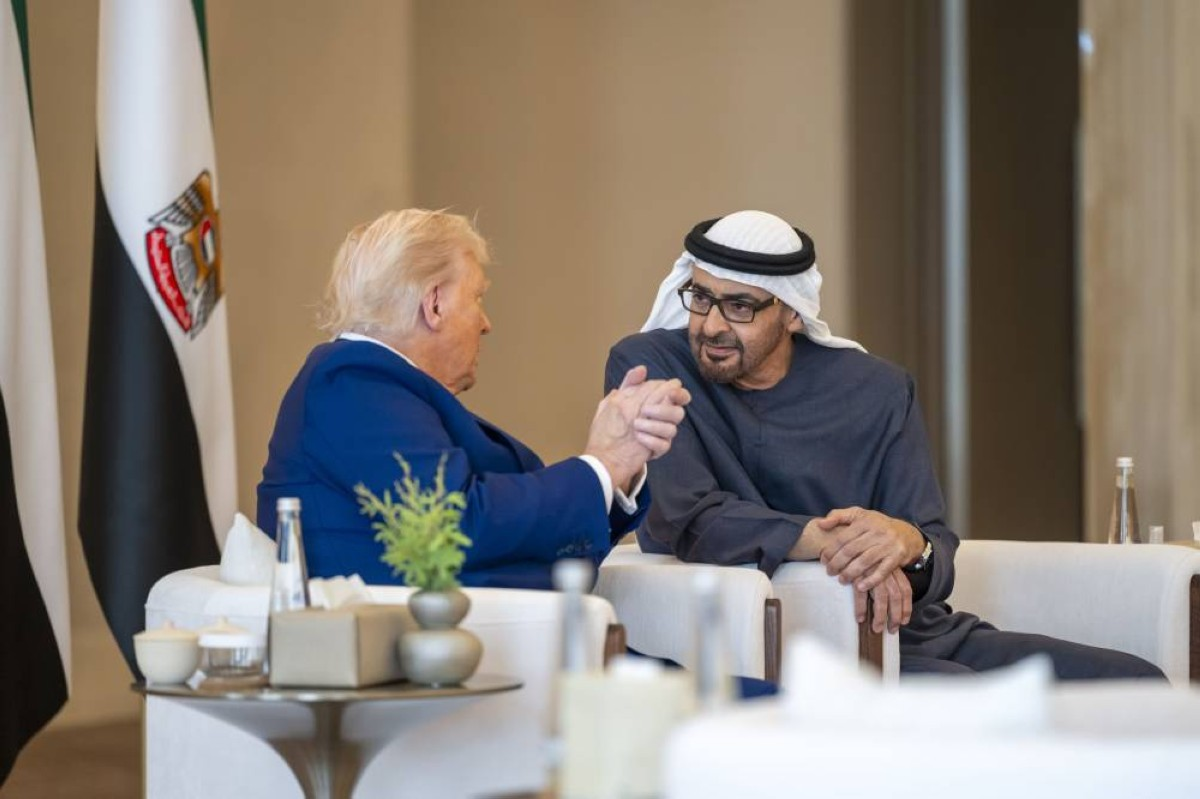
The United Arab Emirates (UAE) and the United States have signed a historic technology agreement to construct the largest artificial intelligence campus outside the U.S., signaling a major policy shift that clears the way for the UAE to access advanced U.S. AI chips, particularly from Nvidia.

Finalized during President Donald Trump’s visit to Abu Dhabi, the deal marks a significant easing of restrictions that previously barred such transfers over U.S. concerns about China’s access to critical technologies.

Key Components of the Agreement:

  • The AI campus, covering 10 square miles (25.9 km²), will be located in Abu Dhabi and have 5 gigawatts of power, enough to support 2.5 million Nvidia B200 chips, per estimates by Rand Corporation analyst Lennart Heim.

  • The facility will be developed by G42, a UAE state-backed firm, but operated and managed by American companies, ensuring compliance with U.S. security protocols.

  • The UAE has committed to build or finance data centers in the U.S. that are at least as powerful as those in the UAE, reinforcing reciprocal investment and security alignment.

Chip Access and U.S. Industry Involvement:

  • Sources say the UAE could be permitted to import up to 500,000 of Nvidia’s most advanced chips annually beginning in 2025.

  • The agreement includes support from U.S. tech giants:

    • Amazon Web Services will collaborate on cybersecurity and cloud adoption.

    • Qualcomm will help establish an AI engineering center in the region.

American companies will operate the data centers and offer American-managed cloud services throughout the region,” said U.S. Secretary of Commerce Howard Lutnick.

Strategic Implications:

The deal represents a recalibration of UAE tech policy, allowing it to:

  • Deepen ties with the U.S. on strategic technologies like compute infrastructure and cloud services

  • Maintain economic ties with China, while minimizing reliance on Chinese hardware in critical infrastructure

It doesn’t mean abandoning China,” said Mohammed Soliman of the Middle East Institute, “but recalibrating tech strategy to align with U.S. standards where it matters most.”

Geopolitical Context:

  • Under Biden, export controls were imposed to prevent chip diversion to China, limiting UAE access.

  • The Trump administration has reversed course, with AI czar David Sacks stating the Biden-era rules were “never intended to capture friends, allies, or strategic partners.”

  • In recent months, G42 and MGX have cut Chinese hardware use and divested from Chinese holdings to meet U.S. compliance conditions.

Still, Huawei and Alibaba Cloud remain active in the UAE, and past AI chip smuggling routes through Singapore, Malaysia, and the UAE have raised flags among U.S. regulators.

This deal marks a strategic turning point not just for U.S.-UAE relations, but for the global AI infrastructure race, cementing the UAE’s ambition to become a top-tier AI superpowerwith Washington’s blessing.

Coinbase Urges US Regulators to Clear Path for Banks to Offer Crypto Services

On Tuesday, Coinbase Global renewed its call for U.S. banking regulators to clarify or revise their stance on banks providing cryptocurrency services and forming partnerships with digital asset companies. The move comes amid a broader push by the crypto industry to lobby lawmakers for a regulatory framework that could foster the sector’s growth. Most traditional U.S. banks have been hesitant to engage with digital asset firms, citing the lack of regulatory clarity.

Coinbase’s Chief Policy Officer, Faryar Shirzad, expressed frustration on social media, claiming that U.S. bank regulators have “unilaterally and undemocratically” prohibited banks from offering crypto services. This marks the latest in a series of efforts by the crypto industry to press for more favorable regulations.

The crypto sector has been actively working to influence political outcomes, having donated millions of dollars to support Donald Trump’s bid for the White House, hoping to prioritize cryptocurrency regulation under a potential new administration. Shirzad also reached out directly to top U.S. banking regulators, including the Office of the Comptroller of the Currency (OCC), the Federal Reserve, and the Federal Deposit Insurance Corporation (FDIC), urging them to allow banks to engage with crypto businesses. However, the OCC declined to comment, and the Fed and FDIC did not immediately respond to inquiries.

The crypto industry has often accused U.S. regulators of deliberately hindering their access to the traditional financial system. While regulators have denied these accusations, the recent move by the U.S. Securities and Exchange Commission (SEC) to create a task force focused on developing a regulatory framework for crypto assets signals a potential shift in policy.

Former PayPal executive David Sacks has also been appointed as Trump’s “White House A.I. & Crypto Czar,” further suggesting that digital assets may receive more attention from the government if Trump is reelected. Despite these political shifts, U.S. banks have remained cautious about adopting cryptocurrencies in their services.