Yazılar

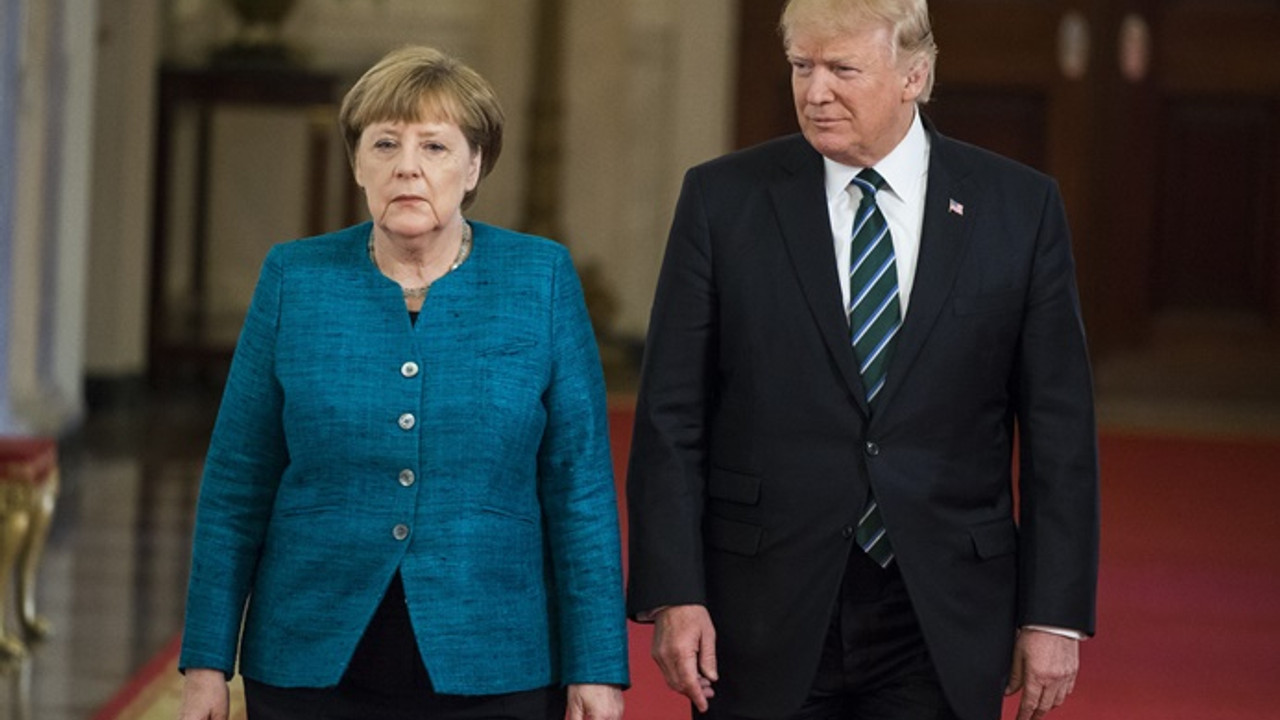
Merkel Raises Concerns Over Musk’s Influence on Trump and Global Politics

Merkel Criticizes Big Business Influence

Former German Chancellor Angela Merkel has expressed alarm over the growing influence of tech magnates like Elon Musk on politics, particularly regarding former U.S. President Donald Trump. In an interview with Der Spiegel, published ahead of her memoir’s release, Merkel highlighted the challenges posed when corporate power overshadows democratic governance.

“If the ultimate recourse of politics is influenced too strongly by companies—through capital or technological capabilities—it poses an unprecedented challenge for all of us,” Merkel stated, emphasizing the importance of balancing the interests of ordinary citizens against those of powerful corporations.


Concerns Over Musk’s Expanding Role

Merkel singled out Musk, CEO of Tesla and SpaceX, as a concerning example. Musk was reportedly tapped by Trump to co-lead a newly envisioned Department of Government Efficiency, which the former president-elect had indicated would operate outside traditional government frameworks.

Merkel pointed to Musk’s vast control over global satellite networks. “If someone like him owns 60% of all satellites orbiting in space, then that has to be a huge concern for us,” she said. Musk’s SpaceX, through its Starlink satellite internet network, operates over 6,000 satellites used worldwide by governments, corporations, and consumers.


Reflections on Multilateralism and Trump

In her forthcoming memoir, Freedom: Memories 1954-2021, Merkel shares insights into her experiences with global leaders, including Trump and Russian President Vladimir Putin. Speaking to Der Spiegel, she lamented Trump’s approach to international relations, noting that his worldview, rooted in a “winner-takes-all” mentality, undermined multilateral cooperation.

“Trump’s re-election filled me with sadness,” Merkel admitted, underscoring the difficulties of maintaining collaborative global efforts in the face of such divisive politics.


Memoir Release and Legacy Concerns

Merkel’s memoir, set to be released on November 26 in over 30 countries, has garnered significant attention. She will launch the book in the U.S. alongside former President Barack Obama in December. The release comes at a time when Merkel’s 16-year tenure is under scrutiny, as Germany faces economic challenges and growing political and international crises.

The memoir promises a candid look at Merkel’s leadership during pivotal global events and offers a reflection on the delicate balance of power between governments, corporations, and individuals.

Bitcoin Surges to Record High of $97,903 Amid Investor Optimism

Key Highlights

  • Bitcoin achieved a new all-time high of $97,903, marking a significant milestone as it surged past the $95,000 threshold.
  • Market sentiment is buoyed by speculation that a potential second term for Donald Trump could create a favorable environment for cryptocurrencies.
  • The flagship cryptocurrency has gained over 127% in 2024, fueled by institutional adoption, regulatory shifts, and macroeconomic factors.

Market Performance

  • Current Price: Bitcoin was trading at $97,646.68, up more than 3% according to Coin Metrics.
  • Supporting Stocks: Shares of MicroStrategy, a notable Bitcoin proxy, climbed 3% in extended trading, while mining stocks such as Mara Holdings rose 4%.
  • Year-to-Date Gains: Bitcoin’s value has more than doubled since the start of the year, positioning it to potentially breach the $100,000 mark by year-end.

Drivers Behind the Surge

  1. Regulatory Optimism:
    • Speculation about supportive cryptocurrency regulations under another Trump presidency has energized the market.
    • Expectations include potential federal initiatives such as a national Bitcoin reserve, which would signal heightened adoption at the governmental level.
  2. Macroeconomic Conditions:
    • Analysts link Bitcoin’s rise to forecasts of larger U.S. budget deficits and inflation, alongside potential shifts in the international role of the U.S. dollar.
    • Such factors enhance Bitcoin’s appeal as a hedge against economic uncertainty and currency devaluation.
  3. Institutional and Retail Momentum:
    • Increased institutional participation, alongside growing retail adoption, has bolstered liquidity and confidence in the cryptocurrency market.
    • According to Sam Callahan of Swan Bitcoin, a combination of improved liquidity and reduced regulatory headwinds is driving the bullish sentiment.

Future Projections

  • Bitcoin is widely expected to cross the $100,000 milestone before the end of 2024, with some analysts predicting a potential doubling of its value by the close of 2025.
  • The cryptocurrency’s trajectory underscores its evolving role as a store of value and a key component in diversified portfolios.

US Finalizes $6.6 Billion Chips Subsidy for TSMC Ahead of Trump’s Presidency

The U.S. Commerce Department announced on Friday the completion of a $6.6 billion subsidy deal with Taiwan Semiconductor Manufacturing Co. (TSMC) to support semiconductor production in Phoenix, Arizona. The agreement, part of the $52.7 billion Chips and Science Act, marks the program’s first major award since its inception in 2022.

Deal Highlights

  • Expanded Investment: TSMC agreed to increase its total Arizona investment from $40 billion to $65 billion, adding a third fab in Arizona by 2030.
  • Advanced Manufacturing: TSMC will produce 2-nanometer technology chips at its second Arizona fab, set to begin production in 2028. It will also deploy its A16 chip manufacturing technology, one of the world’s most advanced.
  • Financial Structure: In addition to the $6.6 billion subsidy, the agreement includes up to $5 billion in low-cost government loans. Payments will be tied to project milestones, with at least $1 billion expected to be released by year-end 2024.

Commerce Secretary Gina Raimondo highlighted the strategic importance of the deal, emphasizing its role in ensuring the U.S. produces cutting-edge chips domestically. “We had to convince TSMC that they would want to expand,” she said, stressing the economic and national security implications of the agreement.

National Security and Policy Concerns

The announcement comes amid heightened scrutiny of semiconductor technology exports to China. On Saturday, reports emerged that the Commerce Department had instructed TSMC to halt shipments of advanced chips to Chinese customers. Raimondo did not confirm the directive but stated, “Investing in TSMC to expand here is offense—defense is ensuring our most sophisticated technology does not reach adversaries like China.”

The subsidy agreement also requires TSMC to forgo stock buybacks for five years and share excess profits with the U.S. government under an “upside sharing agreement.”

Context and Challenges

The Chips and Science Act was designed to bolster domestic semiconductor production, a critical industry where the U.S. lags behind global leaders. Currently, no leading-edge chips are produced domestically. TSMC CEO C.C. Wei called the deal a key accelerator for advancing U.S. chip manufacturing capabilities.

However, President-elect Donald Trump has criticized the Chips Act, raising questions about the program’s future under his administration. Meanwhile, Commerce has allocated additional funds for other semiconductor projects, including $6.4 billion for Samsung in Texas, $8.5 billion for Intel, and $6.1 billion for Micron Technology. Raimondo aims to finalize these agreements before President Joe Biden leaves office in January.

Geopolitical Implications

The U.S. push for semiconductor independence underscores broader strategic concerns about global supply chains and national security. Raimondo reiterated the importance of balancing offensive and defensive strategies, ensuring subsidies support U.S. technological leadership while preventing advanced technologies from reaching competitors like China.

Outlook

With TSMC’s increased commitment and advanced chip production capabilities, the U.S. aims to regain its footing in the global semiconductor market. However, challenges remain, including Trump’s potential policy changes and the delicate geopolitical balance with China.