Yazılar

Elon Musk Joins Trump’s Call with Ukraine’s Zelenskiy After Election Win, Reports Say

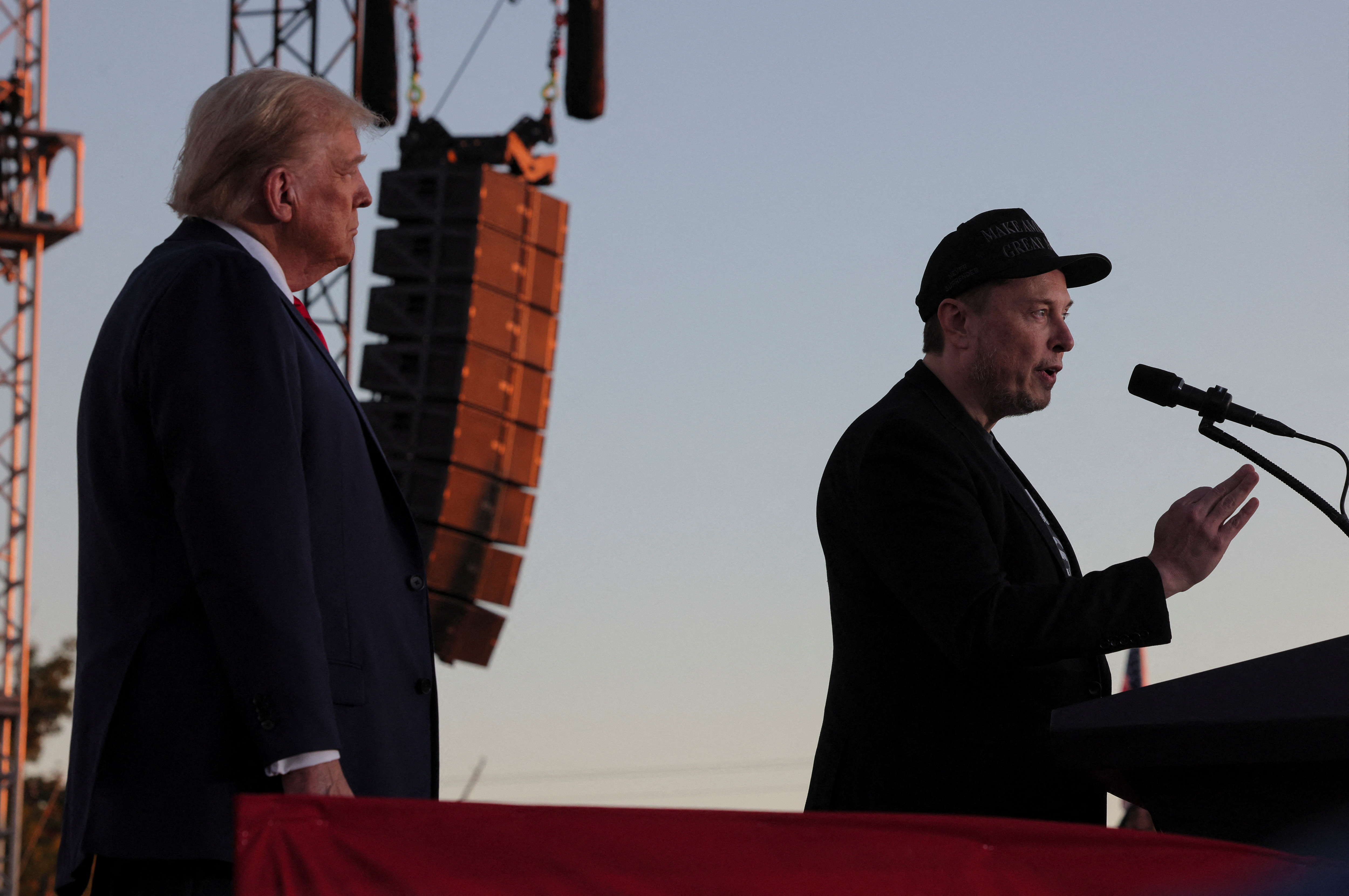
Reports reveal that when Ukrainian President Volodymyr Zelenskiy called Donald Trump to congratulate him on his recent presidential election victory, Tesla and SpaceX CEO Elon Musk joined the conversation. The call, lasting around 25 minutes on Wednesday, featured Trump expressing his support for Ukraine, though without specific details, while Musk committed to continuing Starlink satellite support, a crucial resource for Ukraine’s defense network, according to Axios.

The conversation unfolded as Zelenskiy praised Starlink’s role in maintaining internet services amid the war. Trump, reportedly at Mar-a-Lago with Musk, introduced the tech mogul to Zelenskiy, according to the Washington Post. Musk’s role in providing satellite communication through his SpaceX-owned Starlink has been vital to Ukraine’s defense operations, although Musk’s statements on the conflict have occasionally strained relations with Kyiv.

In response to the call, Zelenskiy emphasized the importance of ongoing U.S. support, sharing on the platform X (formerly Twitter) that he and Trump agreed to continue discussions. “Strong and unwavering U.S. leadership is vital for the world and for a just peace,” he added, underscoring the necessity of American involvement in Ukraine’s battle against Russian aggression.

Reports also highlighted Musk’s financial support of Trump’s campaign and Trump’s indication of offering Musk a role in promoting government efficiency if elected. Musk has not publicly commented on the call, and the Trump campaign refrained from commenting on private discussions.

 

Former Siemens CEO Reflects on Positive Business Ties with Trump, Prepares for Potential Challenges

Joe Kaeser, chairman of the supervisory board of Siemens Energy and former CEO of Siemens, described his experience working with Donald Trump during his first presidential term as notably positive for business. In an interview with CNBC’s Annette Weisbach, Kaeser stated that Trump’s administration was “extremely receptive” to addressing business issues, creating a clear path for corporate interaction.

“If I personally, for my company at the time, had an issue to resolve, his administration was extremely receptive,” Kaeser noted. He highlighted that Trump’s policies, particularly tax cuts, were favorable for the economy. Trump’s first term included a range of tax reforms such as lower federal income tax brackets, increased standard deductions, and modifications to child tax credits, estate tax exemptions, and deductions for pass-through businesses. While some studies indicated that these tax cuts only contributed moderately to U.S. growth, Kaeser viewed the policies as broadly beneficial.

Trump’s second presidency is anticipated to follow a similar economic agenda, with priorities such as potential tariffs on imports and regulatory rollbacks. Analysts speculate that these policies could again have a significant global impact, potentially influencing international trade and markets. Kaeser reflected on Trump’s first term as predictable, describing it as “a relatively easy way of understanding what needs to be done for the companies and the countries.”

Despite the positive experiences from Trump’s first term, Kaeser remains cautious about the next term, noting that the unified Republican control across the White House, Senate, House of Representatives, and Supreme Court could have new and unpredictable effects. “I believe the jury’s out on what that means,” he said.

Kaeser emphasized the need for Germany, Europe, and other nations to be prepared for Trump’s assertive leadership style. “Typically, people like him, who have a very distinct style of leadership and reacting to different news, can only be dealt with from a position of strength,” he said. He suggested that weaker positions could face challenges under Trump’s administration.


Republicans Expand Senate Majority and Move Closer to Controlling House

The Republican Party, led by former President Donald Trump, appears on track to secure control of both the U.S. Senate and House of Representatives next year. On Thursday, multiple media sources projected that Republican candidate Dave McCormick had defeated Democratic Senator Bob Casey in Pennsylvania, bringing the GOP’s Senate seats to 53. With tight races in Arizona and Nevada still undecided, Republicans could expand their Senate majority to as many as 55 seats.

In the House of Representatives, Republicans are also inching closer to maintaining control. They have increased their current majority to 220-212 by adding one more seat, with 25 races remaining uncalled. At present, Republicans hold 211 confirmed seats, needing just seven more to achieve a majority in the 435-seat House. Meanwhile, Democrats would need to secure 19 of the remaining races to retain a slim grip on House power.

The final results for the House may not be known for several days, particularly because 11 of the uncalled races are in California, a state that traditionally takes longer to tally votes.

If Republicans do gain control of both chambers, they would be positioned to advance Trump’s legislative agenda, which includes tax cuts and significant immigration restrictions. However, in the Senate, their majority would still fall short of the 60 votes required to bypass potential filibusters for most legislation, though they would have the numbers to confirm Trump’s judicial and executive branch nominees.

The Senate races in Nevada and Arizona remain crucial. In Nevada, incumbent Democrat Jacky Rosen holds a narrow lead over Republican challenger Sam Brown, with Rosen ahead by less than 1 percentage point and 94% of votes counted. Meanwhile, in Arizona, Democrat Ruben Gallego leads Republican Kari Lake by 1.7 percentage points, with 74% of the votes counted.