
Yazılar

Datadog Shares Surge 23% After Revenue Beat and Strong AI Demand

Datadog shares soared 23% on Thursday, marking the company’s second-best trading day ever, after the cloud software firm posted third-quarter results that exceeded Wall Street expectations and projected robust growth for the final quarter of the year.

The New York-based company reported $885.7 million in Q3 revenue, up 28% year-over-year and well above analyst estimates of $852.8 million, according to LSEG data. For the current quarter, Datadog forecasts between $912 million and $916 million in revenue, surpassing Wall Street’s $887 million projection.

Adjusted earnings reached 55 cents per share, topping FactSet estimates of 45 cents. The company also recorded net income of $33.9 million, or 10 cents per share, compared to $51.7 million, or 14 cents, a year earlier.

CEO Olivier Pomel credited the company’s momentum to continued innovation in artificial intelligence (AI) and cloud security tools. “The Datadog R&D team is innovating rapidly to help our customers solve problems in the AI space,” he said in a statement.

Datadog has rolled out a series of AI-focused products this year, including Bits AI Agents for SRE, which can automatically investigate system alerts and generate response drafts, and expanded features for LLM Observability, designed to monitor large language models. The firm also unveiled its MCP Server, which connects AI agents to enterprise data sources, and TOTO, its proprietary foundation model.

The company said the number of customers generating over $100,000 in annual recurring revenue rose 16% in the quarter, signaling sustained enterprise adoption.

Uber Shares Drop 8% as Legal Costs Undercut Profit and Holiday Outlook Disappoints

Uber’s shares fell 8% on Tuesday after the company reported weaker-than-expected operating profit and issued a cautious outlook for the upcoming holiday quarter. The setback overshadowed otherwise strong growth in both its rides and delivery businesses, which continue to benefit from rising demand and its Uber One membership program.

The ride-hailing giant posted an operating income of $1.11 billion for the third quarter, below analyst expectations of $1.61 billion, according to Visible Alpha. Uber attributed the shortfall to legal and regulatory expenses but did not disclose details. Its guidance for adjusted profit in the fourth quarter — between $2.41 billion and $2.51 billion — also fell short of Wall Street’s projections.

Despite the profit miss, revenue rose 20% year-over-year to $13.47 billion, surpassing analyst estimates of $13.28 billion. Gross bookings climbed to $49.74 billion, beating expectations, driven by a 29% jump in delivery sales and a 20% rise in mobility revenue.

CEO Dara Khosrowshahi said the Uber One program continues to boost customer engagement, noting that users who use both rides and delivery services spend three times more than single-service customers. However, only about 20% of users currently utilize both, leaving significant room for growth.

The earnings disappointment comes despite Uber’s strong year-to-date performance, with its stock up more than 60% before Tuesday’s drop. Investors, however, remain focused on whether the company can sustain profitability while managing mounting legal challenges and regulatory scrutiny.

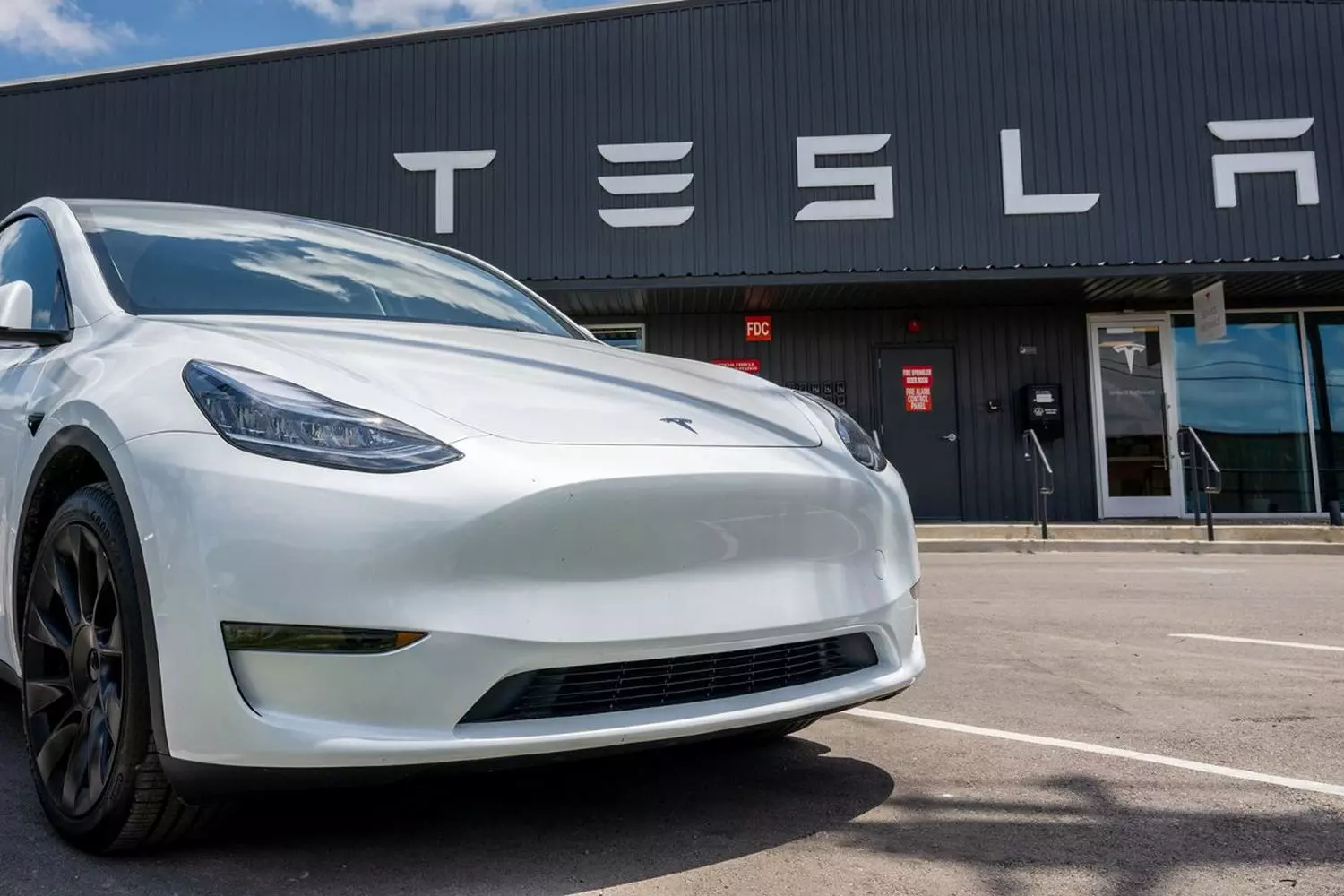
Tesla Profit Misses Expectations Despite Record Sales and Revenue

Tesla posted record third-quarter revenue of $28.1 billion, surpassing analyst estimates of $26.37 billion, but profits fell short due to rising costs, tariffs, and shrinking regulatory credit income. Shares dropped 4% in extended trading as investors reacted to the weaker earnings and fading government incentives that have long supported electric vehicle demand.

Profit per share came in at 50 cents, below the expected 55 cents. The company cited over $400 million in tariff-related costs and a 50% increase in R&D spending, largely tied to AI and robotics projects. Regulatory credit sales fell to $417 million from $739 million a year earlier, signaling continued decline.

Tesla’s gross margin stood at 18%, slightly above estimates, while automotive margins excluding credits reached 15.4%. To sustain demand amid expiring U.S. tax credits, Tesla launched lower-cost “Standard” versions of its Model 3 and Model Y, though analysts warned the move could compress profits further.

Despite the short-term challenges, Tesla remains focused on expansion. CEO Elon Musk said production of the Cybercab robotaxi, Semi truck, and Megapack 3 battery is set for 2026. The company’s energy division grew 81% in storage deployments, and Musk confirmed plans for mass production of the humanoid robot Optimus by late 2026.