Yazılar

IBM’s Cloud Growth Slows Despite Strong AI Mainframe Demand and Solid Q3 Results

IBM reported third-quarter revenue and profit that beat market expectations, but investor optimism dimmed as growth in its key cloud software division slowed. The company’s shares fell 5% in after-hours trading, despite strong results driven by soaring demand for its new AI-powered mainframe systems.

Revenue in the hybrid cloud unit, which includes Red Hat, rose 14% compared to 16% in the previous quarter — a slowdown that raised investor concern about IBM’s ability to fully capitalize on the global cloud boom. Total quarterly revenue reached $16.33 billion, surpassing analyst estimates of $16.09 billion, according to LSEG data.

CEO Arvind Krishna said IBM expects Red Hat’s growth to return to mid-teen levels by 2026. Analysts noted that the deceleration in software sales may disappoint investors, given the segment’s high margins. However, IBM’s infrastructure division, housing its mainframe business, was a standout performer with revenue up 17% to $3.56 billion.

The new mainframe, optimized for AI workloads, is being widely adopted in the financial sector due to its data security and encryption strengths. IBM’s total AI-related business has grown to $9.5 billion, up $2 billion from the previous quarter. The company raised its full-year outlook, now expecting revenue growth above 5% at constant currency.

Netflix Shares Fall 5.6% After Brazilian Tax Dispute Hits Quarterly Earnings

Netflix (NFLX.O) shares dropped 5.6% in after-hours trading on Tuesday after the streaming giant missed Wall Street’s third-quarter profit estimates due to an unexpected $619 million tax expense in Brazil. Despite record ad sales and a promising year-end outlook, the extra charge dragged down earnings and overshadowed otherwise steady revenue growth.

For the quarter ending in September, Netflix reported net income of $2.5 billion, or $5.87 per share, missing analyst forecasts of $3 billion and $6.97 per share, according to LSEG data. Revenue met expectations at $11.5 billion, while operating margin reached 28% — a figure that would have exceeded 31.5% without the one-off tax payment.

The setback comes as Netflix pursues growth beyond streaming through advertising and video games, competing with YouTube, Amazon Prime Video, and Disney+. Analysts said the tax issue weighed on investor sentiment, though the company’s fundamentals remain strong. “All things considered, this was another robust quarter, despite a blip due to an unforeseen expense,” said PP Foresight analyst Paolo Pescatore.

For the fourth quarter, Netflix projected revenue of $11.96 billion, slightly above Wall Street’s $11.90 billion forecast, and earnings per share of $5.45, one cent ahead of estimates.

Executives also addressed ongoing industry consolidation, saying Netflix would remain selective. Co-CEO Ted Sarandos said the company has “no interest in owning legacy media networks” but may consider acquiring intellectual property. Co-CEO Greg Peters added that competitors’ mergers would not affect Netflix’s competitive position.

The company said it delivered its strongest ad-sales quarter to date, though it did not disclose figures. Analysts believe subscription fees will continue to drive the bulk of Netflix’s growth. “Sustained revenue growth will predominantly come from subscriptions,” said eMarketer’s Ross Benes.

Netflix will end 2025 with a packed lineup, including the final season of “Stranger Things” and two live NFL games on Christmas Day. “We’re finishing the year with good momentum and an exciting Q4 slate,” the company said in its shareholder letter.

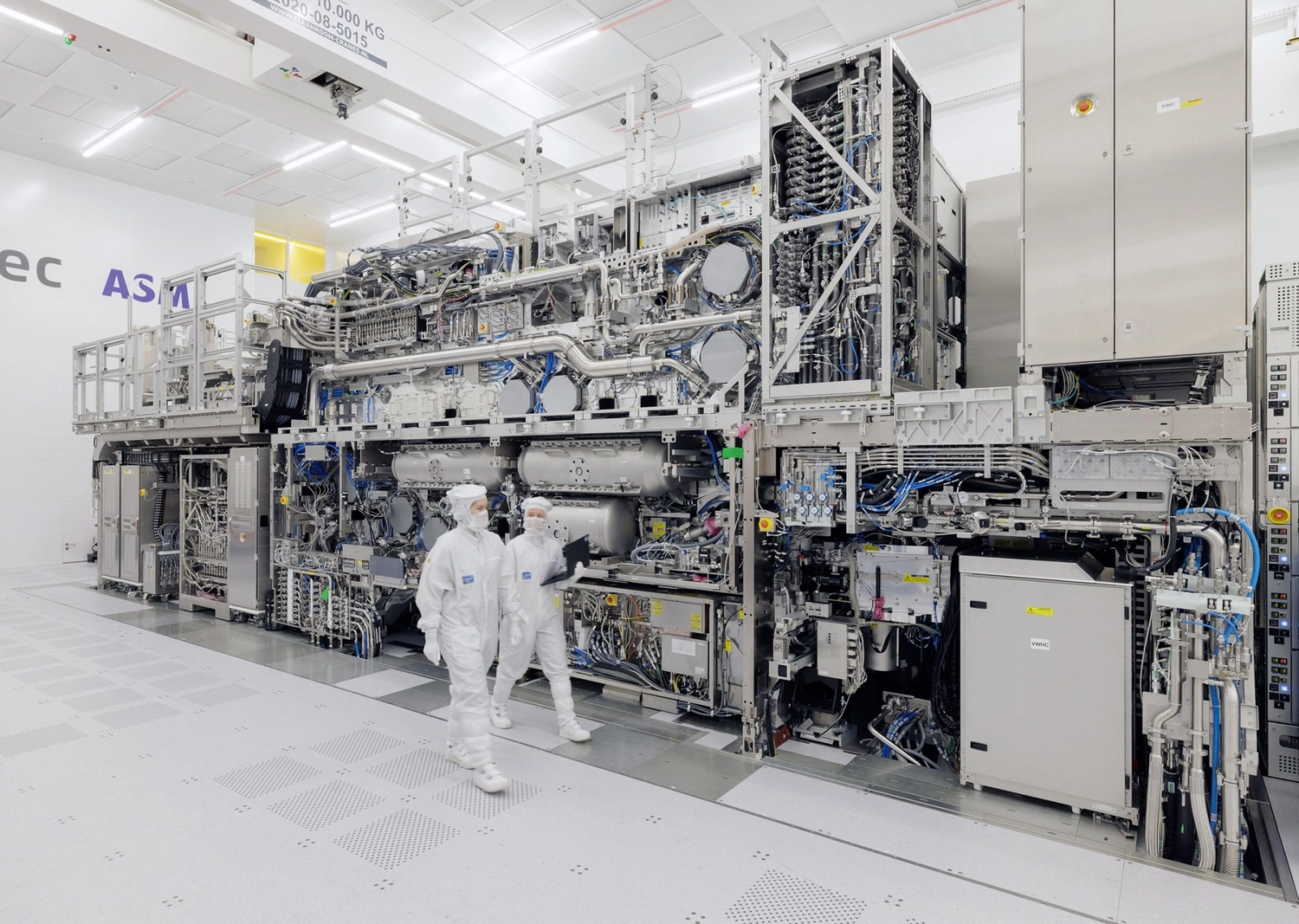
ASML poised to benefit from AI megadeals and chip expansion wave

Dutch chipmaking equipment giant ASML is expected to benefit from a surge in AI-related megadeals between major technology firms and semiconductor manufacturers, with investors anticipating a strong outlook when it reports third-quarter earnings on Wednesday.

Analysts believe ASML’s top customers — including TSMC, SK Hynix, and Samsung — are preparing to ramp up production capacity through 2026 and beyond, driven by a global race to expand AI data centres. These expectations have already boosted ASML’s stock by 32% since early September, outpacing the Philadelphia Semiconductor Index, which rose 15% in the same period.

Forecasts compiled by Visible Alpha suggest new bookings — a key industry indicator — will total 5.36 billion euros ($6.21 billion) for the quarter, following 9.48 billion euros in the first half of the year. Meanwhile, net income is projected to rise 1.4% year-on-year to 2.11 billion euros, according to LSEG IBES data.

Recent multi-billion-dollar deals between NVIDIA, AMD, Intel, Samsung, Meta, and Oracle are fuelling optimism for ASML, whose machines — costing more than $300 million each — are essential for producing advanced chip circuitry.

However, analysts note that building fabrication plants can take several years. They want to hear whether ASML’s clients can accelerate these expansion plans amid rising demand. “Every memory chipmaker is likely to increase production capacity for AI,” said Michael Roeg of Degroof Petercam, citing Micron, SK Hynix, Samsung, and Chinese competitors.