Yazılar

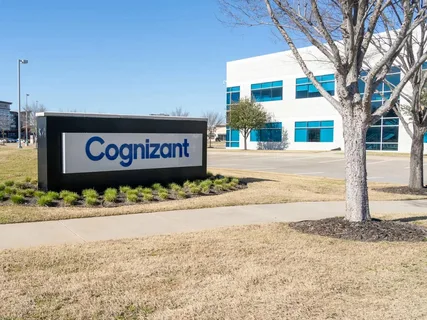
Cognizant Predicts Lower 2025 Revenue as IT Spending Tightens

Cognizant Technology Solutions (CTSH.O) revised its 2025 revenue forecast downwards on Wednesday, citing the impact of ongoing uncertainty about future interest rate cuts, which is prompting businesses to reduce their spending on IT services and consultancy. The company warned that while demand for AI-related investments remains strong, persistent high capital costs are leading enterprises to reconsider their IT spending strategies.

Despite the cautious outlook for the upcoming year, Cognizant saw a positive fourth quarter, driven by a surge in demand from the financial services sector. The company secured more large deals compared to the previous year, helping its quarterly revenue exceed Wall Street’s expectations.

Jatin Dalal, Cognizant’s finance chief, noted a strong pipeline of transformation and modernization projects, particularly within North America’s insurance sector and select areas of banking and financial services. This helped the company achieve fourth-quarter revenue of $5.08 billion, surpassing analysts’ projections of $5.07 billion. Additionally, Cognizant’s adjusted earnings for the quarter came in at $1.21 per share, beating analysts’ average estimate of $1.12.

For the first quarter of 2025, Cognizant forecasts revenue to range between $5 billion and $5.1 billion, slightly above analysts’ expectations of $5.06 billion. However, the company expects its 2025 annual revenue to be between $20.30 billion and $20.80 billion, which is lower than the $20.89 billion forecasted by analysts. The projected adjusted earnings per share for 2025 are expected to fall between $4.90 and $5.06, with the midpoint of $4.98 per share, in line with analysts’ estimates of $4.99.


Emerson Reports Strong First-Quarter Profit Amid Increased Demand for Industrial Components

Emerson (EMR.N), an engineering solutions provider, reported better-than-expected first-quarter profits on Wednesday, driven by robust demand for its valves and regulators in the industrial components sector. This surge in demand is attributed to increased energy and power investments by businesses.

Sales in Emerson’s final control unit, which manufactures valves, regulators, and actuators, saw a 4% rise, reaching $976 million in the reported quarter. On an adjusted basis, Emerson earned $1.38 per share for the quarter ending December 31, surpassing analysts’ estimates of $1.28 per share, according to data from LSEG.

CEO Lal Karsanbhai expressed confidence in the company’s future, noting that the resilient demand in process and hybrid markets, along with a projected recovery in the second half of the year, will continue to drive sales and earnings. Emerson reaffirmed its forecast for 2025 per-share adjusted profit to be in the range of $5.85 to $6.05.

However, the company’s total quarterly revenue rose just 1% to $4.18 billion, slightly missing analysts’ average estimate of $4.23 billion, due to a slowdown in demand for its automation technology.


AMD Shares Drop 8% Amid Disappointing AI Chip Revenue and Pressure from Nvidia

Advanced Micro Devices (AMD) saw its stock plunge by 8% on Wednesday after the company’s AI chip revenue fell short of analysts’ expectations, highlighting its struggle to capture market share from the dominant player, Nvidia. AMD’s fourth-quarter data center revenue, which reflects demand for its AI processors, increased by 69% to $3.9 billion. However, this figure missed the consensus estimate of $4.15 billion.

Despite AMD’s success in gaining ground in the central processing unit (CPU) market, the company continues to lag far behind Nvidia in the graphics processing unit (GPU) sector. According to technology analyst Ben Barringer, while AMD is taking market share from Intel in CPUs, it faces significant challenges in disrupting Nvidia’s established position in the GPU market.

The disappointing results led to a $15 billion loss in AMD’s stock market value, further compounded by an 18% decline in shares last year. While AMD’s stock had surged more than 100% in 2023 amid hopes for its AI-optimized GPUs, Nvidia’s stock has skyrocketed by 171% in 2024. The growing trend of tech giants, including Microsoft and Meta, developing in-house chips to reduce costs may also diminish demand for AMD’s processors.

As Nvidia continues to outperform and custom chips gain popularity, BofA analysts noted that AMD could struggle to make significant inroads in the AI chip market. Additionally, the launch of DeepSeek, a low-cost AI model by Chinese firm DeepSeek, has made investors more cautious about heavy spending on AI chips, further undermining confidence in AMD’s prospects.

At least 22 analysts have lowered their price targets for AMD, with the median target now set at $150, down from $166.5 before the results.