Yazılar

SpaceX Buys EchoStar Spectrum in $17 Billion Deal to Expand Starlink’s 5G Reach

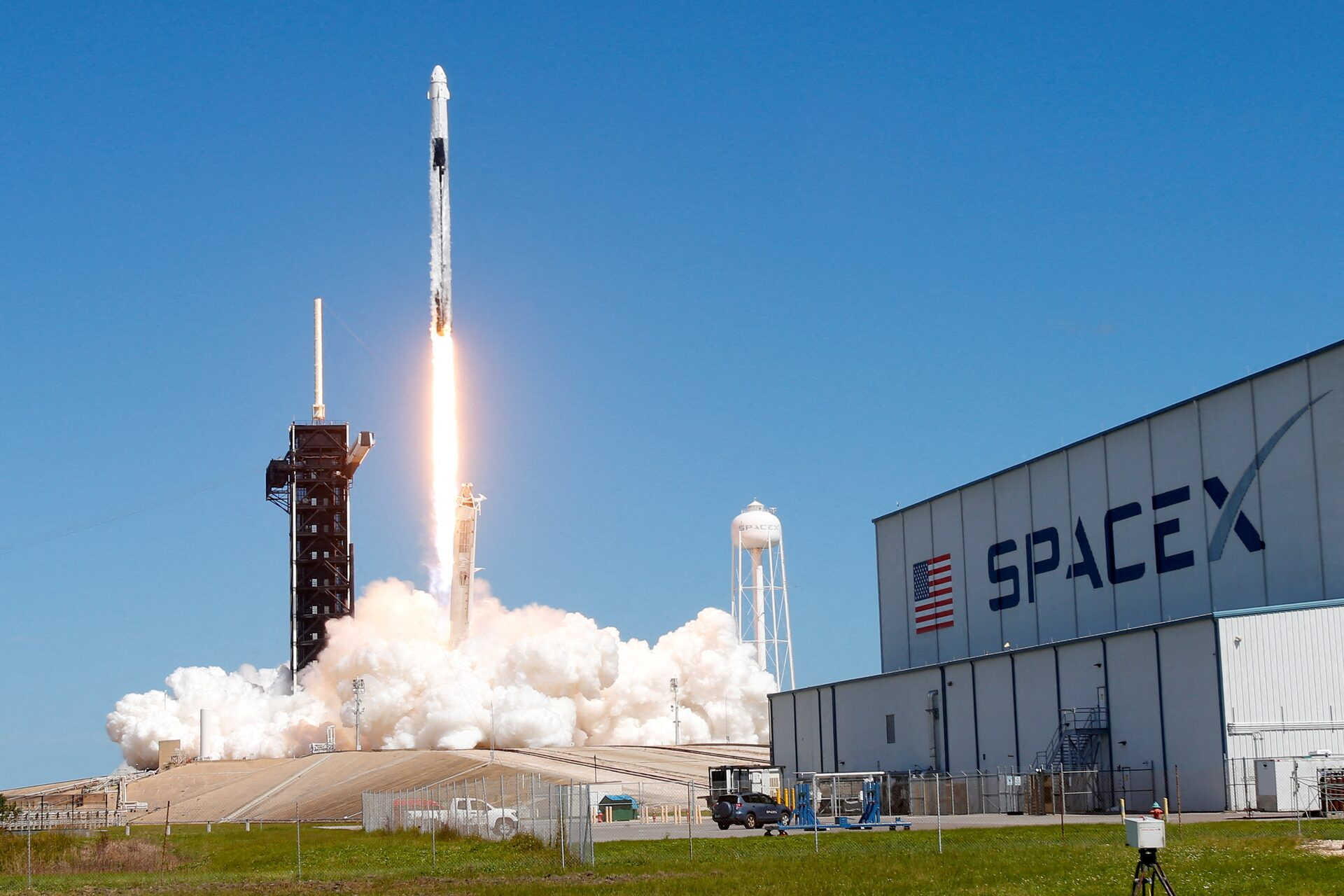
SpaceX announced Monday that it will purchase wireless spectrum licenses from EchoStar for about $17 billion, a move designed to accelerate Starlink’s expansion into the 5G mobile connectivity business. The deal also allows EchoStar’s Boost Mobile subscribers to access Starlink’s direct-to-cell satellite service, extending coverage to underserved regions.

The acquisition gives SpaceX exclusive rights to critical mid-band spectrum, enabling it to build upgraded, laser-linked Starlink satellites that could expand network capacity by over 100 times. “With exclusive spectrum, SpaceX will develop next-generation Starlink Direct to Cell satellites… to end mobile dead zones around the world,” said SpaceX President Gwynne Shotwell.

The deal boosted EchoStar’s shares by 19%, while U.S. carriers AT&T, T-Mobile and Verizon fell 2–3% amid investor concerns over heightened competition. Americans’ mobile data usage surged 35% in 2024 to a record 132 trillion MB, underscoring the need for expanded capacity.

Since 2020, SpaceX has launched more than 8,000 Starlink satellites, with about 600 “cell towers in space” deployed in 2024 alone for direct-to-cell services. Its giant Starship rocket, now in advanced testing, will play a key role in launching the next generation of larger satellites, with operational missions expected in 2026.

The FCC, which had questioned EchoStar’s spectrum obligations, welcomed the SpaceX deal, calling it an opportunity to “supercharge competition” and extend connectivity. EchoStar recently sold $23 billion in spectrum licenses to AT&T, and the SpaceX transaction is expected to resolve regulatory inquiries.

The purchase structure includes $8.5 billion in cash, $8.5 billion in SpaceX stock, and $2 billion in debt interest coverage. EchoStar will continue to operate its Dish TV, Sling, Hughes internet service and Boost Mobile brands.

The deal marks a major win for Elon Musk’s push to control spectrum for Starlink, shifting from leasing agreements with carriers like T-Mobile to operating on frequencies SpaceX owns outright.

Tesla’s U.S. EV Market Share Falls Below 40% for First Time Since 2017

Tesla’s U.S. market share dropped to 38% in August, its lowest level since 2017, as rivals gained ground with aggressive incentives and fresh EV lineups, according to exclusive data from Cox Automotive shared with Reuters. The milestone marks the first time Tesla has fallen below the 40% threshold since it was ramping production of the Model 3 eight years ago.

Tesla once commanded more than 80% of the U.S. EV market, but legacy automakers like Hyundai, Kia, Toyota, Honda, and Volkswagen are surging with competitive offerings, boosted by discounts, lease deals, and federal tax credit urgency. In July, rival EV sales climbed between 60% and 120%, while Volkswagen’s ID.4 deliveries jumped over 450% month-over-month.

By contrast, Tesla’s sales grew just 3.1% in August, well below the market’s 14% growth. Even with sales rising 7% in July, Tesla’s share fell sharply to 42% from 48.7% in June—the steepest drop since 2021.

Analysts warn the decline reflects Tesla’s aging lineup and its pivot away from new mass-market EVs toward robotaxis and humanoid robots. Its last major launch, the Cybertruck (2023), failed to replicate the blockbuster success of the Model 3 or Model Y. A refresh of the Model Y also fell flat with buyers.

Cox’s director of industry insights Stephanie Valdez Streaty put it bluntly: “When you’re a car company, when you don’t have new products, your share will start to decline.”

Tesla’s shrinking share comes as its board is asking investors to approve a $1 trillion pay package for Elon Musk, contingent on Tesla reaching a $8.5 trillion valuation. Meanwhile, Musk’s political entanglements with and later break from Donald Trump have added to brand challenges.

With EV tax credits set to expire at the end of September, Tesla faces a dilemma: cut prices further to chase volume and risk margins, or hold prices and cede market share. Investors and competitors alike will be watching closely as the U.S. EV market enters a decisive phase.

Tesla’s $1 Trillion Musk Pay Package Faces Criticism but Likely to Win Shareholder Backing

Tesla’s board has approved a record-breaking $1 trillion compensation plan for CEO Elon Musk, designed to lock him into the company for the next decade as it pivots toward AI and robotics. Despite the staggering figure, analysts and pay experts say the plan will likely secure shareholder approval at November’s annual meeting, given Musk’s track record and Tesla’s reliance on him.

The package grants Musk 96 million restricted shares worth $31 billion upfront, vesting over two years, plus 12 additional tranches tied to ambitious earnings and market-cap milestones. If all targets are met, Musk’s stake could rise from 13% to 25%, positioning Tesla for a potential $8.5 trillion valuation—larger than Microsoft, Alphabet, and Meta combined today.

Tesla’s board defended the deal, saying Musk is “the only person on the planet” capable of unlocking the company’s potential. Negotiations reportedly involved 37 meetings with lawyers and 10 with Musk, during which Musk insisted on significant control, partial repayment for his voided $56 billion 2018 package, and assurances he wouldn’t be sidelined.

Supporters argue the plan gives Musk incentive to stay and aligns payouts with extraordinary growth. Critics call it excessive corporate governance failure, with unions and pension funds urging rejection. “This is investor money that could go into R&D or acquisitions,” said Kristin Hull of Nia Impact Capital, who signaled a possible shareholder challenge.

Large funds—Vanguard, BlackRock, and State Street—have yet to reveal their votes, though history suggests at least two may back Musk. Meanwhile, Tesla’s stock closed 3.6% higher at $350.84 Friday but remains down 13% in 2025, reflecting weak EV demand and rising competition.

The deal’s sheer scale, combining AI ambition, governance controversy, and Musk’s polarizing persona, ensures it will dominate investor debates well beyond November’s vote.