Yazılar

Ukraine to launch Starlink mobile internet in 2026, becoming Europe’s first

Ukraine is set to become the first European country to offer Starlink mobile services, with telecom operator Kyivstar planning to roll out messaging by the end of 2025 and mobile satellite broadband by mid-2026, Kyivstar CEO Oleksandr Komarov announced.

Under a deal with SpaceX signed in late 2024, field tests have already started for direct-to-cell satellite services, which connect smartphones directly to satellites without relying on traditional cell towers. This technology allows satellite constellations to function like mobile networks from space.

Komarov told Reuters that the initial phase will focus on over-the-top (OTT) messaging platforms such as WhatsApp and Signal, expected to be operational by the end of this year. Full mobile satellite broadband data and voice services are targeted for launch by the second quarter of 2026.

While SpaceX did not comment, the announcement follows a related plan by U.S. carrier T-Mobile, which will offer data services on its Starlink-powered satellite-to-cell network starting October.

Komarov made these remarks ahead of a Ukraine recovery conference hosted by Italy, marking three years since Russia’s invasion. Ukrainian President Volodymyr Zelenskiy is also attending the event. Komarov emphasized his goal to support the Ukrainian government and foster new business relations, including partnerships with Italian firms aiming to invest in Ukraine.

Kyivstar, part of telecom group VEON, is progressing with plans for a U.S. stock market listing on NASDAQ, aiming to complete the direct placement of a Ukrainian entity during wartime by Q3 2025 — a first in history, Komarov noted.

Despite ongoing Russian attacks on Ukraine’s energy infrastructure causing widespread blackouts last year, Komarov said telecom services have become more resilient. Currently, Kyivstar can maintain fixed and mobile services for up to 10 hours even during national blackouts.

Linda Yaccarino resigns as CEO of X amid AI controversies and advertiser backlash

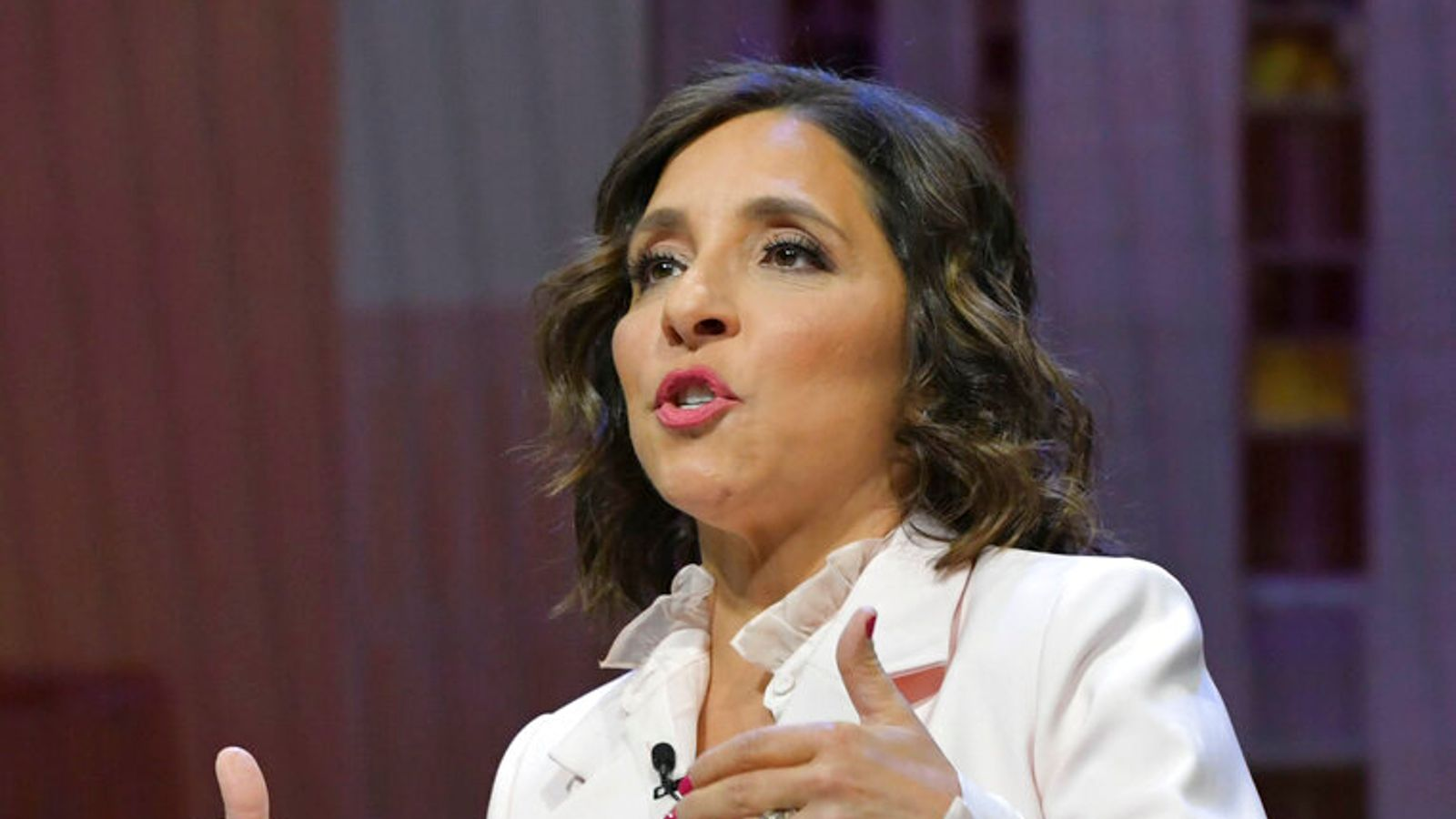
In a surprise move, Linda Yaccarino announced her resignation as CEO of X, the social media platform formerly known as Twitter, just months after the company was absorbed by Elon Musk’s AI startup, xAI. Yaccarino shared the news via a post on X, stating, “I’ve decided to step down as CEO of X,” though no specific reason was provided for her exit.

The abrupt departure deepens the turmoil surrounding Musk’s tech empire, which includes Tesla, SpaceX, and xAI. Musk responded briefly, writing, “Thank you for your contributions,” in a reply to her resignation post. No successor has been named.

Turmoil at the top

Yaccarino, 61, was appointed in 2023 after a high-profile career at NBCUniversal, where she was chair of global advertising and partnerships. Her mission at X was to repair the platform’s relationship with advertisers, many of whom had pulled back due to a surge in extremist and toxic content under Musk’s leadership.

Her resignation follows closely on the heels of a Grok-related controversy, in which xAI’s chatbot posted content containing antisemitic tropes and praise for Adolf Hitler. The posts, which were removed after a wave of criticism, may have heightened internal tensions. Analysts suggest the Grok incident could have been a breaking point, with some citing a clash of leadership styles between Yaccarino and Musk.

“This may have come to a head when the embedded AI chat Grok started responding to AI posts in an increasingly offensive manner,” said Gil Luria, analyst at D.A. Davidson.

Struggles with advertiser trust

While at X, Yaccarino worked to rebuild advertiser confidence, even launching lawsuits against certain advertisers and industry bodies like the World Federation of Advertisers, alleging collusion and boycotts aimed at hurting the platform’s revenue.

Despite the headwinds, some analysts argue that Yaccarino achieved what she was brought in to do. “She accomplished what she was hired to do,” said Jasmine Enberg of Emarketer, pointing to projected ad growth in 2025.

Still, her efforts were under constant strain due to Musk’s provocative statements and unpredictable governance. Yaccarino often found herself putting out fires, navigating PR crises and internal upheaval while attempting to launch new business features, such as:

  • Partnerships with Visa to develop direct payments,

  • A smart TV app for X content,

  • Preliminary discussions around X-branded debit or credit cards, as reported by the Financial Times.

Wider Musk empire faces instability

Yaccarino’s resignation is the latest in a string of executive departures linked to Musk. At Tesla, the CEO’s longtime associate Omead Afshar and North America HR director Jenna Ferrua left last month. Tesla shares dipped 1% following the Yaccarino news.

Musk, who briefly held a government post earlier this year under the Trump administration, is now juggling several companies while facing mounting scrutiny over content moderation, AI safety, and business ethics.

X is also burdened by heavy debt and remains under pressure from both advertisers and regulators over its content policies and AI integrations.

Nordic spaceports poised to boost Europe’s launch autonomy amid US tech dominance

Two remote spaceports in Sweden and Norway are emerging as Europe’s top hopes for reducing dependence on U.S.-based space technology, as the continent struggles to establish sovereign access to orbit amid global tensions and rapid technological shifts.

The Esrange Space Center in northern Sweden and the Andøya Spaceport in northern Norway are racing to become the first mainland European sites to launch satellites into orbit. Their development comes amid fears over potential access limits to SpaceX’s Starlink network, which has proven critical to Ukraine’s war effort — and as European officials worry about geopolitical risks tied to U.S. tech dominance.

“We’ve lost competition to Elon Musk… we need autonomous launch capabilities,” said Andrius Kubilius, European Commissioner for Defence and Space.

Massive launch gap

The urgency is underscored by the scale of the gap: U.S. space launches hit 154 in 2024, while Europe managed just three. Europe accounted for only 10% of global public space investment ($143 billion) last year, according to an EU study.

This disparity is especially critical in the era of low Earth orbit (LEO) satellites, which are cheaper and offer superior connectivity, but must be deployed in massive numbers. Goldman Sachs predicts 70,000 LEO satellites will be launched globally in the next five years.

Europe’s lone spaceport can’t keep pace

Currently, Europe’s only launch facility is in French Guiana, 7,000 km from Paris. It successfully launched the long-delayed Ariane 6 rocket earlier this year — over five years behind schedule. But the Ariane 6 is not reusable, has a higher per-launch cost than SpaceX’s Falcon 9, and lacks capacity for Europe’s growing commercial and defense needs.

Nordic alternatives offer rare geographic advantages

Located above the Arctic Circle, Esrange offers 5,200 km² of uninhabited land, ideal for launch recovery and safety. It’s surrounded by reindeer pastures, mountains, and bogland, and has nearby rail and airport access via Kiruna, a mining town.

Meanwhile, Andøya — an island base partially owned by Norwegian defense contractor Kongsberg — already conducted a successful test flight with German startup ISAR Aerospace. Although the rocket only flew for 30 seconds before splashing into the sea, it was considered a promising start.

ISAR has seen a surge in demand from European defense ministries, which CEO Daniel Metzler links directly to Donald Trump’s re-election bid:

“Trump probably did more for European defence than any European politician… it created a huge sense of urgency.”

ISAR’s first commercial launches are expected in 2025, with Esrange providing additional test capacity for its partially reusable rockets.

Aggressive expansion planned

  • Esrange has partnered with U.S.-based Firefly and South Korea’s Perigee, diversifying its launch options.

  • Firefly offers 24-hour launch readiness for rapid satellite replacement — a capacity NATO officials say Europe must emulate.

A NATO delegation recently visited Andøya, which has already secured a 30-launch-per-year license. Esrange has yet to set a cap but is expected to match or exceed that number in the coming years.

“Europe needs more aggressive timelines,” one anonymous NATO official told Reuters.

Still a long road ahead

Despite progress, major technical and infrastructure work remains before full orbital capability is achieved.

“There’s a lot of testing and trialling to be done,” said Lennart Poromaa, head of Esrange. “Within a year, we’ll probably have the entire base ready.”

Europe’s space race is no longer a science experiment — it’s a geopolitical imperative, with the Arctic launch pads offering one of the continent’s best hopes of securing strategic autonomy in orbit.