Yazılar

Tesla’s Self-Driving Strategy Threatened by Chinese Auto and Tech Giants

Chinese electric vehicle (EV) makers, led by BYD, are increasingly challenging Tesla not only in the affordable EV sector but now also in the race to develop self-driving technology. BYD’s aggressive pricing strategy—offering its advanced “God’s Eye” driver-assistance system for free—poses a direct threat to Tesla’s expensive Full Self-Driving (FSD) package, priced at nearly $9,000 in China.

According to Shenzhen-based BYD investor Taylor Ogan, God’s Eye outperforms Tesla’s FSD. Other Chinese competitors such as Leapmotor and Xpeng are also offering highly capable driver-assistance systems in vehicles costing as little as $20,000. This surge in advanced autonomous technology is heavily backed by the Chinese government, creating fierce competition within the world’s largest auto market.

Teardown analyses reveal that BYD’s assisted-driving hardware costs are similar to Tesla’s, despite BYD’s systems incorporating additional components like radar and lidar that Tesla omits in favor of a camera-only approach. Lower sensor costs in China—up to 40% cheaper than in Europe and the U.S.—helped Chinese firms maintain a cost advantage while delivering more comprehensive systems.

The competitive pressure from China coincides with broader challenges for Tesla CEO Elon Musk, whose global EV sales have been slipping. As Tesla shifts its focus toward robotaxis and autonomy to sustain its market valuation—currently around $1 trillion—the company now faces stiff competition from Chinese firms who are also advancing rapidly in autonomous vehicle development.

Huawei has emerged as a key player by partnering with major Chinese automakers such as Chery, SAIC, and Changan to supply driver-assistance technology. Reuters journalists recently observed Huawei’s Aito M9 autonomous system successfully navigating the congested streets of Shenzhen, showcasing China’s significant progress in real-world autonomous driving conditions.

Meanwhile, Tesla faces regulatory hurdles in China that prevent the company from using locally collected driving data to improve its AI models abroad. Negotiations to transfer such data to the U.S. have so far been unsuccessful. In contrast, Chinese companies benefit from Beijing’s policy support, government subsidies, and the massive scale of domestic EV sales, which provide extensive on-road data to refine their autonomous systems.

BYD’s decision to offer God’s Eye for free may reduce its 22% gross margins but is expected to boost sales volume, enhancing its AI capabilities through expanded data collection. The company sold 4.2 million vehicles last year—more than twice Tesla’s output—further improving its economies of scale and bargaining power with suppliers.

The intense competition in China’s EV sector has driven rapid technological innovation and reduced costs, allowing companies like BYD to pressure suppliers for further price reductions. This aggressive environment is viewed as entering a “knockout round” of competition, as described in a recent BYD communication to its supply chain partners.

Tesla, preparing to launch a limited robotaxi trial in Austin, Texas, with 10 to 20 vehicles, remains behind its Chinese rivals in delivering fully autonomous solutions. Tesla has yet to release a fully unsupervised version of FSD capable of true hands-off driving, while Chinese companies are advancing toward Level 3 autonomy certification under new regulatory frameworks.

Morgan Stanley Markets $5 Billion Debt Package for Elon Musk’s xAI Amid Political Tensions

Morgan Stanley is marketing a $5 billion debt package, including bonds and two loans, for Elon Musk’s artificial intelligence company xAI, according to sources familiar with the matter. The move comes during escalating tensions between Musk and U.S. President Joe Biden, adding complexity to the fundraising efforts.

Last week, Morgan Stanley began discussing a floating-rate term loan B, priced at 97 cents on the dollar, with an interest rate set at 700 basis points above the SOFR benchmark. A second financing option offers a fixed rate of 12%, though both structures are subject to investor demand and may change as discussions progress. Preliminary financial details were shared with investors during a recent meeting.

Unlike prior Musk-related transactions, Morgan Stanley is approaching this deal on a “best efforts” basis, meaning it will not guarantee the full issue volume or commit its own capital. This cautious stance reflects a more conservative lending approach amid uncertain macroeconomic conditions. The bank’s restraint follows its experience with Musk’s $44 billion acquisition of Twitter (now X) in 2022, when seven banks led by Morgan Stanley were left holding $13 billion in debt for over two years after the Federal Reserve raised interest rates.

Banks typically offload such loans to investors soon after deals close, but the X debt remained on their books until early 2024. Improved financial performance at X, bolstered by increased platform traffic and Musk’s proximity to former U.S. President Donald Trump, finally allowed banks to sell the debt. Investor interest was also fueled by growing enthusiasm for artificial intelligence investments and the potential political influence tied to Musk’s ventures.

In parallel with the debt sale, xAI has been in discussions to raise around $20 billion in equity funding. Depending on negotiations, the company’s valuation could range from over $120 billion to as much as $200 billion, according to various sources. An earlier plan to merge xAI with social media platform X was ultimately abandoned.

However, recent political developments have complicated Musk’s fundraising prospects. A public rift between Musk and Trump has emerged, potentially jeopardizing federal contracts or grants to Musk’s private companies. This political uncertainty could dampen investor appetite for xAI’s debt or lead to demands for higher risk premiums.

Morgan Stanley and xAI declined to comment on the ongoing negotiations.

Trump to Keep Starlink at White House Despite Break with Elon Musk

President Donald Trump announced on Monday that he plans to continue using Elon Musk’s Starlink satellite internet service at the White House, despite declaring over the weekend that his personal relationship with Musk was over. However, Trump indicated he might move his Tesla vehicle off-site.

“I may move the Tesla around a little bit, but I don’t think we’ll be doing that with Starlink. It’s a good service,” Trump told reporters.

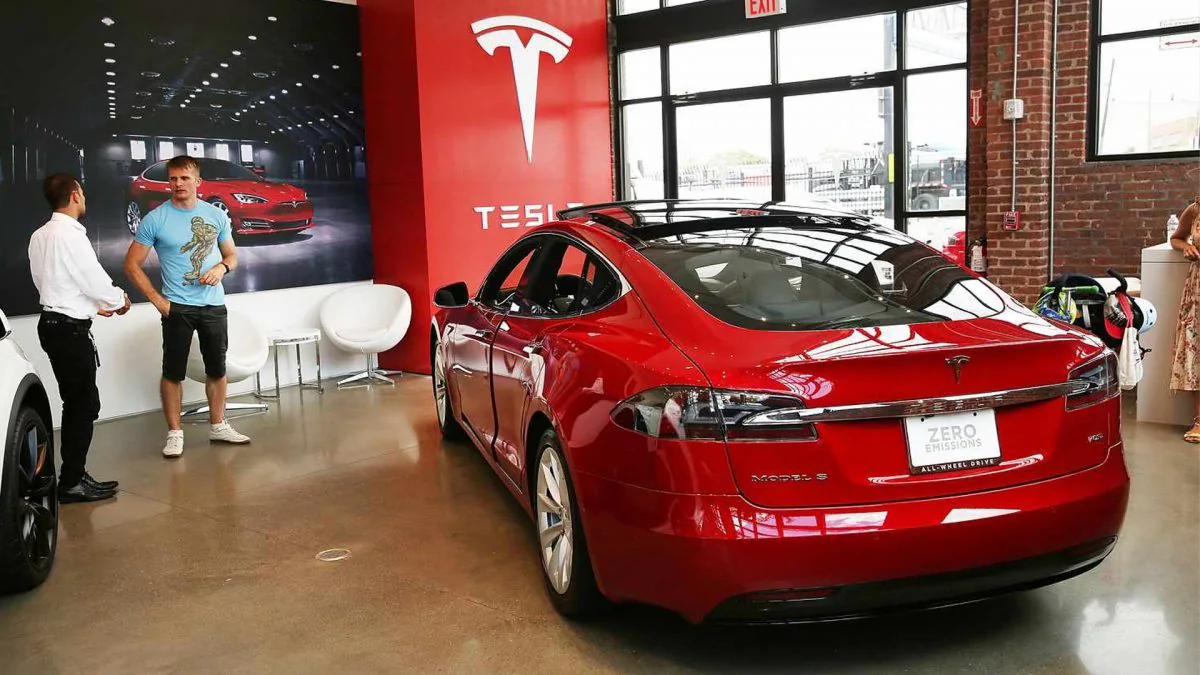
Trump purchased a red Tesla Model S earlier this year when he was still an ally of Musk. Following their recent public feud — sparked by Musk’s harsh criticism of Trump’s tax and spending bill — there were reports the president might get rid of the Tesla, which remained parked at the White House over the weekend.

Despite the spat, Trump said he would have no problem if Musk reached out. “We had a good relationship, and I just wish him well,” he added. Musk responded on X with a heart emoji to a video of Trump’s comments.

Their public clash, beginning last Thursday, followed Musk’s labeling of Trump’s bill as a “disgusting abomination,” complicating Republican efforts to pass the legislation with narrow majorities in Congress.

Sources close to Musk indicate his anger may be waning, and there could be a possibility of repairing ties.