Yazılar

SpaceX Boosts Global Connectivity with Launch of 26 More Starlink Satellites

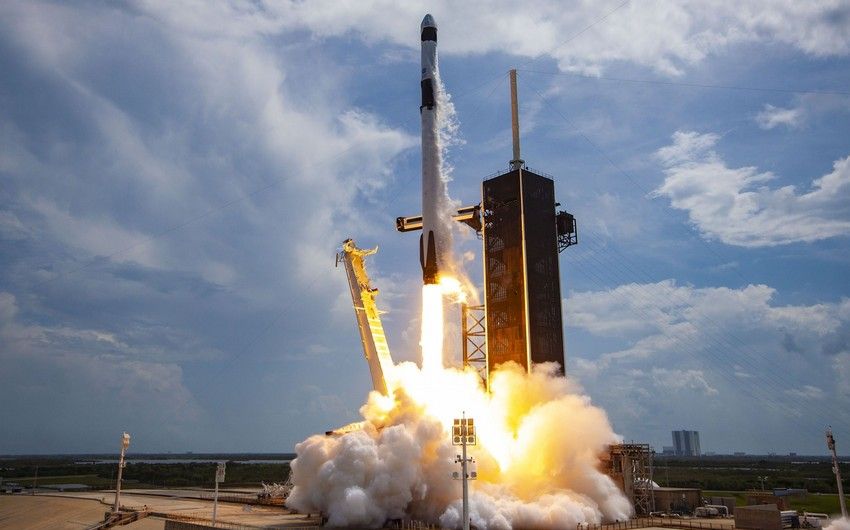
SpaceX successfully completed another milestone in its mission to expand global internet access, launching 26 additional Starlink satellites into low Earth orbit on Thursday night, June 12. The launch took place at 9:54 p.m. EDT from Launch Complex 4 East at Vandenberg Space Force Base in California. Roughly an hour after liftoff, the satellites were deployed into orbit, pushing the total number of active Starlink satellites to over 7,600—further solidifying SpaceX’s dominance in satellite-based broadband services.

The mission, designated as Starlink Group 15-6, was powered by a Falcon 9 rocket whose first-stage booster (B1081) made its 15th flight—another testament to SpaceX’s unmatched reusability strategy. After successfully completing its mission, the booster executed a precise landing on the droneship Of Course I Still Love You, stationed in the Pacific Ocean. With SpaceX’s record for booster reusability standing at 28 flights, the company continues to push the boundaries of cost-effective and sustainable orbital launches.

This particular mission marked SpaceX’s 72nd Falcon 9 launch of the year, with 53 of those specifically dedicated to Starlink. The expanding satellite network is designed to deliver high-speed internet across the globe, with new capabilities like direct-to-cell service already being tested. These advancements aim to improve connectivity in underserved and remote regions, allowing users with compatible smartphones or compact satellite dishes to access internet and messaging services without traditional infrastructure.

Looking ahead, SpaceX is not only reinforcing Starlink’s global footprint but also paving the way for next-gen applications such as real-time communications for emergency services and in-flight Wi-Fi for airlines. With dozens more launches planned, the Starlink megaconstellation is rapidly shaping the future of broadband—bringing connectivity to corners of the world that were previously out of reach.

Elon Musk’s Starlink to Enter Indian Market Offering Plans Below ₹850 Monthly: Report

Starlink is preparing to launch its satellite internet services in India, having cleared key regulatory approvals. According to recent reports, the company plans to offer subscription packages starting at around $10 per month, which is roughly Rs. 850. These plans are expected to include unlimited data as part of initial promotional offers, aiming to attract a large user base quickly. Elon Musk’s SpaceX hopes to reach 10 million Indian subscribers to balance the high costs of spectrum and licensing through scale.

Earlier this month, Starlink received a Letter of Intent from India’s Department of Telecommunications (DoT), granting permission to roll out its satellite communication network in the country. However, the Telecom Regulatory Authority of India (TRAI) has recommended additional charges, including an extra Rs. 500 per month per urban user, which could make satellite internet services pricier than traditional broadband options. These proposals also include fees like 4% of adjusted gross revenue and a minimum annual spectrum charge, along with an 8% licensing fee for commercial operations.

Despite these regulatory costs, Starlink and other satellite internet providers are expected to offer competitive pricing to recover their initial investments. The rumored Rs. 850 monthly plan with unlimited data could position Starlink as one of the most affordable satellite internet services globally, making it accessible to a wide population across India, including rural and underserved areas.

Starlink uses a vast network of low Earth orbit (LEO) satellites orbiting approximately 550 kilometers above Earth to provide high-speed, low-latency internet connectivity. This technology allows Starlink to deliver broadband in remote locations where traditional cable or fiber infrastructure is not feasible. With India’s vast geography and digital demand, Starlink’s entry could significantly boost internet access and bridge connectivity gaps across the country.

Microsoft to Integrate Elon Musk’s xAI Models Into Azure Cloud Platform

Microsoft Expands Azure AI Marketplace With Elon Musk’s Grok 3 Models

Microsoft is bringing Elon Musk’s xAI models to its Azure cloud platform, expanding its artificial intelligence (AI) model marketplace with new capabilities. The company confirmed that Grok 3, the latest AI model developed by xAI and launched earlier this year, will be available to Azure customers. This addition is part of Microsoft’s broader effort to cement Azure as a leading platform for deploying and managing cutting-edge AI applications.

The tech giant is competing with other major cloud service providers like Amazon Web Services (AWS) and Google Cloud to become the primary destination for AI development. As the demand for diverse and powerful AI models grows, so does the competition among cloud providers to host them. With Grok 3 joining Azure’s marketplace, Microsoft now offers access to over 1,900 models, including those from OpenAI, Meta, and DeepSeek. However, notable absences remain, such as models from Google and the fast-rising startup Anthropic.

Microsoft also made a series of AI-focused announcements during the opening of Build 2025, its annual developer conference. Many of the updates highlighted the company’s efforts to enhance agent-based AI systems—intelligent tools designed to act on a user’s behalf. A key focus was on integrating industry standards like Anthropic’s Model Context Protocol (MCP), which helps AI agents interface more effectively with digital content and applications. Microsoft confirmed that Windows and other products will adopt MCP, ensuring broader compatibility with future AI tools.

In support of this initiative, Microsoft and its GitHub subsidiary have also joined the MCP steering committee, further reinforcing their commitment to open AI collaboration and interoperability. “In order for agents to be as useful as they could be, they need to be able to talk to everything in the world,” said Kevin Scott, Microsoft’s Chief Technology Officer, emphasizing the importance of cross-platform communication and AI accessibility in the future of computing.