Yazılar

Taiwan Adds Huawei and SMIC to Strategic Export Control List Amid Security Concerns

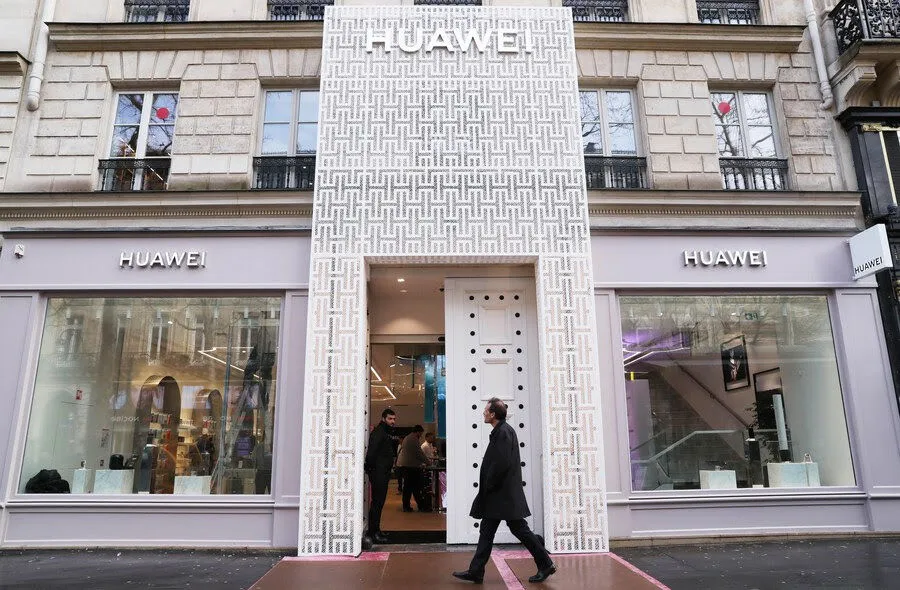
Taiwan has placed China’s tech giants Huawei Technologies and Semiconductor Manufacturing International Corp (SMIC) on its export control list, requiring Taiwanese firms to obtain government approval before exporting any products to these companies.

The additions were part of a recent update to the Ministry of Economic Affairs’ trade administration strategic high-tech commodities entity list, announced on June 10. Alongside Huawei and SMIC, the update included 601 entities from countries such as Russia, Pakistan, Iran, Myanmar, and China, including groups like the Taliban and al Qaeda.

Taiwan’s trade administration stated the review and update were driven by “prevention of arms proliferation and other national security considerations.” It urged manufacturers to comply with export control regulations, fulfill verification obligations, and carefully assess transaction risks.

Taiwan is home to TSMC, the world’s largest contract chipmaker and a key supplier to AI leader Nvidia. Both Huawei and SMIC are pivotal to China’s ambitions in chips and artificial intelligence and have been striving to close the technology gap.

Taiwan already enforces strict chip export controls on Taiwanese companies that manufacture domestically or supply Chinese firms, reflecting ongoing tensions between Taipei and Beijing, which claims Taiwan as its territory.

Huawei is also subject to U.S. export restrictions barring access to American and foreign-made goods involving U.S. technology, including chips manufactured by TSMC. Last year, TSMC was ordered by the U.S. Commerce Department to halt shipments of certain chips to Chinese customers, including Huawei and Sophgo, a Chinese chip designer linked to Huawei’s AI processor.

Taiwan’s government has repeatedly pledged to combat Chinese efforts to steal technology and attract Taiwanese chip talent, emphasizing the strategic importance of the semiconductor sector.

SMIC, China’s largest chipmaker, continues to invest heavily to expand capacity amid U.S. export curbs, aiming to boost China’s domestic semiconductor capabilities.
US Warns Huawei Can Produce No More Than 200,000 AI Chips in 2025, But China Is Catching Up

Huawei Technologies will likely produce no more than 200,000 advanced artificial intelligence chips in 2025, according to Jeffrey Kessler, Under Secretary of Commerce for Industry and Security at the U.S. Commerce Department. While this figure falls short of meeting China’s growing demand, Kessler cautioned that China is rapidly narrowing the technological gap with the United States.

Speaking before the House of Representatives Foreign Affairs South and Central Asia subcommittee on Thursday, Kessler emphasized that the production limitations do not mean the U.S. can become complacent. “China is investing huge amounts to increase its AI chip production, as well as the capabilities of the chips that it produces. So, it’s critical for us not to have a false sense of security,” he warned.

Since 2019, Washington has implemented a series of export controls restricting Huawei and other Chinese firms’ access to high-end U.S. chips and manufacturing equipment. These curbs aim to slow China’s progress in critical technologies and prevent potential military applications. Despite these hurdles, Huawei plans to supply its domestically produced Ascend 910C AI chips to Chinese customers as an alternative to Nvidia’s more advanced products.

White House AI Czar David Sacks recently stated that China is only 3-6 months behind the U.S. in AI model capabilities. However, he clarified that Chinese AI chip hardware remains about one to two years behind leading U.S. competitors such as Nvidia. Huawei’s CEO Ren Zhengfei also acknowledged the gap, noting that the company’s chips trail behind U.S. products by a generation, though Huawei continues to invest more than $25 billion annually to advance performance.

While Huawei is expanding its AI chip output, U.S. export controls have hampered Nvidia’s ability to maintain its market dominance in China. Recent trade negotiations between the U.S. and China in London resulted in a tentative truce, yet tensions persist, especially after the Trump administration imposed new export controls on semiconductor design software, jet engines for Chinese aircraft, and other critical technologies.

During the congressional hearing, Democratic Representative Greg Meeks raised concerns about the Trump administration’s approach, suggesting it has blurred the lines between export control policy and broader trade issues. Kessler reassured lawmakers that export controls remain robust and effective, while also stressing that the Commerce Department will continue to actively monitor and adjust regulations as the technology landscape evolves.

At present, there are no immediate plans for further restrictions on U.S. semiconductor sales to China, though officials remain vigilant about developments in China’s domestic semiconductor sector.

Huawei CEO Admits Chip Technology One Generation Behind U.S. but Highlights Innovation Workarounds

Huawei Technologies’ CEO Ren Zhengfei acknowledged on Tuesday that the company’s chips lag behind U.S. peers by one generation but emphasized that Huawei is overcoming this gap through innovative approaches such as cluster computing and compound chip designs. In an interview with the People’s Daily, the Chinese state media outlet, Ren stated that there is “no need to worry about the chip problem,” despite ongoing U.S. export restrictions.

Ren revealed that Huawei invests about 180 billion yuan ($25.07 billion) annually in research, with around a third allocated to theoretical research. He stressed the importance of theory for breakthroughs, noting, “Without theory, there will be no breakthroughs, and we will not catch up with the United States.”

U.S. export controls, introduced since 2019 to curb China’s access to advanced chipmaking technology, have limited Huawei’s ability to source high-end chips and manufacturing equipment. Nevertheless, Huawei’s strategy involves supplementing traditional chip advances (Moore’s law) with mathematical approaches, non-Moore’s law technologies, and cluster computing — where multiple chips or computers work together to boost performance.

Huawei’s Ascend AI chip series competes domestically with Nvidia, though U.S. restrictions bar Nvidia from selling its most advanced AI chips to China. Despite this, Huawei has developed AI systems like the “AI CloudMatrix 384,” linking 384 Ascend 910C chips in a cluster that, according to some analysts, can outperform Nvidia’s comparable offerings in certain metrics.

Ren also commented on perceptions of Huawei’s stature, saying the U.S. “has exaggerated Huawei’s achievements” and that the company still has work ahead to reach those high expectations.

This interview comes as top U.S. and Chinese officials resume trade talks in London, where technology export restrictions are key discussion points.