Yazılar

Magnificent Seven Set to Shed $1 Trillion in Value, Led by Apple and Nvidia

Apple (AAPL.O) and Nvidia (NVDA.O) led a sharp sell-off in technology stocks on Monday, fueled by U.S. recession fears and Berkshire Hathaway’s (BRKa.N) decision to reduce its stake in Apple, disrupting a prolonged rally in the sector. High-performing stocks such as Alphabet (GOOGL.O), Amazon (AMZN.O), Meta Platforms (META.O), Microsoft (MSFT.O), and Tesla (TSLA.O) fell up to 12.2% in premarket trading. The losses in the “Magnificent Seven” stocks were set to erase nearly $1 trillion from their combined market value.

Chip stocks, which have been top performers in the AI boom, also tumbled. Advanced Micro Devices (AMD.O), Intel (INTC.O), Super Micro Computer (SMCI.O), and Broadcom (AVGO.O) fell as much as 10.3%. The sell-off followed a weak U.S. payrolls report on Friday, prompting investors to seek safer assets and anticipate Federal Reserve interest rate cuts to support growth.
Warren Buffett’s Berkshire Hathaway announced over the weekend that it had halved its stake in Apple, raising concerns about the tech industry’s outlook. Nvidia shares were also impacted by reports of a potential three-month delay in the launch of its upcoming AI chips due to design flaws, affecting customers such as Meta, Alphabet’s Google, and Microsoft.

Big technology stocks, which had driven Wall Street gains for over a year, have faced pressure recently due to signs that returns from significant AI investments might take longer to materialize. Shares of Amazon, Microsoft, and Alphabet, the three largest cloud-computing providers, fell after their earnings reports failed to meet high expectations of rapid growth from AI investments.

“Expectations have arguably become too high for the so-called Magnificent Seven group of companies. Their success has made them untouchable in the eyes of investors and when they fall short of greatness, out come the knives,” said Dan Coatsworth, investment analyst at AJ Bell.
Stocks Plunge: Nikkei Down 13%, European Shares Near Six-Month Lows

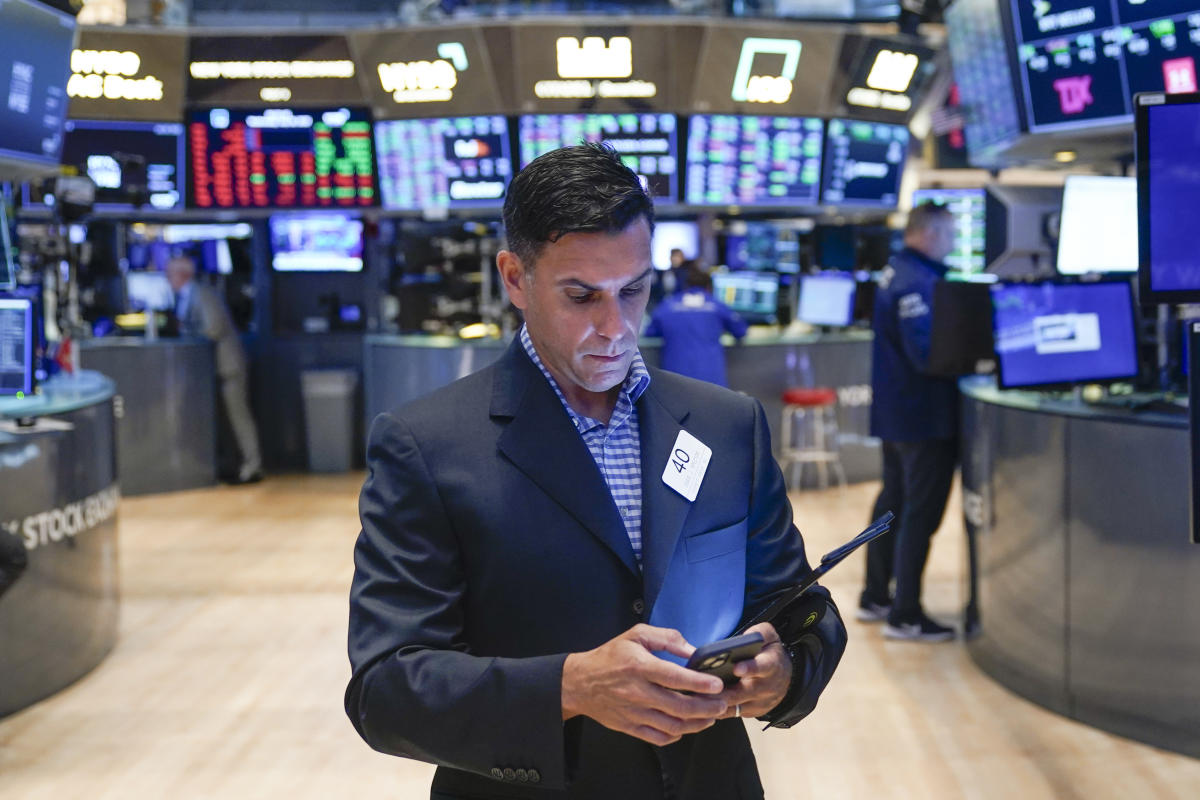
Wall Street braced for a global stock rout, with Japanese shares exceeding their 1987 “Black Monday” loss due to U.S. recession fears prompting investors to flee from risk, anticipating rate cuts to rescue growth. Nasdaq futures fell over 4%, and S&P 500 futures fell around 3% following a sell-off in Japan that spread across European markets. The CBOE’s volatility index, Wall Street’s fear gauge, jumped over 30 points to 53.55, the highest since March 2020. Japan’s benchmark Nikkei average closed 12.40% lower, its largest one-day fall since 1987, while the broader Topix lost 12.48%. Jim Reid, global head of macro and thematic research, noted that thinly-traded summer markets can be more easily roiled, but the moves were grounded in reality, pointing to the Bank of Japan’s new hiking cycle, elevated tech valuations, and a weak U.S. payrolls report.

European shares fell to near six-month lows, with only a handful of stocks trading in the green. The pan-European STOXX 600 index was down about 3%, its lowest since February. Major European indices, including Germany’s DAX, France’s CAC 40, Britain’s FTSE, and Spain’s IBEX 35, all fell more than 2%. The safe-haven yen and Swiss franc surged, and crowded carry trades unraveled, with speculation that investors were unloading profitable trades to cover losses elsewhere. This selling torrent triggered circuit breakers on Asian stock exchanges.

Treasury bonds were in demand, with U.S. 10-year yields dropping to 3.721%, the lowest since mid-2023. A weak July payrolls report saw markets pricing in a 78% chance of Federal Reserve rate cuts in September. Futures imply 122 basis points of cuts in the 5.25-5.5% funds rate this year, and rates of around 3.0% by the end of 2025. Despite emerging weakness in the U.S. economy, Goldman Sachs estimated a 25% likelihood of a recession, whereas JPMorgan analysts assigned a 50% probability. Economist Michael Feroli expects a 50 basis points cut in September, followed by another 50 basis points in November.

Global Stock Traders Face Dip-Buying Dilemma After Crushing Selloff

A massive selloff has unsettled global equity markets, leaving investors uncertain about buying stocks at lower prices. Concerns over the U.S. economy and disappointing tech earnings have cast a shadow over the outlook, potentially leading to further losses. Last week, the S&P 500 dropped nearly 6% from its July peak, while the tech-heavy Nasdaq Composite experienced its first 10% correction since early 2022. Markets in Europe and Asia also plummeted, with Japan’s Nikkei index losing almost 5%.

Investors now face a dilemma: whether to buy during this dip or hold off amid recession fears. Historically, the S&P 500 has fallen an average of 29% during recessions, according to Truist Advisory Services. Additionally, Warren Buffett’s Berkshire Hathaway reported selling half its stake in Apple and increasing its cash reserves, signaling caution.

Mark Travis, portfolio manager at Intrepid Capital, noted that investors are reassessing risks due to high valuations. Despite a strong year driven by AI technology and a resilient economy, the recent selloff has dampened risk appetite. Concerns that the Federal Reserve might be delaying interest rate cuts have led traders to move from high-valued stocks to safer investments like U.S. government bonds.

Some investors, however, view the selloff as a temporary setback and are considering buying opportunities. The S&P 500 and Nasdaq are still up around 12% year-to-date, with Nvidia showing significant gains despite recent declines. Economists found positives in the latest jobs report, and some tech companies, including Apple and Meta Platforms, delivered strong earnings.

Nevertheless, stock valuations remain high by historical standards, potentially leading to further selling. The S&P 500’s valuation has decreased slightly but remains above its long-term average. Market strategist Art Hogan highlighted the market’s tendency to overreact to economic normalization signs, potentially leading to profit-taking.

With limited major economic data releases until mid-August, markets may remain volatile. The Cboe Volatility Index, known as Wall Street’s fear gauge, reached its highest level since March 2023, indicating increased demand for options protection. Additionally, the yield on the benchmark 10-year U.S. Treasury dropped significantly, reflecting expectations of future rate cuts and investor caution.