Yazılar

Tech Surge and BOJ’s Dovish Comments Boost Wall Street

Wall Street’s main indexes advanced on Wednesday, supported by gains in megacap stocks and a dovish shift by Japan’s top policymaker after a surprise interest rate hike last week that had triggered volatility in global markets. Major technology stocks saw gains of at least 2%, led by Amazon.com rising 2.6%, though Tesla dipped nearly 1%. All major S&P sectors were trading higher, with information technology and energy leading the gains. Michael Landsberg, chief investment officer at Landsberg Bennett Private Wealth Management, noted, “Many investors are sitting on big gains in tech stocks … so it’s important for investors to right size their risk,” while predicting continued volatility.
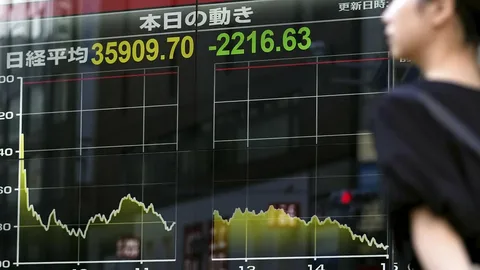
The CBOE Volatility Index, Wall Street’s fear gauge, declined to 23.09 points from a high of 65.73 on Monday. A surprise rate hike by the BOJ on July 31 to a level unseen in 15 years had sparked a global stock rout as investors unwound their sharp yen carry trade positions. However, on Wednesday, global equity markets extended their rebound after Bank of Japan Deputy Governor Shinichi Uchida indicated the central bank would not raise rates when financial markets are unstable, pushing the yen lower and boosting market sentiment.

By 11:22 a.m. ET, the Dow Jones Industrial Average rose 350.48 points, or 0.90%, to 39,348.14, the S&P 500 gained 71.02 points, or 1.36%, to 5,311.05, and the Nasdaq Composite gained 268.20 points, or 1.64%, to 16,635.06. The S&P 500 and the Nasdaq ended Tuesday more than 1% higher following comments from Federal Reserve officials that eased recession worries and shifted the spotlight back to earnings.

Fortinet jumped 24.6% after raising its annual revenue forecast, while Airbnb slid 12.7% after forecasting third-quarter revenue below estimates and warning of shorter booking windows. Walt Disney fell 1.9% predicting a ‘moderation in demand’ at its theme parks, Super Micro Computer lost 16.3% after reporting quarterly adjusted gross margins below estimates, and Amgen fell 4.4% due to higher expenses offsetting revenue increases. The markets await further commentary on monetary policy from U.S. central bank officials next week, ahead of Fed Chair Jerome Powell’s speech at the Jackson Hole event.
Google Antitrust Ruling May Pose $20 Billion Risk for Apple

Apple’s lucrative agreement with Google is facing significant risk after a U.S. judge ruled that Google, owned by Alphabet, has been operating an illegal monopoly. As a potential remedy to avoid antitrust actions, Google might have to terminate its agreement with Apple, which makes Google’s search engine the default on Apple devices. Wall Street analysts suggested this move on Tuesday.

Google currently pays Apple $20 billion annually, which accounts for about 36% of Google’s earnings from search advertising through the Safari browser, according to Morgan Stanley analysts. If this deal is undone, it could result in a 4-6% reduction in Apple’s profit.

The agreement is set to run until at least September 2026, with Apple having the option to unilaterally extend it for an additional two years, based on a document filed by the Department of Justice in the antitrust case. Evercore ISI analysts indicated that the most likely outcome would be a ruling against Google paying for default placement or a mandate for companies like Apple to prompt users to select their preferred search engine proactively.

Apple’s shares were flat on Tuesday, lagging behind a broader market recovery after Monday’s global selloff. Alphabet’s shares showed little change after a 4.5% drop in the previous session. Herbert Hovenkamp, a law professor at the University of Pennsylvania, remarked that dominant market players should avoid exclusive agreements and ensure that agreements provide buyers with the freedom to choose alternatives.

The legal process, including potential appeals, could extend into 2026. If the deal is scrapped, Apple might offer alternatives such as Microsoft Bing or develop a new search product powered by OpenAI. The ruling is expected to accelerate Apple’s shift towards AI-powered search services. Apple recently announced plans to integrate OpenAI’s ChatGPT chatbot into its devices and is in talks with Google to add the Gemini chatbot, with plans to include other AI models.

Apple is also enhancing Siri with AI technology to handle tasks like writing emails and interacting with messages. While these efforts might not generate significant revenue in the near future, they could help Apple leverage new technology.

Gadjo Sevilla, an analyst at Emarketer, suggested that while this situation could be a temporary setback for Apple, it also presents an opportunity to pivot to AI solutions for search.


Indexes End with Strong Gains, Rebounding from Global Market Rout

U.S. stocks ended sharply higher on Tuesday, with investors returning to the market after a dramatic sell-off. Recent comments by Federal Reserve officials eased worries about a U.S. recession. All major S&P 500 sectors saw significant gains. Federal Reserve policymakers dismissed the notion that weaker-than-expected July jobs data indicated an impending recession. However, they cautioned that the Fed might need to cut interest rates to avoid such an outcome. Nvidia (NVDA.O) was the biggest contributor to the gains in the S&P 500 and Nasdaq.

“The market had just gotten top heavy, but it did reprice a decent amount, particularly the Nasdaq, and people are coming back to the idea that with lower rates, it should provide support for stocks,” said Rick Meckler, partner at Cherry Lane Investments in New Vernon, New Jersey. According to preliminary data, the S&P 500 (.SPX) gained 51.66 points, or 1.00%, to end at 5,237.99 points, while the Nasdaq Composite (.IXIC) gained 166.77 points, or 1.03%, to 16,366.86. The Dow Jones Industrial Average (.DJI) rose 284.86 points, or 0.74%, to 38,988.13.

Traders are now pricing in a 75% chance that the Fed will cut rates by 50 basis points at its next policy meeting in September, and a 25% chance of a 25 basis point reduction, according to the CME Group’s FedWatch Tool. Stocks had sold off after weak economic data raised concerns about a U.S. recession. These concerns were exacerbated as investors unwound yen-funded trades, which had been used to finance stock acquisitions for years, following a surprise Bank of Japan rate hike last week.

The next major Fed event is Chair Jerome Powell’s speech at Jackson Hole on August 22-24. Uber (UBER.N) shares rose sharply after the ride-sharing and food delivery provider exceeded Wall Street estimates for second-quarter revenue and core profit, driven by steady demand for its services. Caterpillar (CAT.N) also gained after surpassing analysts’ estimates for second-quarter profit, as higher prices on its larger excavators and other equipment offset moderating demand in North America.