Yazılar

What a U.S. Federal Reserve Rate Cut Could Mean for the Global Economy

The U.S. Federal Reserve is widely expected to implement its first interest rate cut since the Covid-19 pandemic. Although anticipated, global investors are bracing for significant impacts, as the Fed’s decisions ripple through international markets.

Many central banks, including those in the eurozone, U.K., and Canada, have already cut rates, responding to sluggish growth and declining inflation. However, analysts have speculated that further rate cuts might be limited without the Fed moving in tandem, given its significant global influence.

Global Impact of Fed Rate Cut:
A key concern tied to a Fed rate cut involves the effect on global currencies. Higher interest rates typically attract more foreign investment, strengthening the local currency. In the current cycle, countries like Japan and Turkey have experienced currency devaluation due to low interest rates, while the U.S. dollar surged in 2022, driven by aggressive Fed rate hikes. A weaker currency can trigger inflation by increasing the cost of imports, complicating inflation management for some central banks.

Beyond currencies, the Fed’s decisions directly impact the U.S. economy, particularly with growing concerns about a softening labor market and potential recession. This, in turn, affects global asset prices. Gold, which has seen record highs, is influenced by both inflation fears and market uncertainty. Commodities such as oil, often priced in U.S. dollars, may see demand rise following a rate cut due to lower borrowing costs stimulating economic activity.

Emerging markets, heavily influenced by U.S. monetary policy, are especially vulnerable. Interest rate cuts in the U.S. lower the cost of borrowing dollars, which eases liquidity for global companies. However, lower U.S. yields may also redirect investments to other markets, making them relatively more attractive.

Uncertainty Surrounding the Fed’s Next Move:
While investors are confident about an upcoming rate cut, uncertainty lingers over how deep the cut will be and how quickly the Fed will proceed with additional reductions. Market speculations suggest the first cut could range from 25 to 50 basis points, but concerns about economic growth have pushed many to favor a more significant reduction. Historically, large rate cuts have signaled deeper economic challenges, as seen during the 2007 financial crisis and the tech bubble in the early 2000s.

Some analysts caution that while a rate cut may relieve market stress in the short term, it could foreshadow longer-term economic struggles. However, others argue that the current economic data remains inconclusive, allowing equities to hold steady until more definitive economic trends emerge.
 

Hong Kong Stocks Fall as Investors Digest China Economic Data, Await Fed Rate Verdict

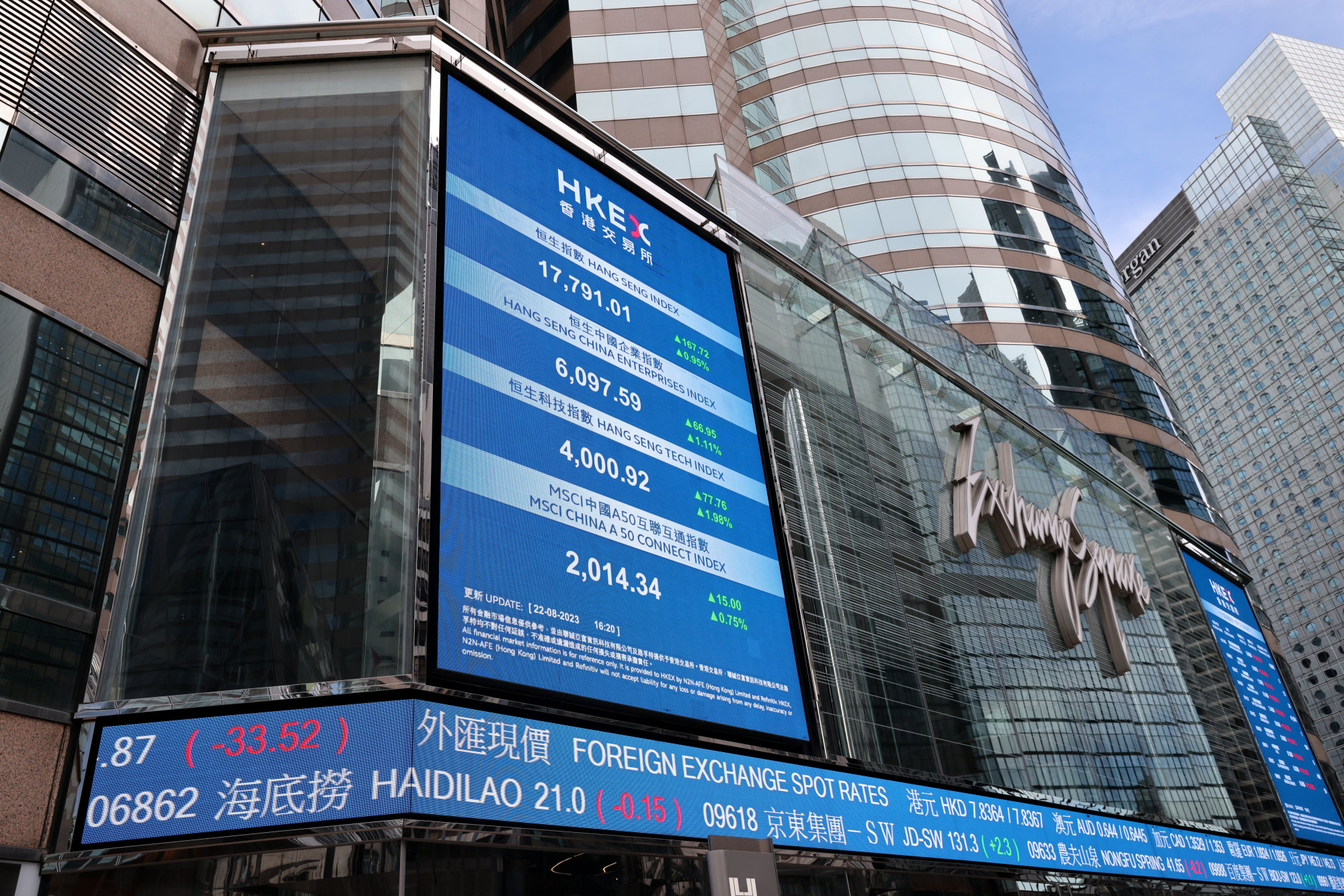
Asian markets opened mixed on Monday, with Hong Kong stocks dipping as investors absorbed disappointing economic data from China and looked ahead to the U.S. Federal Reserve’s policy meeting later in the week. The Hang Seng Index dropped by 0.76% following the release of China’s August economic figures, which fell short of expectations in factory output, retail sales, and investment. The urban unemployment rate hit a six-month high, while year-on-year home prices experienced their steepest decline in nine years.

Investor focus is now shifting toward the Federal Reserve’s meeting on Tuesday and Wednesday, where the central bank is expected to discuss a possible interest rate cut, the first since 2020. In contrast, Australia’s S&P/ASX 200 saw a 0.44% rise at market open, while Taiwan’s Weighted Index edged up slightly. However, several key markets, including those in mainland China, South Korea, and Japan, were closed for holidays, including the Mid-Autumn Festival and Japan’s Respect for the Aged Day.

Further complicating the Asian markets, Typhoon Bebinca has resulted in the cancellation of hundreds of flights across China, with Shanghai bracing for the strongest storm since 1949. As investors monitor the approaching storm, attention is also focused on upcoming economic data and central bank decisions from the region.

Japan’s inflation data, expected to show a rise for August, is likely to support the Bank of Japan’s hawkish stance. The central bank is projected to hold interest rates steady during its policy meeting on Friday, but could signal potential rate hikes ahead. The Japanese yen strengthened Monday morning, trading at 140.49 against the U.S. dollar, positioning the currency to close at its strongest level in over a year.

Meanwhile, China is set to adjust its one- and five-year loan prime rates on Friday. The one-year loan rate, which influences most new and existing loans, currently stands at 3.35%, while the five-year rate, which affects mortgage pricing, is at 3.85%.

In the U.S., after a slow start to September—a historically weak month for the markets—the three major indexes ended last week on a positive note. The S&P 500 gained 0.54%, closing at 5,626.02, while the tech-heavy Nasdaq Composite advanced 0.65% to 17,683.98. The Dow Jones Industrial Average jumped 0.72%, finishing at 41,393.78. Futures tied to the Dow Jones, S&P 500, and Nasdaq 100 showed little movement, with investors awaiting the Fed’s upcoming decisions.


Federal Reserve to Adopt Slow Policy Easing Due to Inflation Concerns, Says Fitch

The U.S. Federal Reserve is expected to begin its rate-cutting cycle with a slower approach than in previous decades, according to a recent report by Fitch Ratings. The rating agency projects that the central bank will begin easing at its September policy meeting, starting with a 25-basis-point cut, followed by another in December. Further gradual cuts are expected through 2025 and 2026, totaling 250 basis points over 25 months, much slower than the historical median of 470 basis points over eight months.

Inflation Still a Concern

Fitch emphasized that inflation remains a concern, particularly core inflation, which excludes food and energy prices. While inflation dropped to its lowest since February 2021, standing at 2.5% year-on-year in August, it remains above the Fed’s 2% target. The report points out that the recent decline in core inflation was primarily due to falling automobile prices, which may not be sustainable.

The Fed’s cautious approach is also driven by the inflation challenges it faced over the past few years, highlighting gaps in understanding the drivers of inflation. With core CPI still elevated at 3.2% on an annual basis, Fitch expects the Fed to proceed slowly with rate cuts to avoid reigniting inflationary pressures.

Global Monetary Policy Divergence

While the Fed is expected to proceed with slow easing, other global central banks are taking different approaches. In China, Fitch foresees continued rate cuts by the People’s Bank of China (PBOC) as deflationary pressures deepen. The PBOC’s recent cuts and declining core inflation, now at 0.3%, signal further easing to combat economic challenges. Fitch predicts China’s inflation to drop to 0.5% in 2024, with additional rate cuts through 2025.

Conversely, Japan’s central bank is adopting a more hawkish stance. The Bank of Japan (BOJ) has aggressively raised rates, reflecting its growing confidence that inflation is firmly entrenched. Core inflation in Japan has been above the BOJ’s target for 23 months, supported by ongoing wage growth. Fitch expects the BOJ’s policy rate to reach 0.5% by the end of 2024, rising to 1% by 2026, a shift that could have broader global economic impacts.