
Yazılar

ECB warns digital euro could trigger €700 billion bank run risk

A European Central Bank (ECB) simulation has found that a digital euro could drain up to €700 billion in deposits from commercial banks during a severe financial panic, potentially pushing about a dozen eurozone lenders into a liquidity squeeze.

The study, published on Friday and requested by European lawmakers, explored how the introduction of a central bank–backed digital currency might affect financial stability. In a worst-case “flight-to-safety” scenario, the ECB estimated that depositors could shift €699 billion—about 8.2% of all retail sight deposits—into digital euros if each user were allowed to hold up to €3,000.

The ECB said 13 of 2,025 banks in its analysis would breach their mandatory Liquidity Coverage Ratio (LCR) under such stress. Smaller lenders relying heavily on household deposits would face the greatest strain.
“In a digital age, bank runs happen much quicker and much more forcefully than before,” warned Markus Ferber, a European Parliament lawmaker, urging caution over high holding limits.

However, the central bank described the scenario as “highly unlikely.” Under normal conditions, outflows would total just over €100 billion, well within safe liquidity margins. The ECB said lower holding caps of €500–€2,000 would sharply reduce risk and confirmed that such limits “safeguard the stability of the financial system.”

The study also found that a €3,000 limit could trim banks’ return on equity by 0.3 percentage points, varying by country.
“You can only make the digital euro attractive if you’re willing to hurt banks a little,” said Fabio De Masi, a German MEP.

EU Risk Watchdog Urges Swift Action on Stablecoin Safeguards

The European Union’s financial risk watchdog has called for urgent safeguards on stablecoins that are only partially issued within the bloc, echoing growing concerns from the European Central Bank (ECB) about the potential for destabilizing financial runs.

Stablecoins — cryptocurrencies pegged to traditional reserve assets such as fiat currencies or commodities — are designed to maintain price stability. However, the European Systemic Risk Board (ESRB) warned that stablecoins issued both inside and outside the EU present inherent structural risks.

“Third-country multi-issuer schemes — with fungible stablecoins circulating both in the EU and abroad — have built-in vulnerabilities which require an urgent policy response,” the ESRB said in a statement.

RISK OF RUNS AND LIQUIDITY STRAINS

The ECB, led by Christine Lagarde, fears that if confidence in such stablecoins falters, investors could rush to redeem their holdings in the EU, where regulatory protections are strongest.
Such a scenario could lead to liquidity shortages, as EU-based reserves may be insufficient to cover redemptions — potentially forcing the ECB to intervene to stabilize markets.

Lagarde has consistently emphasized that stablecoin issuers operating in the EU and abroad must be held to identical standards, to prevent regulatory loopholes that could import external financial risk into the bloc.

REGULATORY GAPS AND POLICY IMPLICATIONS

Under the EU’s Markets in Crypto-Assets (MiCA) regulation — one of the world’s most comprehensive crypto frameworks — stablecoins are required to be fully backed by liquid reserves.
However, in “multi-issuer” arrangements, where an EU entity and a non-EU entity jointly issue a stablecoin, the stricter EU rules do not apply to the foreign partner. This creates regulatory asymmetry that may allow risk to flow into the EU system.

The ESRB warned that multi-function financial groups issuing stablecoins across jurisdictions may fall under more lenient regimes than traditional financial conglomerates, heightening the risk of divergent prudential standards and undermining the integrity of EU financial supervision.

A CALL FOR COORDINATED OVERSIGHT

The watchdog urged EU institutions to close these gaps quickly through policy coordination and international cooperation to ensure that global stablecoin systems do not exploit differences between regulatory frameworks.

The ESRB’s statement comes as the European Union prepares to implement MiCA fully by 2026, amid growing debate about how to integrate emerging crypto technologies into the region’s financial stability architecture without stifling innovation.

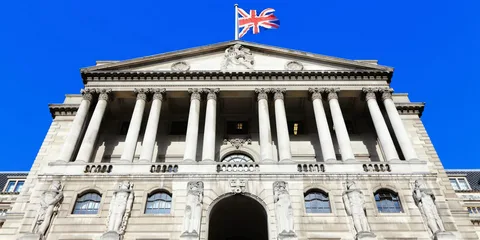
Bank of England’s Bailey: AI can help regulators uncover the ‘smoking gun’

Bank of England Governor Andrew Bailey said financial regulators should adopt artificial intelligence to better detect misconduct and risks within firms they oversee. Speaking at the London School of Economics on Monday, Bailey stressed the need to invest heavily in data, data science, and AI techniques to make full use of the vast information regulators already collect.

Bailey warned that supervisors face a recurring problem: crucial evidence of wrongdoing may exist within their own datasets but remain undetected until it is too late. “It also creates the danger for the authorities that you’ve got the evidence in the building and you haven’t been able to use it and it subsequently comes out that somewhere in your system was the smoking gun,” he said.

The BoE governor reiterated his opposition to rolling back financial rules in the name of business competitiveness. He said easing oversight could risk a return to the kind of behavior that destabilized the economy during the 2008 financial crisis.

His comments come amid ongoing debate over how much regulation is appropriate for the UK’s financial sector. In July, Bailey pushed back against Finance Minister Rachel Reeves’ claim that regulation was a “boot on the neck of businesses,” defending the BoE’s prudential framework for banks and other institutions.

The BoE is now exploring how AI might strengthen its supervisory role, potentially helping regulators spot early-warning signs of fraud, mismanagement, or systemic vulnerabilities hidden in mountains of financial data.