Yazılar

Rights Advocates Raise Concerns Over U.S. Plan to Use AI for Student Visa Revocation

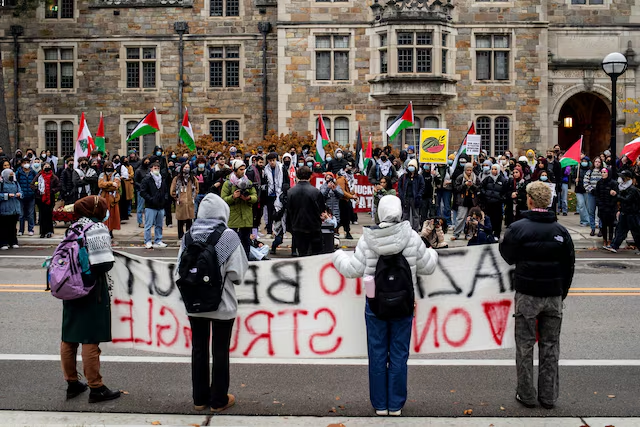
Rights advocates, including free speech groups, have expressed concerns after reports surfaced that the U.S. State Department plans to use artificial intelligence (AI) to revoke the visas of foreign students accused of supporting Palestinian Hamas militants. The initiative, dubbed “Catch and Revoke,” is set to involve AI-assisted reviews of social media accounts belonging to tens of thousands of student visa holders.

This move has raised alarm among groups like the Foundation for Individual Rights and Expression (FIRE) and pro-Palestinian organizations. They argue that AI cannot accurately assess the nuances of expressions related to the highly complex and long-standing Israeli-Palestinian conflict. They also warn that relying on AI for such sensitive matters could infringe on First Amendment rights to free speech and assembly.

According to reports, the State Department is reviewing news reports of anti-Israel demonstrations and lawsuits alleging antisemitism related to foreign nationals. Fox News additionally reported that the department had revoked the visa of a student involved in what it described as “Hamas-supporting disruptions.”

Sarah McLaughlin, a scholar at FIRE, emphasized that AI tools are incapable of grasping the subtleties of political expression concerning the Israeli-Palestinian conflict. The American-Arab Anti-Discrimination Committee called the reported plan an “alarming erosion of constitutionally protected free speech and privacy rights.”

While the State Department did not comment directly, Secretary of State Marco Rubio stated that the U.S. has “zero tolerance for foreign visitors who support terrorists,” reaffirming that violations of U.S. law, including by international students, could lead to visa denial, revocation, and deportation.

This initiative follows actions by the Trump administration, which has taken a hard stance on pro-Palestinian protests, including pledging to deport non-citizen students involved in such protests. Additionally, Trump has threatened to cut federal funding to educational institutions that allow what he deems illegal protests.

The broader context involves the U.S. designating Hamas as a “foreign terrorist organization,” following the group’s deadly October 2023 attack that killed over 1,200 people. Israel’s subsequent military actions in Gaza have led to significant casualties and displacement, further intensifying global debate.

Trump’s Executive Order on Free Speech Draws Criticism

On Monday, U.S. President Donald Trump signed an executive order aimed at restoring freedom of speech and ending censorship on online platforms. The order has sparked significant backlash, with critics pointing to Trump’s own controversial history regarding freedom of expression.

Key Points:

  • Purpose of the Order: Trump’s executive order is intended to address what he and his Republican allies have described as the suppression of free speech under the Biden administration, particularly in the context of social media platforms. The order is framed as a response to alleged censorship of political viewpoints and speech.
  • Criticism of Trump’s Past Actions: Critics have pointed out that Trump himself has a history of restricting free speech. Over the years, he has threatened and sued journalists, political opponents, and critics, often citing their comments as defamatory. His past actions, such as suing five media outlets including CNN and ABC News, and referring to journalists as the “enemy of the people,” have raised concerns about the authenticity of his commitment to free speech.
  • Legal Context: While Trump’s order seeks to address alleged censorship, the U.S. Supreme Court ruled in June that the Biden administration’s interactions with social media companies did not violate First Amendment rights. The federal government is already prohibited from interfering with citizens’ free speech, raising doubts about the impact of the new executive order.
  • Expert Opinion: University of California, Irvine, Professor David Kaye criticized the order as a “deeply cynical” public relations move. Kaye, a former UN Special Rapporteur on free speech, argued that the government is already restricted from interfering with First Amendment rights, and the order would not change that. He also questioned the consistency of Trump’s stance on free speech, noting the contradiction between his criticisms of the media and his supposed defense of free speech.

TikTok’s Fate Divides Republicans as Supreme Court Case Looms

The upcoming U.S. Supreme Court case involving TikTok has split opinions among Republicans, with former President Donald Trump opposing a ban on the app, while many of his party allies support the government’s position on national security concerns. The case, set to be argued on Friday, raises critical issues about the balance between free speech and national security.

At the heart of the case is a law passed by Congress last year, with bipartisan support, that mandates TikTok’s China-based parent company, ByteDance, either sell the platform or face a U.S. ban by January 19. The law, signed by President Joe Biden, is driven by fears that China could use TikTok to spy on U.S. users by accessing their data, from personal messages to location information. The Justice Department argues that the app poses a security threat, citing its vast user data and the potential for content manipulation.

TikTok, along with ByteDance, has pushed back against these national security claims, arguing that the law infringes upon First Amendment protections. The company asserts that such a law would allow the U.S. government to ban any speech deemed to be influenced by a foreign entity, undermining free speech rights.

Trump has taken an unexpected stance, stating he has a “warm spot” for TikTok and opposing the ban, which he believes could harm his base, given the platform’s role in boosting his campaign visibility. His lawyer, John Sauer, has filed a request to delay the law’s enforcement until he can address the issue through political means after taking office.

In contrast, many Republican state attorneys general, led by Montana’s Austin Knudsen, have filed briefs supporting the ban, citing national security risks. They argue that allowing TikTok to operate without severing ties with the Chinese Communist Party could expose Americans to data exploitation.

The Supreme Court’s decision is expected to have far-reaching implications for both digital platforms and internet freedom, with some experts warning that a favorable ruling for the government could pave the way for further regulatory action against other platforms with foreign ties, such as Telegram.

The stakes are high for TikTok, which has approximately 170 million active monthly users in the U.S. If the court upholds the law, it could lead to TikTok’s removal from app stores, although users with the app already downloaded may still have access. However, without updates, the app could become increasingly unusable.