Yazılar

Tesla Pauses Full Self-Driving Trial in China Pending Regulatory Approval

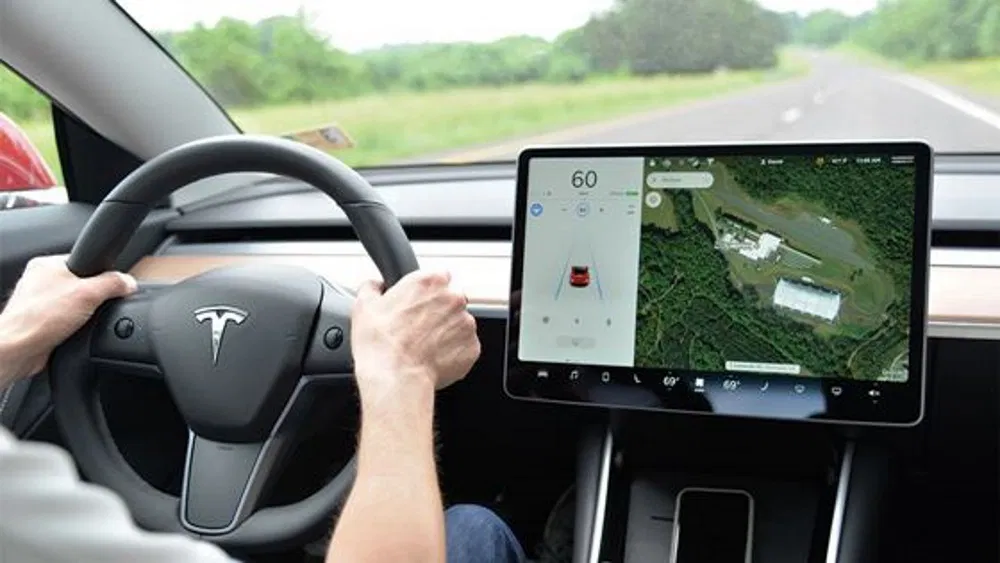
Tesla announced on Monday that it would halt its limited-time free trial of the Full Self-Driving (FSD) feature in China, pending the completion of regulatory approval. The pause follows complaints regarding the trial, which was initially scheduled to run from March 17 to April 16.

Tesla’s customer support addressed the issue on the social media platform Weibo, where they stated that all parties involved are working to advance the relevant approval processes. They assured customers that the feature would be released once regulatory conditions are met and urged patience.

FSD is a suite of driving-assistance technologies powered by generative artificial intelligence, designed to handle complex traffic conditions. Tesla is targeting a full rollout of FSD later this year and is collaborating with Chinese tech giant Baidu to enhance the system’s performance.

While Tesla has successfully offered such trials in the U.S. without requiring up-to-date navigation maps—relying instead on local AI training from its 2 million EVs—the company faces challenges in China due to strict data laws that prevent the system from being trained using local data. Additionally, China’s industry ministry implemented new rules in February mandating that autonomous driving-related over-the-air software updates be approved by regulators before they can be deployed.

Tesla Collaborates with Baidu to Improve Assisted Driving in China

Tesla is working with Baidu, a Chinese tech giant, to enhance the performance of its advanced driving assistance system (ADAS) in China, according to two sources familiar with the matter. This collaboration follows criticism from customers over a recent update to Tesla’s Full Self-Driving (FSD) Version 13 software, which failed to meet expectations.

Baidu has sent a team of engineers from its mapping division to Tesla’s Beijing office to improve the integration of Baidu’s navigation maps with Tesla’s FSD V13. The goal is to refine the system’s understanding of Chinese roads, including lane markings and traffic light signals, making it more accurate and up-to-date. The exact number of engineers or the financial terms of the collaboration were not disclosed.

This partnership comes as Tesla faces challenges with data and regulatory restrictions imposed by both Beijing and Washington, hindering its ability to bring its full Autopilot and FSD systems to its second-largest market. Unlike in the U.S., where Tesla trains its AI with data from its own fleet, it cannot do so in China due to local data laws. This has led to increasing pressure from competitors like BYD and Xpeng, which offer similar technology without charging extra fees.

The updated software, released in February, aimed to add urban navigation features but faced backlash for not delivering the promised full FSD functionality in China. Tesla’s FSD V13 had not been sufficiently trained to navigate Chinese streets, causing drivers to encounter frequent traffic violations such as incorrect lane changes and running red lights.

The partnership with Baidu, a dominant map provider in China, aims to resolve these issues by improving the mapping capabilities and providing more accurate navigation data. Tesla has been relying on Baidu for mapping services since 2020.

This collaboration comes as Tesla’s market share in China declined for the first time last year, dropping from 11.7% to 10.4% in 2024, according to recent data. Meanwhile, local competitors have been pushing sales more aggressively. In the U.S. and Europe, Tesla has faced a slowdown in demand, putting further pressure on its performance in China.

Despite the regulatory challenges and competition, Tesla remains focused on rolling out full FSD technology in China this year. However, it remains unclear how soon the collaboration with Baidu will lead to a resolution of the system’s issues.

Tesla Shares Rise as Musk Promises Cheaper EVs and Autonomous Ride-Hailing

Tesla shares climbed more than 2% on Thursday after CEO Elon Musk announced plans to launch lower-cost electric vehicles (EVs) in the first half of 2025 and begin testing an autonomous ride-hailing service in June. These commitments helped investors look past a weaker-than-expected fourth quarter, which saw declining revenue and shrinking margins due to delayed model upgrades and rising competition.

Despite Tesla’s first annual decline in deliveries in 2024, the company assured investors that its vehicle business would return to growth in 2025. However, Tesla did not reaffirm Musk’s earlier forecast of a 20-30% sales increase for next year.

Morgan Stanley analysts noted that Tesla is shifting from being a traditional automotive company to a diversified player in AI and robotics. Investors remain optimistic, especially as Musk’s support for U.S. President Donald Trump could lead to more favorable regulatory conditions for Tesla’s robotaxi ambitions.

Musk revealed that Tesla will begin unsupervised testing of its autonomous ride-hailing service in Austin, Texas, though he did not provide specific details on how it would function. The company also did not share pricing details for its upcoming affordable EV models.

If Tesla’s stock gains hold, its market value could rise by approximately $28 billion. The stock surged 62.5% in 2024 and is currently trading at 118 times its 12-month forward earnings, significantly higher than Ford (6.07) and General Motors (4.48).

At least 19 brokerages have raised their price targets for Tesla stock, with a median target of $300, up from $278 at the end of December. Analysts believe that Tesla’s growth will be fueled by Full Self-Driving technology and the introduction of an affordable EV. However, some experts remain cautious about Musk’s timeline for launching robotaxis, citing regulatory challenges, particularly in Europe and China.

Tesla also announced an increase in its capital expenditure forecast, expecting to spend over $11 billion in 2025 and the following two fiscal years.