Yazılar

Tesla Sued by Family Over Alleged Misrepresentation of Autopilot Safety in Fatal Crash

Tesla is facing a lawsuit filed by the family of a driver who died in a collision in 2023, alleging that the company’s “fraudulent misrepresentation” of its Autopilot technology was to blame for the fatal crash. The lawsuit, filed in October in Contra Costa County, California, centers around the death of Genesis Giovanni Mendoza-Martinez, who was driving a 2021 Tesla Model S when it crashed into a parked fire truck while using the Autopilot system. Mendoza’s brother, Caleb, who was a passenger at the time, was seriously injured in the incident.

The Mendoza family’s legal team argues that Tesla, along with CEO Elon Musk, has exaggerated the capabilities of the Autopilot system in order to boost excitement and financial performance for the company. The lawsuit cites multiple instances, including tweets, company blog posts, and statements from earnings calls, where Tesla has made claims about Autopilot’s safety and effectiveness.

In response, Tesla’s legal team contends that the crash was caused by the driver’s own “negligent acts” and that any representations made by the company were not a substantial factor in the incident. Tesla asserts that its vehicles and systems are designed to meet safety standards and comply with both state and federal laws.

Tesla recently succeeded in moving the case from state court to federal court in California’s Northern District. Legal experts note that fraud claims in federal court typically carry a higher burden of proof. The lawsuit adds to the growing number of legal challenges Tesla faces regarding the safety of its Autopilot and Full Self-Driving (FSD) systems. At least 15 other cases are currently active, involving Tesla incidents where either Autopilot or FSD was in use prior to a crash, some of which have been moved to federal court.

The crash has also drawn attention from the National Highway Traffic Safety Administration (NHTSA), which opened an investigation into Tesla’s Autopilot system in 2021. As part of the probe, Tesla made several updates to its systems, including over-the-air software modifications. A second NHTSA investigation is ongoing, evaluating the effectiveness of Tesla’s remedy to address Autopilot behavior around stationary emergency vehicles.

Tesla is also under scrutiny from the California Department of Motor Vehicles, which has sued the company for false advertising, alleging that Tesla’s claims about its Autopilot and FSD features mislead consumers. Despite these legal challenges, Tesla is continuing to roll out a new version of its FSD system. Elon Musk recently encouraged his millions of followers on X to “Demonstrate Tesla self-driving to a friend,” claiming the technology “feels like magic.”

Despite Musk’s ongoing promises of fully autonomous driving, competitors like Waymo (owned by Alphabet) and Chinese firms WeRide and Pony.ai are already operating commercial robotaxi services, while Tesla has yet to deliver a fully autonomous vehicle.
 

Elon Musk Unveils Futuristic ‘Cybercab’ Robotaxi, Yet Faces Skepticism Over Timelines

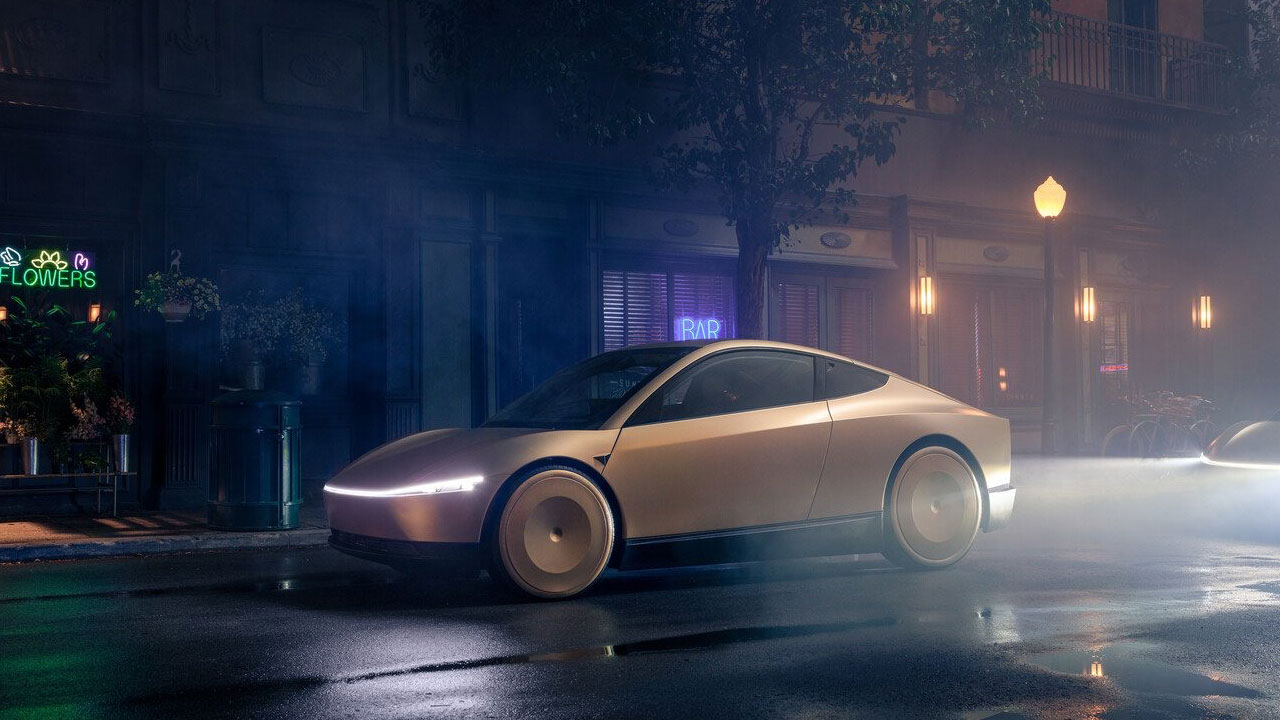
Tesla CEO Elon Musk presented his latest vision for a future dominated by self-driving vehicles, revealing designs for the highly anticipated Cybercab robotaxi at a star-studded event in California on Thursday. Musk’s bold vision includes a world where autonomous vehicles operate without human intervention, transforming cityscapes by replacing parking lots with parks and ushering in a new “age of abundance.”

The futuristic designs featured sleek, metallic aesthetics, evoking a sci-fi world that Musk compared to the dystopian movie “Blade Runner”—though with a more optimistic twist. The presentation also showcased a Robovan, designed for larger groups or cargo, alongside the Cybercab. These driverless vehicles, Musk promised, would be on the roads within a few years, with the Cybercab slated for production by 2026.

Familiar Promises, New Skepticism

Musk is no stranger to making ambitious promises. His timeline for the Cybercab is just the latest in a series of delayed targets. In 2019, Musk claimed Tesla’s fleet of self-driving cars would be available by 2020. That timeline was missed, with Musk later admitting that he tends to be “a little optimistic” about deadlines. During Thursday’s event, even though the unveiling was delayed by nearly an hour, Musk maintained the enthusiasm of the crowd, who cheered for his 20-minute presentation.

Tesla’s Full Self-Driving (FSD) feature, which is available for $8,000, has yet to fulfill its promise of complete autonomy, still requiring human drivers to remain alert and take control when necessary. Musk claimed that in states like California and Texas, Teslas with FSD will be fully autonomous by next year, provided state regulators give their approval.

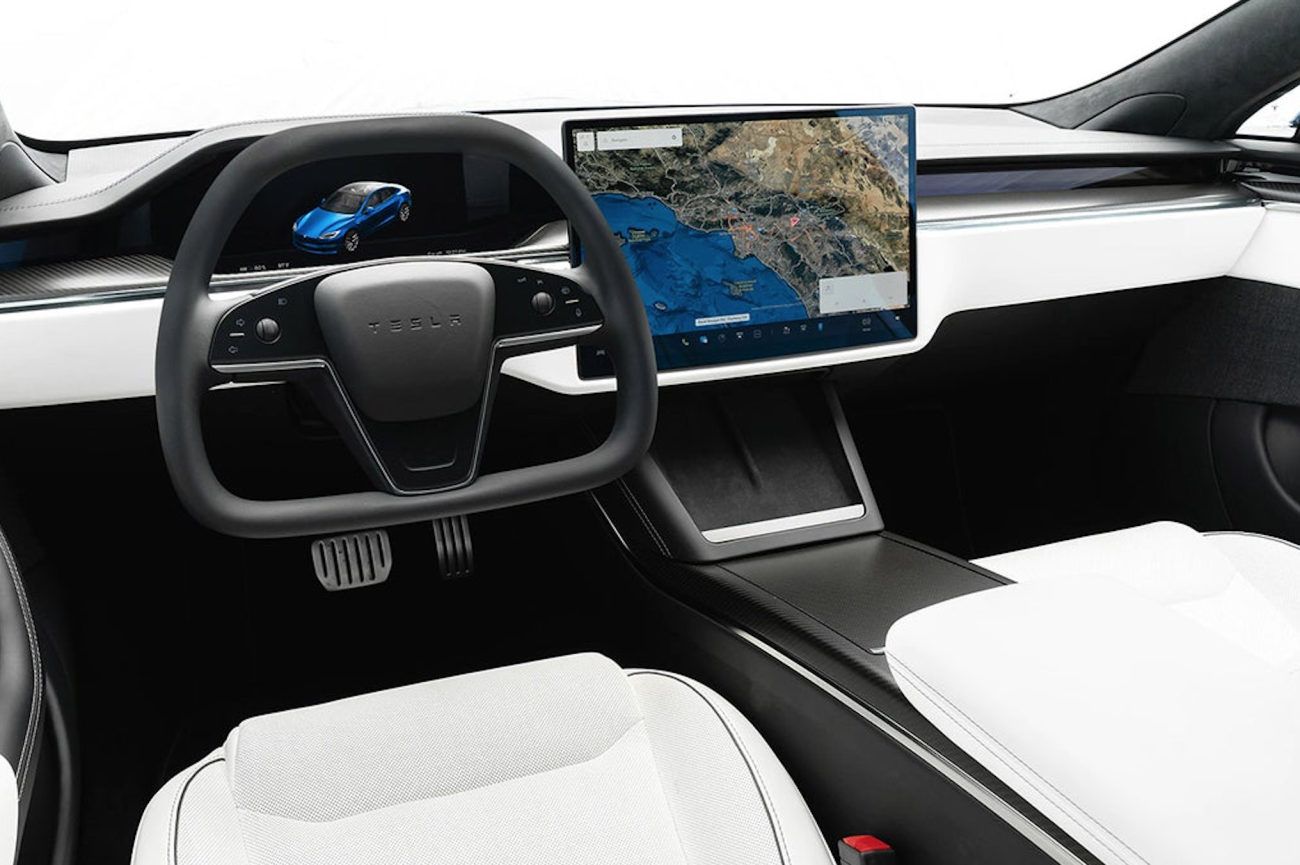
The Cybercab, unlike Tesla’s current vehicles, will be designed specifically for fully autonomous operation, with no steering wheel, brake pedals, or accelerator. It will feature a wireless charging system that charges the vehicle by driving over a charging plate, eliminating the need for plugs.

Competitive Landscape: Falling Behind?

While Musk’s presentation was met with fanfare, Tesla faces significant competition in the autonomous driving space. Companies like Google’s Waymo and Amazon’s Zoox have already deployed self-driving services in select cities. Tech journalist Kara Swisher, a frequent critic of Musk, pointed out that while Tesla is still showcasing prototypes, Waymo has been operational in San Francisco for some time. Swisher sarcastically referred to Tesla’s Robovan design as “a lovely toaster on wheels,” highlighting that other companies have moved beyond the conceptual stage to real-world deployment.

Overcoming Technical and Regulatory Challenges

Tesla’s FSD technology, while impressive, is far from perfect. Some independent testing shows that drivers need to intervene every 13 miles on average. Musk has admitted that previous timelines for achieving full autonomy were “overly optimistic” but continues to project confidence, stating that Tesla’s system will be safer than human drivers by the end of this year.

Analysts like Gene Munster from Deepwater Asset Management have echoed concerns about the feasibility of Musk’s timelines, especially given the difficulty in achieving the required levels of accuracy for driverless systems. Munster estimates that it will take Tesla at least two more years to refine the technology and an additional two to three years to obtain regulatory approval.

Musk’s history of delayed product launches adds further skepticism. The Cybertruck, revealed in 2019, took four years to go into production, and other vehicles like the electric semi-truck remain in development over six years after their initial announcement. As Munster emphasized, patience will be key for investors waiting for the promises of Tesla’s autonomous future to become reality.

The Road Ahead: Opportunities and Challenges

Musk envisions a future where Tesla owners could rent out their autonomous vehicles when not in use, creating a new source of income. Tesla’s robotaxi service would compete not only with human-driven services like Uber and Lyft but also with other autonomous services already in development.

While Tesla has made significant progress in the electric vehicle space, the challenges of achieving full autonomy remain formidable. Regulatory approval, technical hurdles, and stiff competition from established tech companies are just a few of the obstacles Musk faces in delivering on his vision.

In the short term, the success of Tesla’s self-driving technology will likely hinge on its ability to refine the FSD feature and gain regulatory approval in key markets. In the long term, Musk’s grand vision of a world filled with autonomous vehicles, like the Cybercab and Robovan, will require both technological breakthroughs and patience from investors and consumers alike.

Tesla Bets Big on ‘Black Box’ AI for Robotaxis Amid Mounting Pressure

Tesla is gearing up for the highly anticipated “robotaxi unveil,” a critical moment for CEO Elon Musk’s decade-long promises of autonomous driving. Set to showcase a prototype called “Cybercab,” the automaker is not expected to reveal a fully operational driverless vehicle. Tesla’s success in convincing regulators and passengers of the vehicle’s safety, however, faces significant hurdles, especially as competitors like Waymo have already launched robotaxi services in select cities.

Tesla’s self-driving approach is distinct from its rivals. Unlike Waymo or General Motors’ Cruise, Tesla relies solely on cameras and end-to-end machine learning, which processes visual data into driving decisions. While this method promises simplicity and cost-effectiveness, it lacks the redundant systems, like radar and lidar, that ensure safety in more unpredictable driving scenarios. Autonomous vehicle experts argue this leaves Tesla’s approach vulnerable to “edge cases” — unusual, complex driving conditions that AI may not predict or handle properly.

Another challenge facing Tesla is the “black box” nature of its AI, which makes it difficult to diagnose system failures after accidents. Without clear insight into why the AI makes certain driving decisions, safeguarding against future errors becomes more complex. Industry leaders, including Nvidia CEO Jensen Huang, warn that such AI systems are unreliable without more traditional safety layers like sensors.

For Tesla, achieving full autonomy is crucial as it faces declining sales and fierce competition from Chinese electric vehicle makers. Musk has increasingly pivoted toward autonomous driving as a key priority, with the promise of affordable, driverless robotaxis that can operate anywhere. Tesla’s rivals, while already deploying robotaxi services, are confined to small, meticulously mapped zones and operate more expensive vehicles.

Musk’s bold promises date back years, including a 2016 pledge that Tesla cars would soon be able to drive themselves across the country. Despite numerous delays and failed predictions, Tesla’s upcoming event has sparked widespread speculation, especially after it scrapped plans for a $25,000 mass-market EV, known as the Model 2.

Tesla’s reliance on AI-enabled vision technology does offer advantages, particularly its ability to gather vast amounts of data from millions of vehicles already on the road. This data, analyzed by its machine learning systems, could eventually make Tesla’s cars safer and more autonomous. In contrast, competitors like Waymo and Cruise collect data from much smaller fleets equipped with more expensive sensors.

Despite Musk’s optimism, experts caution that Tesla is still years away from achieving fully autonomous driving capabilities. Waymo’s former CEO John Krafcik emphasized the importance of redundant safety systems and warned that Tesla’s AI approach may be insufficient for ensuring safety. Critics point out that AI systems like Tesla’s cannot always explain why they make certain decisions, complicating efforts to build safe, autonomous vehicles.

Tesla’s bold bet on end-to-end AI has put the company in a race against time. As it focuses heavily on self-driving technology, it risks alienating investors who have supported its electric vehicle ambitions. However, Musk remains undeterred, doubling down on promises to deliver full autonomy within a year. Whether Tesla can overcome the substantial challenges of its AI-driven vision strategy remains uncertain, but the stakes — and potential rewards — are higher than ever.