
Yazılar

Maldives Seeks Economic Bailout from India Despite Recent Strains in Bilateral Ties

Facing a looming economic crisis, Maldivian President Mohammed Muizzu has expressed confidence that India will step in to provide financial assistance. Ahead of his five-day visit to India, Muizzu is expected to seek a bailout worth hundreds of millions of dollars to alleviate the country’s critical foreign exchange reserve situation, which has dwindled to $440 million—barely enough to cover 1.5 months of imports.

In an email interview with the BBC, Muizzu highlighted India as one of the Maldives’ key development partners, acknowledging its potential role in offering financial solutions during this fiscal challenge. This marks a shift in tone from Muizzu’s previous “India Out” campaign, which had called for the withdrawal of Indian troops stationed in the island nation. During the interview, however, Muizzu avoided directly addressing his past anti-India rhetoric and expressed optimism that any existing differences could be resolved through open dialogue and mutual understanding.

Economic Crisis and Need for a Bailout

The Maldives’ economic woes have escalated with the recent downgrade of its credit rating by global agency Moody’s, which warned that “default risks have risen materially.” Despite this, Muizzu dismissed the idea of a sovereign debt default, emphasizing that the government is following a home-grown agenda rather than seeking assistance from the International Monetary Fund (IMF).

However, Moody’s report raises serious concerns, noting that the Maldives’ foreign reserves are far below the levels required to meet its external debt service obligations of $600 million in 2025 and over $1 billion in 2026. Without significant financial assistance, the nation’s economic stability remains precarious.

Reconciliation with India Amid Strained Relations

Muizzu’s visit to India is critical, especially given the strained relations between New Delhi and Malé since his election in November 2023. His initial foreign visits to Turkey and China were seen as snubs to India, a departure from the tradition of newly elected Maldivian leaders prioritizing India. Relations worsened when Muizzu’s government demanded the withdrawal of Indian troops, though the two nations ultimately agreed to replace the soldiers with civilian technical staff to operate India-donated aircraft.

Despite these tensions, India has historically played a significant role in the Maldives’ development, offering $1.4 billion in financial support for infrastructure and other projects. The upcoming talks in Delhi are seen as a chance for Muizzu to rebuild ties and secure crucial financial assistance to shore up the country’s reserves.

The China Factor and Strategic Concerns

Though Muizzu rejects being labeled pro-China, his administration has made moves that suggest a tilt toward Beijing, raising concerns in India. Earlier this year, the Maldives allowed a port call by a Chinese research vessel, which some viewed as a potential mission to gather data for Chinese military purposes. Additionally, Muizzu’s government has chosen not to renew a hydrographic survey agreement with India, further cooling diplomatic relations.

However, analysts suggest that Muizzu’s recent outreach to India is rooted in the harsh economic realities facing the Maldives. Azim Zahir, a Maldivian political analyst, believes Muizzu’s pivot back toward India is a recognition of the country’s dependence on its larger neighbor—financial support from China has not been as forthcoming as anticipated.

Future Outlook

As Muizzu prepares for his visit to India, the economic and diplomatic stakes are high. A successful bailout from India could stabilize the Maldives’ foreign exchange reserves, allowing it to avert a debt default and ensure continued development. However, balancing relations with both India and China will remain a challenge for Muizzu’s administration as it navigates the Indian Ocean’s shifting geopolitical landscape.
 

OPEC+ Focuses on Compliance as Output Hike Postponed Amid Market Uncertainty

The OPEC+ alliance is tightening its focus on ensuring compliance with oil production cuts as it advances with a strategy involving both formal and voluntary output reductions. Two OPEC+ delegates, speaking anonymously due to the sensitive nature of the discussions, revealed that the coalition is particularly concerned about some members’ failure to adhere to their production quotas. Countries like Iraq and Kazakhstan, along with Russia, have been producing more than their agreed levels, challenging the credibility of OPEC+ efforts to stabilize the market.

Earlier in the month, the group delayed an anticipated return of 2.2 million barrels per day (bpd) to the market, initially scheduled for October, pushing the phase-out of voluntary cuts to December instead. OPEC+ members are operating under a complex structure of cuts: the group is set to produce 39.725 million bpd next year under its official policy, while eight key members, including Saudi Arabia, are voluntarily reducing output by an additional 1.7 million bpd until 2025.

Undercompliance within OPEC+ has been a recurring issue, undermining the alliance’s credibility as it tries to manage the global oil supply amidst geopolitical tensions in the Middle East, economic recovery uncertainties in China, and market volatility triggered by stock sell-offs. Oil prices, which have been relatively low throughout the year, fell again on Thursday following reports that Saudi Arabia may be willing to abandon its unofficial target of $100 per barrel to increase output after December.

Brent crude futures for November were trading at $71.44 per barrel on Thursday, down slightly from the previous session, while Nymex WTI futures remained stable at $67.75 per barrel. Carole Nakhle, CEO of Crystol Energy, suggested that Saudi Arabia’s potential pivot on price could be a warning to non-compliant OPEC+ members, noting that Riyadh has shouldered much of the burden of production cuts. She emphasized that while higher prices benefit Saudi Arabia, there has never been a fixed target price for the group.

OPEC+ ministers, including Saudi Arabia’s Prince Abdulaziz bin Salman, have reiterated that their primary goal is to reduce global oil stocks rather than aim for a specific price point. Nonetheless, some member countries rely on oil revenues to meet budgetary obligations. For instance, the International Monetary Fund estimates that Saudi Arabia needs oil prices to average $96.20 per barrel to balance its fiscal budget, a key factor as the kingdom invests heavily in its Vision 2030 economic diversification program.

Despite these pressures, Saudi Arabia has not shifted its OPEC+ strategy and continues to avoid targeting an explicit oil price, according to one OPEC+ source. Riyadh’s focus remains on long-term revenue generation through projects like Neom, a futuristic megacity designed to lessen the country’s dependence on hydrocarbons.

The history of Saudi Arabia using its production capacity as leverage within OPEC+ is not new. In 2020, a price war between Riyadh and Moscow led to a market glut during the early stages of the Covid-19 pandemic, briefly driving WTI oil prices into negative territory. OPEC+ currently relies on monthly production data from independent sources to monitor member compliance, with the Joint Ministerial Monitoring Committee, which oversees conformity, scheduled to meet next on October 2.


Russian Ship Suspected of Transporting Iranian Missiles as Military Relations Deepen

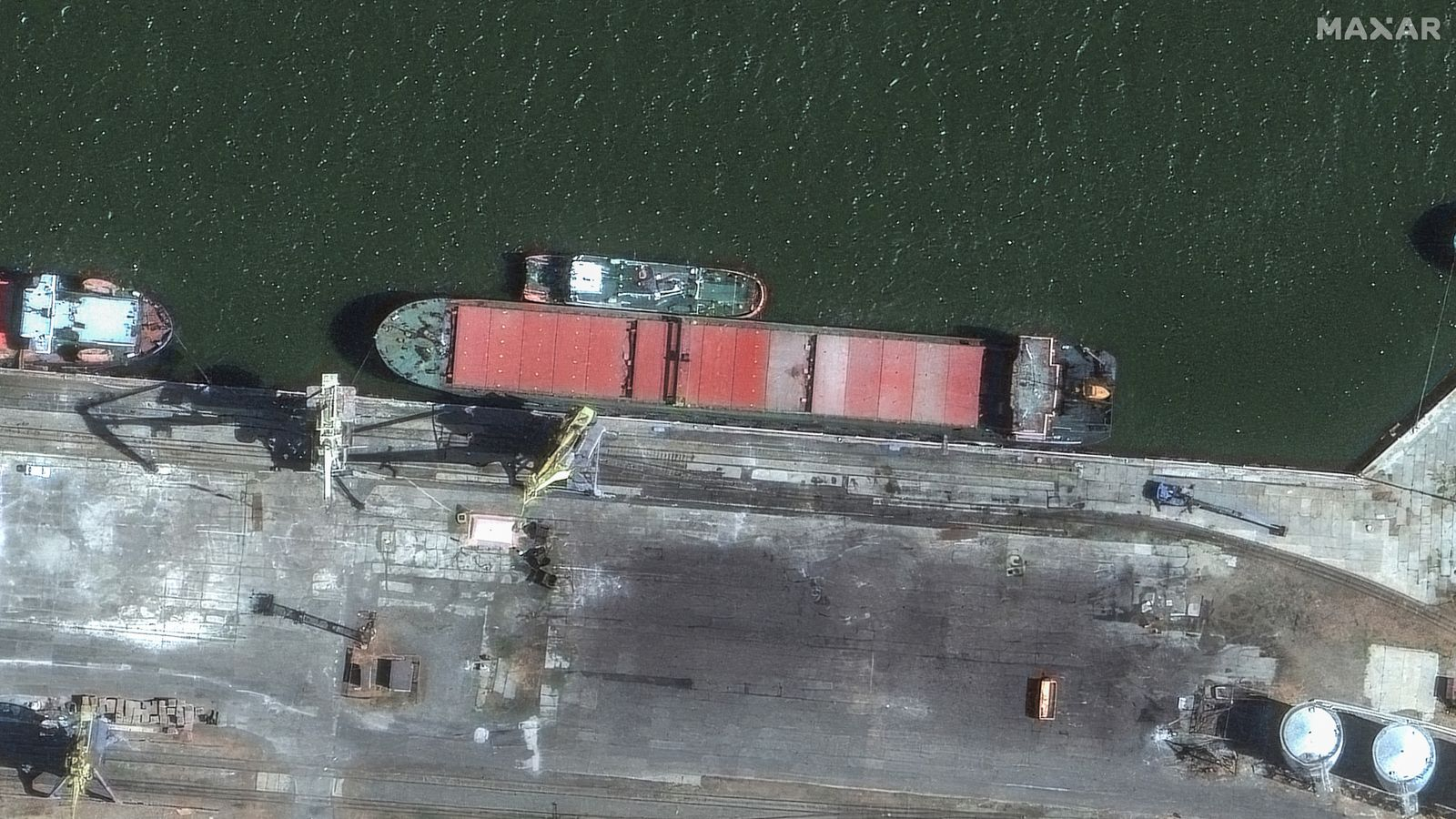
Satellite imagery from Maxar Technologies shows the Russian cargo ship Port Olya 3, suspected of delivering Iranian ballistic missiles to Russia, docked at the Port Olya in Astrakhan on September 4. This comes after the vessel’s prior visit to Iran’s Amirabad port on August 29. The US Treasury has confirmed the ship’s involvement in transporting CRBMs (close-range ballistic missiles) from Iran to Russia for use in the war against Ukraine, imposing sanctions in response.

This alleged missile shipment marks a significant escalation in Iran’s military support for Russia, which has included supplying thousands of Shahed attack drones and building a drone factory in Russia. US Secretary of State Antony Blinken revealed that the Russian military likely received Fateh-360 missiles from Iran, expected to be used in Ukraine within weeks. These missiles have a range of 120 kilometers and can carry a 150-kilogram payload, making them effective for targeting Ukrainian positions at long distances.

Despite Iran’s denial of providing ballistic missiles, US officials and the Institute for the Study of War (ISW) suggest that these missiles will likely target Ukrainian energy, military, and civilian infrastructure. Ukrainian officials summoned Iran’s charge d’affaires, warning of severe consequences if the reports prove true.

As the military partnership between Iran and Russia strengthens, it remains to be seen whether this escalation will push the US and European allies to loosen restrictions on Ukraine’s use of missiles against Russian targets.