OpenAI Launches GPT-5 Amid Industry Push for AI Returns on Investment
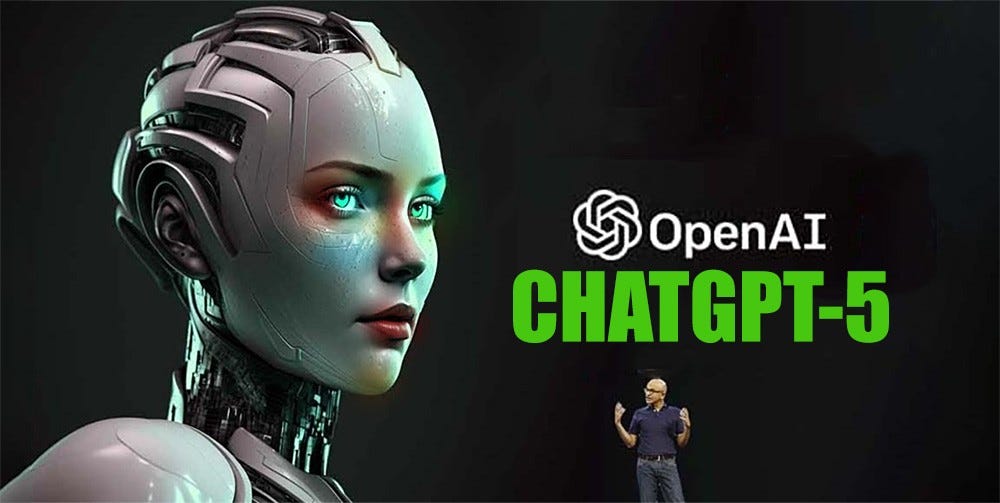
OpenAI unveiled GPT-5 on Thursday, the latest iteration of its influential AI technology powering ChatGPT, available now to all 700 million users of the chatbot platform. This launch marks a key moment as the AI sector seeks to justify massive investments by demonstrating clear enterprise value.
While consumer enthusiasm remains strong, with users captivated by ChatGPT’s conversational capabilities, business spending on AI has yet to fully materialize. The industry’s top players—Alphabet, Meta, Amazon, and Microsoft (which backs OpenAI)—are collectively spending nearly $400 billion this fiscal year on AI infrastructure, raising expectations for significant returns.
OpenAI is currently in talks to let employees cash out at a $500 billion valuation, up from $300 billion. The company has attracted high-profile talent with signing bonuses reaching $100 million, underscoring intense competition for AI expertise.
CEO Sam Altman emphasized GPT-5’s advancements in software development, finance, and health queries, describing it as capable of expert-level responses comparable to PhD-level knowledge. A standout feature demonstrated was “vibe coding”—the ability to generate fully functioning software from natural language prompts, highlighting a new era of software on demand.
However, early reviewers suggest that the leap from GPT-4 to GPT-5, while impressive, may not be as large as previous model upgrades. Altman acknowledged GPT-5 still cannot autonomously learn, a critical step toward matching human-like intelligence.
A new capability called “test-time compute” enables GPT-5 to spend extra computational effort on harder problems, improving its reasoning and problem-solving. This technology is now publicly accessible for the first time and is central to OpenAI’s mission to build broadly beneficial AI.
Despite GPT-5’s launch, OpenAI faces challenges, including a shortage of new training data and the complexity and cost of running large-scale AI training. The company sees infrastructure expansion worldwide as essential for broader AI adoption.
Altman remains optimistic about AI’s future impact but stresses that current investments in infrastructure are still insufficient to realize its full potential globally.