Yazılar

Xiaomi Tops Wearables Market in Q1 2025 with 19% Share, Surpassing Apple: Canalys Report

Xiaomi reclaimed its position as the leading vendor in the wearable band market during the first quarter of 2025, following the launch of refreshed Mi Band and Redmi Watch models earlier this year. According to a Canalys report, the Beijing-based tech giant surpassed Apple, driven by a remarkable 44 percent year-over-year growth in shipments. Other notable players in the market included Huawei, Samsung, and Garmin, who secured third, fourth, and fifth places respectively. The surge in Xiaomi’s sales highlights its growing appeal among consumers seeking affordable and feature-rich wearable devices.

The Canalys Wearable Band Analysis report further revealed that global shipments of wearable bands reached 46.6 million units in Q1 2025, marking a 13 percent increase compared to the same period last year. Basic wearables, known for their simplicity and affordability, led the growth, with Xiaomi shipping the highest volume thanks to its new releases: the Xiaomi Smart Band 9 and Redmi Band 5. The Redmi Band 5, in particular, emerged as Xiaomi’s best-selling device, helping to secure its top spot in the market. Apple and Huawei followed closely behind, holding the second and third positions.

Apple’s market share in the wearable band segment stood at 16 percent during Q1, and Canalys predicts that this figure will rise in the latter half of 2025. This optimism is fueled by the upcoming launch of Apple’s 10th-anniversary smartwatch, which is expected to attract significant consumer interest. Meanwhile, Huawei experienced a solid 36 percent growth in shipments year-on-year, reaching 7.1 million units. This growth was largely driven by the strong performance of Huawei’s Fit and GT wearable series.

The Canalys study also shed light on consumer preferences in the smartwatch market, highlighting affordability, long battery life, and robust health tracking features as the top priorities for buyers. These factors are shaping the competitive landscape as manufacturers race to deliver devices that balance cost, functionality, and user experience. Xiaomi’s recent success demonstrates how aligning product offerings with these consumer demands can lead to substantial market gains.
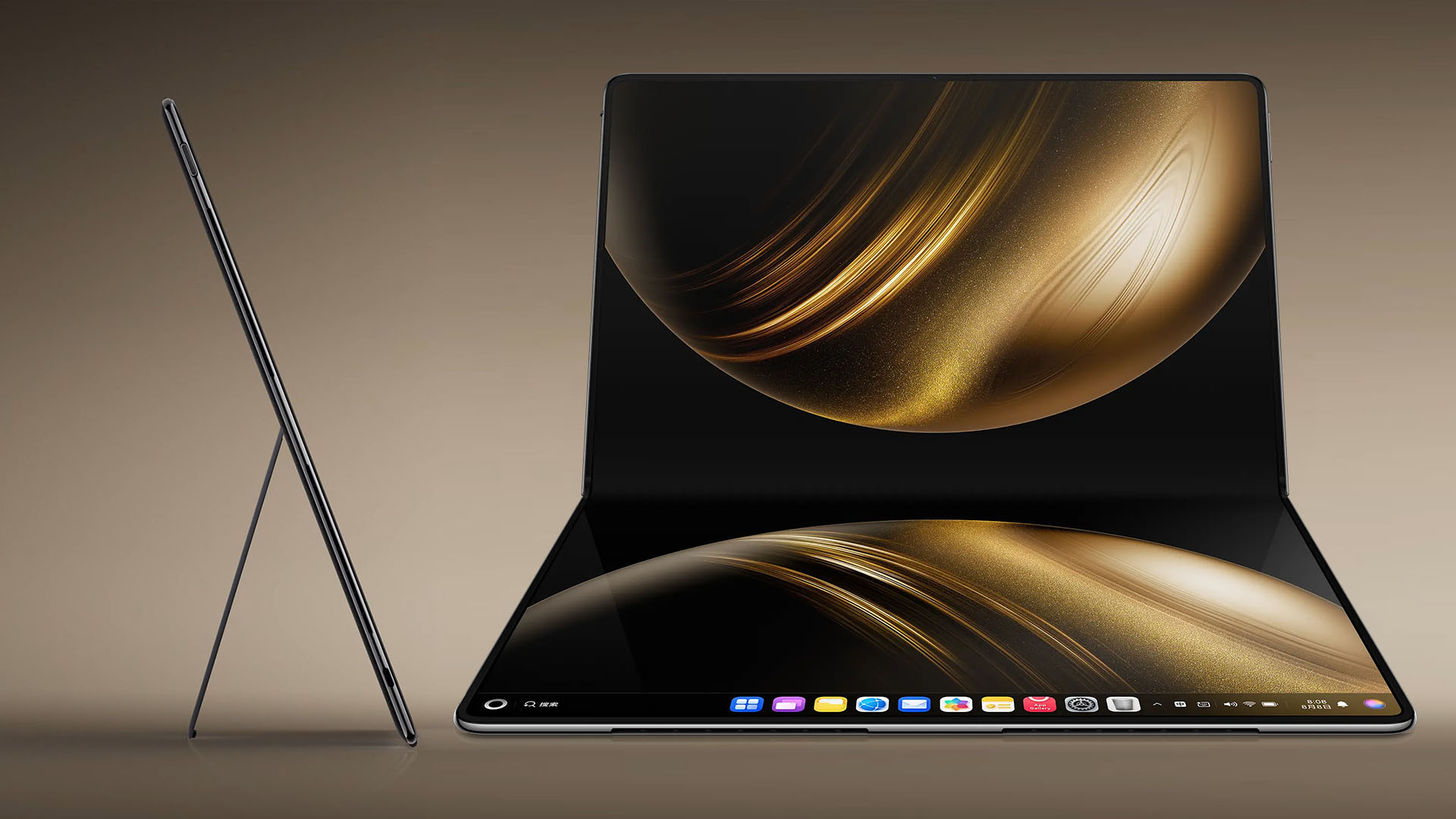
Huawei Introduces MateBook Fold Ultimate Featuring 18-Inch Dual-Layer Flexible OLED Display: Pricing and Key Specs

Huawei officially launched the MateBook Fold Ultimate Design in China alongside its new Nova 14 smartphone series. This foldable laptop features an impressive flexible OLED display that unfolds to a large 18-inch screen with a unique 4:3 aspect ratio. The display uses LTPO technology, a first for laptops, which reportedly boosts energy efficiency by 30 percent. The hinge design, called a basalt water drop hinge, ensures a seamless fold and smooth transition between the folded and unfolded states. Users can choose between a virtual keyboard on the screen or a physical, ultra-thin portable keyboard for versatility.

The pricing for the Huawei MateBook Fold Ultimate Design starts at CNY 23,999 for the model with 32GB RAM and 1TB storage, while the higher-spec 32GB + 2TB variant is priced at CNY 26,999. Pre-orders are open through Huawei’s official e-store in China, with sales beginning on June 6. The laptop is offered in three elegant colors: Cloud Water Blue, Forging Shadow Black, and Skyline White, catering to different style preferences.

In terms of specifications, the MateBook Fold Ultimate Design sports a high-resolution 18-inch 3K OLED display with 3,296 x 2,472 pixels and a peak brightness of 1,600 nits. The panel supports HDR10+ and has TÜV Rheinland Eye Comfort 3.0 certification to reduce eye strain. When folded, it transforms into a 13-inch screen with a 3:2 aspect ratio and 2,472 x 1,648 pixels resolution. Running HarmonyOS 5 out-of-the-box, the laptop comes with 32GB of RAM and up to 2TB of SSD storage. It also features an 8-megapixel front camera for video calls and content creation.

The device is powered by a 74.69Wh battery and supports fast charging at 140W via USB Type-C. For connectivity, it offers Wi-Fi 6E and Bluetooth 5.2, ensuring fast and stable wireless connections. The MateBook Fold Ultimate Design also includes a six-speaker sound system paired with a quad-microphone array for immersive audio and clear voice input. Additionally, the laptop comes with an integrated stand and a super-thin, 5mm aluminum alloy portable keyboard to enhance productivity and convenience on the go.

Malaysia Denies Government Role in AI Project Involving Huawei Ascend Chips

Malaysia’s Ministry of Investment, Trade and Industry (MITI) has officially clarified that the government is not involved in a reported artificial intelligence project using Huawei’s Ascend chips, distancing itself from earlier reports suggesting official backing.

The clarification follows local media coverage on Monday that claimed Malaysian firm Skyvast Corporation would deploy Huawei’s Ascend AI chips in a domestic initiative. In response, MITI stated the project “was not developed, endorsed, or coordinated by the Government of Malaysia, nor does it form part of any Government-to-Government agreement or nationally mandated technology programme.”

Huawei, for its part, told Reuters that it has not sold any Ascend chips in Malaysia, and that the Malaysian government has made no such purchases. The Chinese tech giant developed the Ascend line after being cut off from U.S. suppliers, positioning the chips as domestic alternatives amid Washington’s escalating export restrictions on advanced semiconductors, particularly from Nvidia.

The Malaysian ministry also reaffirmed its commitment to complying with international export control laws, national security regulations, and guidance from global regulatory bodies. The statement appears aimed at avoiding diplomatic friction amid growing U.S. scrutiny over AI-related tech flows involving China.

Skyvast Corporation has not responded to requests for comment.

The backtracking highlights the sensitivity of semiconductor and AI technology partnerships in the current geopolitical climate, especially as countries weigh alignment with U.S.-led technology sanctions while maintaining ties with Chinese tech firms.