Yazılar

AI Leaders Urge U.S. to Boost Exports and Infrastructure to Stay Ahead of China

Top executives from OpenAI, Microsoft, and AMD warned U.S. lawmakers on Thursday that the country risks losing its lead in artificial intelligence to China unless it expands infrastructure, loosens AI chip export restrictions, and strengthens workforce training. Their testimony before the U.S. Senate Commerce Committee, chaired by Senator Ted Cruz, emphasized the urgent need for pro-growth AI policies to counter China’s rapid advancements.

The call to action follows China’s DeepSeek AI breakthrough last year and Huawei’s rollout of advanced AI chips, both of which have shaken Washington’s confidence in maintaining AI dominance.

The number-one factor that will define whether the U.S. or China wins this race is whose technology is most broadly adopted in the rest of the world,” said Brad Smith, President of Microsoft. He added that Microsoft has banned internal use of DeepSeek due to data privacy and propaganda concerns.
The lesson from Huawei and 5G is that whoever gets there first will be difficult to supplant.”

Key Takeaways from the Senate Hearing:

  • OpenAI CEO Sam Altman emphasized the need for massive infrastructure investment, including data centers and power generation, to fuel AI’s growth.

  • AMD CEO Lisa Su highlighted the importance of maintaining competitiveness in AI chip design while also ensuring export flexibility.

  • Smith called for broader AI education, R&D funding, and skilled labor development, including more electricians for AI facilities.

The tech industry is pushing back against Biden-era AI export rules that aimed to limit China’s access to powerful AI chips. In response, the Trump administration is preparing to rescind those curbs and replace them with a new framework — a move praised by Cruz, Altman, and Su during the session.

The Biden administration’s misguided midnight AI diffusion rule on chips and model weights would have crippled American tech companies’ ability to sell AI to the world,” Cruz said.

China’s DeepSeek, based in Hangzhou, made waves by launching a powerful, cost-effective AI model competitive with OpenAI and Meta — a move that intensified pressure on U.S. lawmakers to act quickly.

Meanwhile, Huawei is preparing to mass-ship advanced AI chips to Chinese customers despite ongoing U.S. trade restrictions.

With national security, economic leadership, and technological supremacy at stake, AI executives stressed that global market penetrationnot just technical capability—will determine who wins the AI race.

China’s SMIC Reports Strong Q1 Profit Surge but Warns of Cloudy Outlook Amid Tariffs and Yield Risks

Semiconductor Manufacturing International Corp (SMIC) posted a strong financial performance in the first quarter, with profit surging 162% to $188 million and revenue rising 28% year-over-year, driven partly by rush orders from U.S. clients seeking to preempt newly imposed tariffs. However, despite the gains, the results missed analyst expectations, and SMIC’s Hong Kong-listed shares dropped 6.8% following a cautious Q2 forecast.

SMIC, China’s largest chip foundry, said it expects revenue in the second quarter to decline by as much as 6%, citing potential challenges from lower production yields as the company integrates new manufacturing equipment.

Key Financials (Q1 2025):

  • Profit attributable to shareholders: $188 million (vs. $222.4M LSEG estimate)

  • Year-over-year profit growth: +162%

  • Revenue growth: +28%

  • U.S. customer contribution: 12.6% of revenue (up from 8.9% in Q4 2024)

Tariff Impact and Industry Risks:
Co-CEO Zhao Haijun acknowledged the escalating U.S.-China trade tensions, noting that although the current impact is limitedthanks to tariff exemptions and a diversified supply chainuncertainty looms for the second half of the year.

If customers cut back purchases due to price increases, the sector could face a hard landing,” Zhao warned.

The company remains largely focused on legacy chips for consumer electronics and home appliances, while advanced chips, such as those powering Huawei smartphones, make up a very small portion of its business. SMIC has not confirmed any production ties to Huawei.

Broader Policy Context:

  • The Trump administration in April approved tariff exclusions on selected Chinese electronics including smartphones, computers, and memory chips, partially easing import pressures for U.S. firms.

  • Meanwhile, Chinese authorities have granted exemptions on some semiconductor imports and are in active talks with the domestic chip sector to mitigate the trade war’s impact.

Despite its strong Q1, SMIC’s outlook reflects the fragility of the global semiconductor supply chain in a climate of geopolitical tension, policy shifts, and technological transitionespecially as it scales new equipment and process nodes.

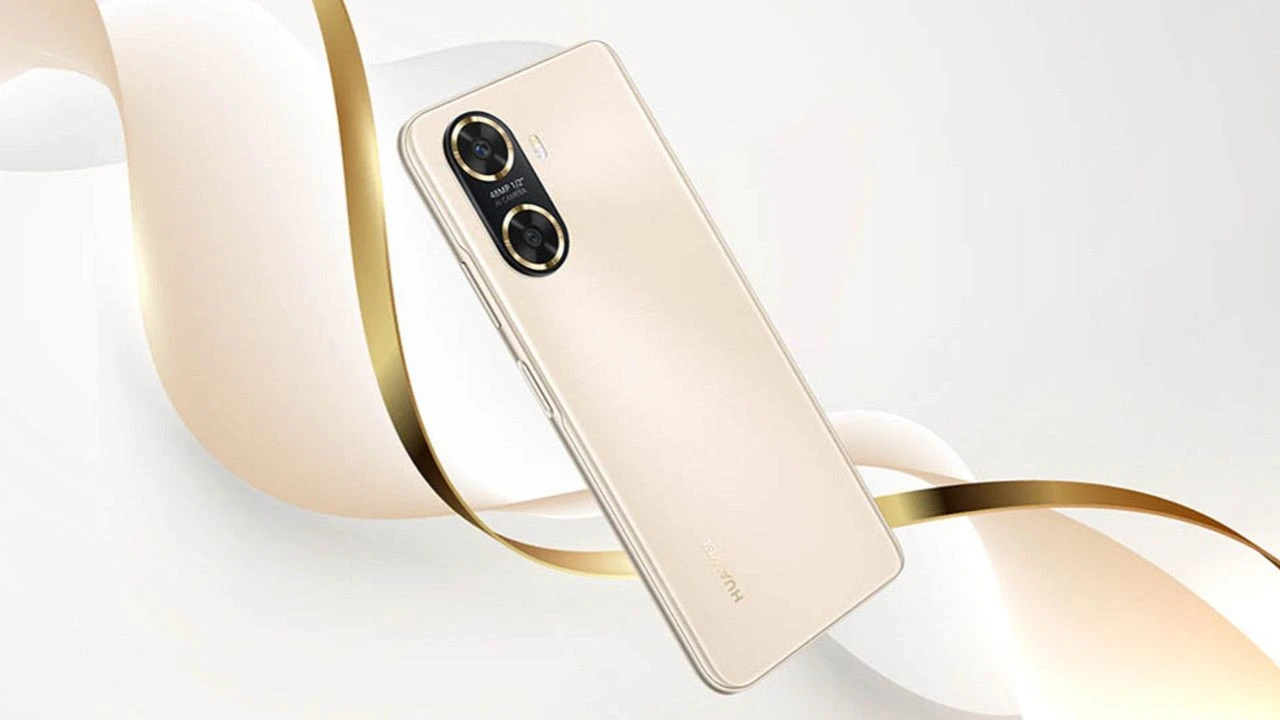
Huawei Enjoy 80 Launched with 6,620mAh Battery and 50MP Camera: Price and Full Specifications Revealed

The Huawei Enjoy 80 has officially launched in China, offering a range of features that make it an appealing option for those seeking a mid-range smartphone. Powered by a robust 6,620mAh battery, the device supports 40W fast charging, allowing for quick top-ups with the included power adapter. The smartphone also features a 50-megapixel primary camera, which promises high-quality photos, and an 8-megapixel selfie camera for clear and detailed self-portraits. Running on HarmonyOS 4.0, it also boasts up to 512GB of internal storage and 8GB of RAM, offering ample space and smooth performance for daily tasks.

The pricing of the Huawei Enjoy 80 starts at CNY 1,199 (around Rs. 14,000) for the base variant with 8GB of RAM and 128GB of storage. The higher variants with 256GB and 512GB of storage are priced at CNY 1,399 (roughly Rs. 16,300) and CNY 1,699 (approximately Rs. 19,800), respectively. The phone is available in four distinct color options: Azure Blue, Field Green, Gold Black, and Sky White. These can be purchased directly through the Huawei China e-store, providing various choices for users in terms of design.

In terms of display, the Huawei Enjoy 80 comes with a 6.67-inch HD+ LCD screen, featuring a resolution of 720×1,604 pixels. The screen offers a 90Hz refresh rate and can reach a peak brightness of 1,000 nits, ensuring a pleasant viewing experience even in bright conditions. While the company has not disclosed the specific chipset powering the device, it is designed to handle everyday tasks with ease. The phone also features an IP64 rating for dust and splash resistance, making it a durable option for various environments.

One standout feature of the Huawei Enjoy 80 is its Enjoy X Key, a dedicated button on the left edge of the device that allows quick access to frequently used functions. For security, it includes a side-mounted fingerprint sensor. The phone also supports an array of connectivity options, including 4G, Bluetooth 5.1, Wi-Fi 5, a 3.5mm headphone jack, and a USB Type-C port. Additionally, it includes an IR blaster, allowing users to control compatible household appliances directly from their phone, making it a practical device for everyday use.