Yazılar

EU Plan to Phase Out High-Risk Tech Draws Fire From China’s Huawei

The European Union plans to phase out components and equipment from so-called high-risk technology suppliers in critical sectors, under proposed revisions to the EU Cybersecurity Act that have drawn sharp criticism from Huawei.

The draft proposal, released by the European Commission, aims to strengthen protections against rising cyber and ransomware attacks, foreign interference and espionage risks, while reducing Europe’s dependence on non-EU technology providers. Although the Commission did not name specific companies or countries, Huawei is widely expected to be among those affected.

EU technology chief Henna Virkkunen said the measures would improve security of critical ICT supply chains and bolster Europe’s technological sovereignty. The new rules would apply to 18 key sectors, including telecom networks, cloud services, semiconductors, energy systems, medical devices, drones and connected vehicles.

Under the proposal, mobile operators would have 36 months after publication of a high-risk supplier list to phase out key components. Additional timelines for fixed and satellite networks will be set later. Any restrictions would follow formal risk assessments and market impact studies.

Huawei said excluding suppliers based on country of origin rather than technical evidence violates EU legal principles and World Trade Organization obligations, echoing criticism from China’s foreign ministry. Industry group Connect Europe warned the measures could impose billions of euros in extra costs. The proposal must still be negotiated with EU governments and the European Parliament before becoming law.

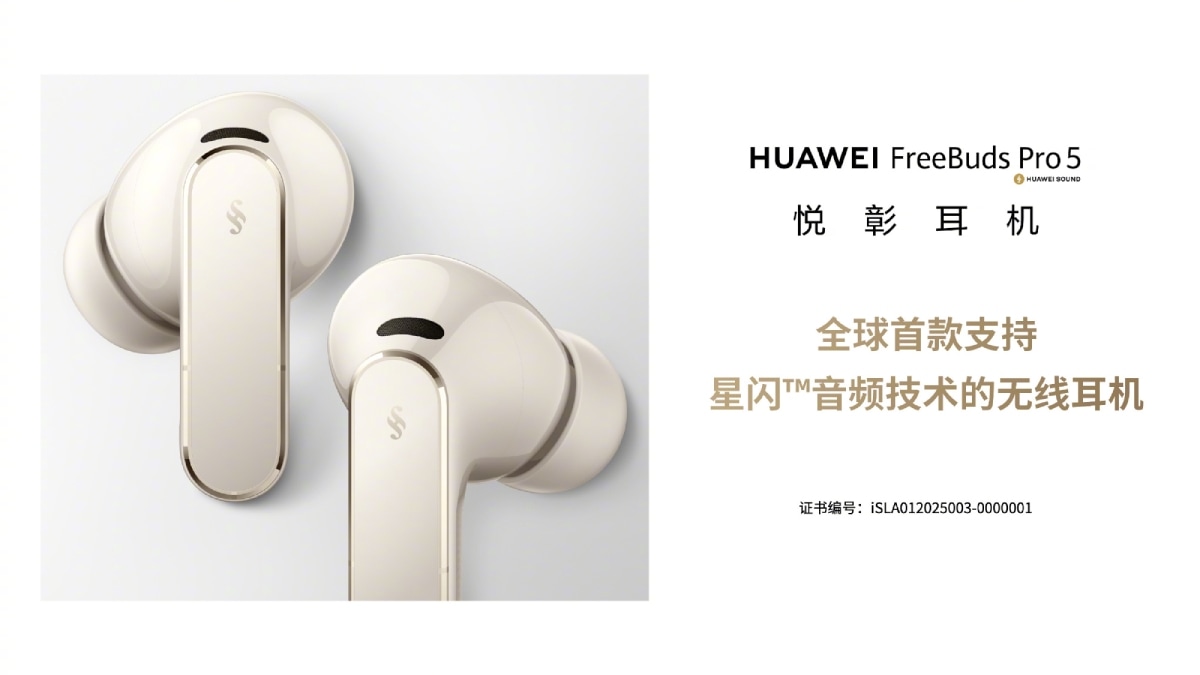
Huawei Confirms November Launch for FreeBuds Pro 5 Featuring NearLink Audio Technology

Huawei is set to launch the FreeBuds Pro 5 later this month in China, marking the company’s latest flagship entry in the wireless earbuds market. Reservations are now open, allowing consumers to preview the earbuds’ sleek design and available color options. The FreeBuds Pro 5 will succeed the FreeBuds Pro 4, which debuted in November 2024 and offered up to 33 hours of total battery life.

The upcoming earbuds have been teased with NearLink Audio technology, promising enhanced connectivity and superior audio performance. He Gang, CEO of Huawei’s Consumer Business Unit, shared the teaser on social media, giving fans a first look at the earbuds’ design and confirming the imminent launch. The FreeBuds Pro 5 is expected to continue Huawei’s focus on premium sound quality and innovative features in the TWS segment.

huawei freebuds pro 5 huawei teaser inline freebuds pro 5

The launch may coincide with the release of the Huawei Mate 80 series, indicating a strategic push by the company to strengthen its consumer electronics ecosystem in China. With advanced features and an emphasis on audio quality, the FreeBuds Pro 5 aims to compete strongly in the crowded flagship earbuds market, targeting both music enthusiasts and tech-savvy consumers.

As the launch date approaches, Huawei enthusiasts are eager to see how NearLink Audio technology enhances wireless audio experiences. With the combination of improved battery life, sleek design, and cutting-edge connectivity, the FreeBuds Pro 5 could set a new standard for the company’s premium audio offerings, further expanding Huawei’s presence in the competitive TWS earbuds space.

DeepSeek Researcher Voices Pessimism About AI’s Future Impact Despite Company’s Global Success

In its first major public appearance since becoming a global AI sensation, Chinese developer DeepSeek struck a surprisingly cautious tone about the technology’s long-term impact on society.

At the World Internet Conference in Wuzhen, Chen Deli, a senior researcher at DeepSeek, warned that artificial intelligence could create major social disruptions within the next two decades. “In the next 10–20 years, AI could take over the rest of work humans perform and society could face a massive challenge,” Chen said. “I’m extremely positive about the technology, but I view the impact it could have on society negatively.”

Chen shared the stage with executives from five other Chinese AI companies—Unitree, BrainCo, and others—collectively referred to as the country’s “six little dragons” of AI innovation. While praising AI’s potential in the short term, Chen stressed that companies like DeepSeek must act as “defenders” of social stability as automation accelerates.

DeepSeek rose to global prominence in January after releasing a low-cost open-source AI model that outperformed several leading U.S. systems. The company’s meteoric rise has since made it a symbol of China’s technological resilience amid intensifying competition with the United States.

Despite its success, DeepSeek has remained mostly silent publicly. Its only major appearance this year came when founder and CEO Liang Wenfeng met President Xi Jinping in February. The company has since skipped several major tech events, adding to its enigmatic reputation.

DeepSeek has continued developing its technology quietly, unveiling in September a new V3 model that it described as “experimental,” optimized for efficiency and longer text processing. Its work has also boosted China’s domestic chip ecosystem: hardware makers Cambricon and Huawei now build processors compatible with DeepSeek’s models.

In August, DeepSeek’s announcement of an upgraded model optimized for Chinese-made chips caused local semiconductor stocks to surge—underlining how the company remains both a technical pioneer and a national symbol of self-reliance in AI.