Yazılar

Qualcomm Forecasts Strong Q2, Shares Drop After Licensing Outlook

Qualcomm exceeded analysts’ expectations for Q1 sales and adjusted profits but forecast a more tempered outlook for its patent licensing business, sending its stock price down 4.8% in after-hours trading. The company reported Q1 sales of $11.67 billion and adjusted earnings of $3.41 per share, significantly outperforming the expected $10.93 billion and $2.96 per share. For the upcoming fiscal second quarter, Qualcomm projected sales of $10.75 billion and adjusted profits of $2.80 per share, both surpassing analysts’ expectations.

However, the company warned that its patent licensing business, which generates revenue from companies paying royalties for 5G technology, would not see growth this year after a deal with Huawei expired. This news caused some investor concern, despite positive projections in Qualcomm’s chip business. Licensing revenue for Q2 is forecasted at $1.35 billion, below the $1.43 billion analysts anticipated.

The market’s response was mixed, with Qualcomm’s shares dropping by 4.8% after the announcement. Investors have been closely monitoring Qualcomm’s involvement in the AI and smartphone markets, and while the company continues to secure major deals, such as with Samsung and Microsoft, the uncertain future of its Huawei agreement looms large.

Despite the dip in licensing revenue expectations, Qualcomm’s position in the smartphone, automotive, and IoT markets continues to strengthen. The company reported strong handset revenue of $7.57 billion, up 13% from the previous year, and its automotive chip sales saw significant growth, reaching $961 million.
 

Huawei Chairman Announces 2024 Revenue Exceeded $118 Billion

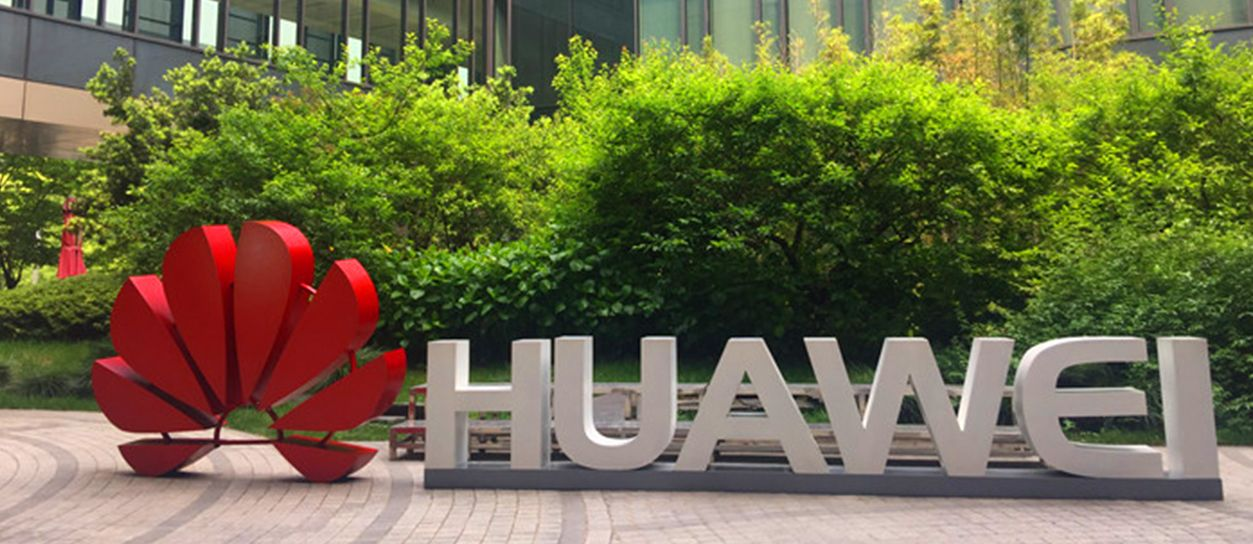
Huawei’s chairman, Liang Hua, announced on Wednesday that the company surpassed 860 billion yuan ($118.27 billion) in annual revenue for 2024, marking a significant recovery after the impact of U.S. sanctions. The company experienced a remarkable 22% year-on-year growth compared to 2023, when it reported 704.2 billion yuan in revenue. This marks Huawei’s fastest growth in four years, as it continues to adapt and rebuild its operations.

Liang made these remarks at a forum in Guangzhou, confirmed by a Huawei spokesperson. He emphasized that Huawei’s 2024 results align with the company’s expectations, with ICT infrastructure remaining stable, the consumer business returning to growth, and the smart car solutions business rapidly developing. He added that the company’s annual sales revenue would exceed 860 billion yuan.

Huawei’s consumer business saw a strong rebound beginning in August 2023, when it launched new smartphones featuring locally-produced chipsets that successfully navigated U.S. sanctions. This resurgence has allowed Huawei to capture a 16% share of the Chinese smartphone market, overtaking Apple, according to Canalys data.


Chinese Chip Makers and Cloud Providers Rush to Support DeepSeek’s AI Models

Chinese chip makers and cloud service providers are quickly integrating DeepSeek’s artificial intelligence models into their systems, marking a significant turning point for the nation’s AI industry. Companies like Moore Threads and Hygon Information Technology, both AI chip manufacturers, announced that their computing clusters and accelerators are now compatible with DeepSeek’s R1 and V3 models. Moore Threads even shared a celebratory post on WeChat, praising DeepSeek’s ability to drive China’s AI sector forward by utilizing domestically produced graphic processing units (GPUs).

Huawei Technologies, which also develops AI chips, revealed it is collaborating with AI infrastructure startup SiliconFlow to integrate DeepSeek’s models into its Ascend cloud service. This integration has been described as a “watershed moment” by Bernstein analysts, highlighting the growing independence of China’s AI sector from advanced U.S. hardware.

Cloud giants like Alibaba, Baidu, and Tencent have also jumped on board, offering DeepSeek’s models through their respective services. DeepSeek’s AI assistant, launched last month, quickly gained popularity by offering a more data-efficient alternative at a fraction of the cost of global competitors, surpassing ChatGPT in app downloads from Apple’s App Store within days.

The company has drawn attention globally with its groundbreaking approach. DeepSeek’s research, published in December, claimed that its V3 model’s training cost less than $6 million in Nvidia’s H800 chips—significantly lower than the billions spent by companies like Meta and Microsoft. This has been a major factor in DeepSeek’s rising prominence, with its founder, Liang Wenfeng, becoming a cultural figure in China.

While Microsoft and Amazon have started offering DeepSeek’s models, some countries, including Italy and the Netherlands, have raised concerns over privacy, leading them to either block or investigate the AI app.