Yazılar

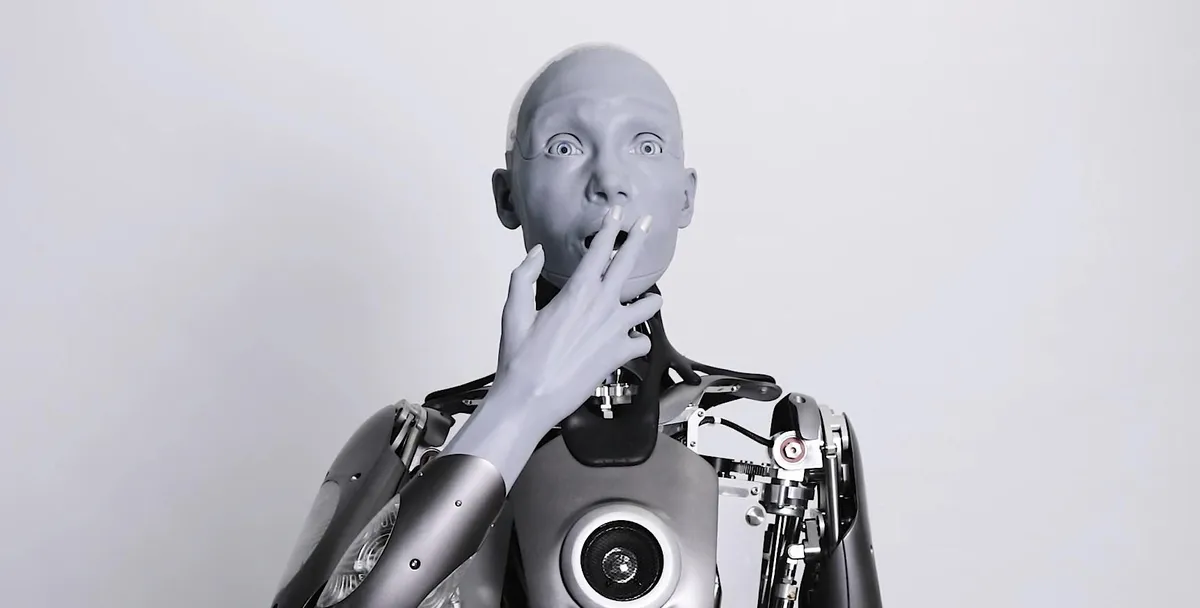
Nvidia CEO Predicts Humanoid Robot Revolution Within Five Years

Nvidia CEO Jensen Huang has predicted that humanoid robots will become widely used in manufacturing within the next few years, much sooner than many expect. Speaking at the company’s annual developer conference in San Jose, California, Huang unveiled new software tools designed to help robots navigate real-world environments more effectively.

In a conversation with journalists after his keynote address, Huang emphasized that the widespread presence of humanoid robots is not a long-term vision but an imminent reality. He suggested that manufacturing will be the first industry to adopt these robots due to its structured environment and well-defined tasks, making automation more feasible.

Factories provide a controlled setting where humanoid robots can be integrated with minimal disruption, Huang explained. He also highlighted the economic advantages, noting that the cost of renting a humanoid robot could be around $100,000, making them a viable alternative to human labor in certain roles.

Nvidia’s advancements in AI and robotics continue to drive innovation in automation, with the company at the forefront of enabling next-generation robotic systems.

Google Introduces New AI Models for Rapidly Growing Robotics Industry

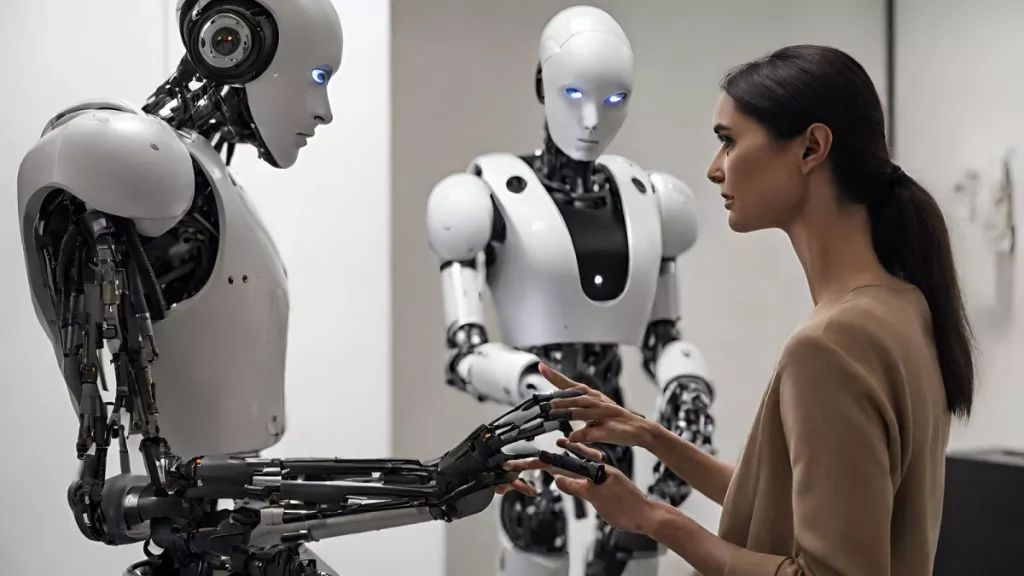
Google, the parent company of Alphabet, unveiled two new AI models on Wednesday, designed specifically for the rapidly advancing robotics industry. These models, based on Google’s Gemini 2.0 framework, aim to accelerate the development of robots across various sectors, especially in industrial settings.

The robotics field has experienced significant progress in recent years, with AI-driven advancements enabling faster commercialization of robots for tasks in factories and warehouses. Google’s new models are tailored to meet the growing demand for smarter robots capable of performing complex tasks.

The first model, Gemini Robotics, integrates vision, language, and physical action, enabling robots to interact with their environment through physical output. The second model, Gemini Robotics-ER, provides robots with a deeper spatial understanding, allowing them to reason and run programs with greater autonomy, expanding their capabilities.

These models cater to all types of robots, including humanoids and industrial robots, which are increasingly being adopted in warehouses and factories. Google emphasized that its AI models are designed to help startups reduce costs and speed up product development, which is crucial in a market where robotics innovation is moving quickly.

Google’s AI models have been tested on its ALOHA 2 bi-arm robotics platform but are versatile enough to be customized for other robots, such as Apptronik’s Apollo humanoid robot. Apptronik recently raised $350 million to scale production of its AI-powered robots, with Google participating in the funding round alongside other investors.

Though Google once owned the robotics firm Boston Dynamics, known for its advanced robot designs, it sold the company to SoftBank Group in 2017. However, the launch of these new AI models shows Google’s continued interest and involvement in the robotics space.

Elon Musk Plans to Implement Humanoid Robots in Tesla Factories for Internal Operations by 2025

Musk’s April Announcement: Tesla Robots to Perform Factory Tasks by Year-End, with Sales Expected by 2025 Devamını Oku