Yazılar

Physical AI Takes Centre Stage at CES, but Humanoid Helpers Remain Distant

Just four years after the launch of ChatGPT brought artificial intelligence into the mainstream, CES in Las Vegas this week was dominated by talk of “physical AI” — robots, humanoids and autonomous systems that move AI beyond software and into the real world.

The annual technology show highlighted a clear shift by the global tech and auto industries from pure AI software toward hardware-driven applications. From robotics and autonomous driving to AI-powered home devices, exhibitors showcased visions of how AI could reshape daily life in the coming years.

Chip designer Arm Holdings said AI is fuelling a fresh wave of innovation and demand. Arm told Reuters it has reorganised its business to create a dedicated physical AI unit aimed at expanding into robotics. “AI is really driving a whole innovation and demand cycle,” said Chris Bergey, head of Arm’s PC and mobile unit.

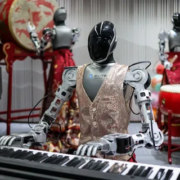
Humanoid robots drew particular attention. Machines from companies including LG Electronics played poker, folded paper and danced with visitors. But their slow, carefully scripted movements underlined persistent hurdles such as limited processing power, battery constraints and difficulty handling real-world situations beyond pre-programmed tasks. Analysts said affordable, capable humanoid assistants remain years away.

AI HARDWARE MEETS SOFTWARE
Major tech players used CES to underline the convergence of AI hardware and software. Lenovo hosted a high-profile event featuring Jensen Huang and Lisa Su, unveiling its Qira AI assistant designed to work across PCs, phones and wearables, including services from companies such as Expedia.

Meta Platforms showcased upgrades to its Ray-Ban Display glasses and Neural Band, while Google introduced its Gemini AI model for TVs and smart home devices.

Alongside headline products, CES also featured more questionable AI applications. From AI-powered hair clippers and dry-cleaning gadgets to digital pets and talking avatars, analysts noted that many devices previously branded as “smart” now simply carried the AI label.

CHIPS UNDER THE HOOD
Behind the scenes, chipmakers stressed the need to move AI workloads from the cloud onto devices to control costs. Intel launched its Panther Lake laptop chip, built using its new 18A manufacturing process, while AMD unveiled new processors for AI PCs.

Still, questions remain over consumer demand. “The general consumer is still not aware of what an AI PC really means,” said Ben Bajarin of Creative Strategies, adding that it could take time before the benefits become clear.

While CES made clear that physical AI is the industry’s next big push, experts agreed that truly useful, affordable humanoid servants are still a long way off.

Chinese Automaker Xpeng Pivots to “Physical AI” Strategy Amid Intensifying Competition

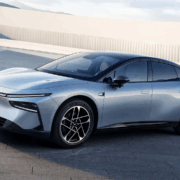
Chinese electric vehicle maker Xpeng said it aims to reposition itself as a “physical AI” company rather than a traditional carmaker, as it prepares to launch street trials of robotaxis and begin mass production of humanoid robots, reflecting a broader shift in the auto industry toward artificial intelligence.

Speaking at an event in Guangzhou on Thursday, founder and Chief Executive He Xiaopeng said deep integration of AI — including Xpeng’s in-house “Turing” AI chip — would help the company stand out in China’s fiercely competitive auto market. Xpeng is one of China’s top-selling EV startups and a technology partner of Volkswagen.

“Xpeng definitely does not want to become a car company that simply sells hardware cheaply,” He said. “We want to become a global technology company, a company with strong differentiation.”

The strategy mirrors efforts by Tesla, led by Elon Musk, which has expanded into robotaxis and humanoid robots as AI adoption accelerates worldwide. Highlighting the growing focus on physical AI, Arm Holdings told Reuters this week it had reorganized to create a dedicated physical AI unit targeting robotics.

Other Chinese automakers are pursuing similar paths. Li Auto announced an AI-focused repositioning in 2023, with founder Li Xiang saying the company invests more than 6 billion yuan ($859 million) annually in AI models, computing power and infrastructure.

Xpeng’s push into AI comes as China’s auto sector — the world’s largest — remains locked in a prolonged price war that has pressured margins. At the Guangzhou event, He unveiled four updated vehicle models, highlighting new software-driven features such as 3D navigation, advanced hazard alerts beyond the driver’s line of sight, and upgraded autonomous driving systems.

He said Xpeng is continuing to hire aggressively and invest in autonomous driving and humanoid robotics built around its proprietary AI capabilities. The company plans to begin mass production of humanoid robots in the second half of 2026 and will start street trials of robotaxis “very soon.”

Xpeng reported a net loss of 380 million yuan in the third quarter. He has previously said he expects the company to break even by the end of 2025.

Hyundai Plans to Deploy Humanoid Robots at U.S. Factory Starting in 2028

Hyundai Motor Group said it plans to begin deploying humanoid robots at its U.S. manufacturing plant in Georgia from 2028, marking a major step toward automating higher-risk and repetitive factory tasks.

The company unveiled the production version of the Atlas humanoid robot — developed by its subsidiary Boston Dynamics — at the Consumer Electronics Show. Hyundai did not disclose costs or volumes but said it ultimately aims to roll out the robots across all its manufacturing sites as part of its push into “physical AI.”

Atlas robots will initially handle parts sequencing from 2028, with duties expanding gradually as safety and quality benefits are validated. By 2030, Hyundai expects the robots to move into component assembly and, over the longer term, take on heavy-load, repetitive and complex tasks.

Hyundai said the robots are designed to reduce physical strain on workers and improve safety. Atlas can lift up to 50 kilograms, operate autonomously and function in industrial environments ranging from minus 20 to 40 degrees Celsius.

The company added that it is accelerating development through partnerships with AI leaders such as Nvidia and Google, as humanoid robots are expected to become a key segment of the emerging physical AI market.