Yazılar

Beijing Robot Store Stocks Einstein Replicas, Chess Partners in AI Leadership Push

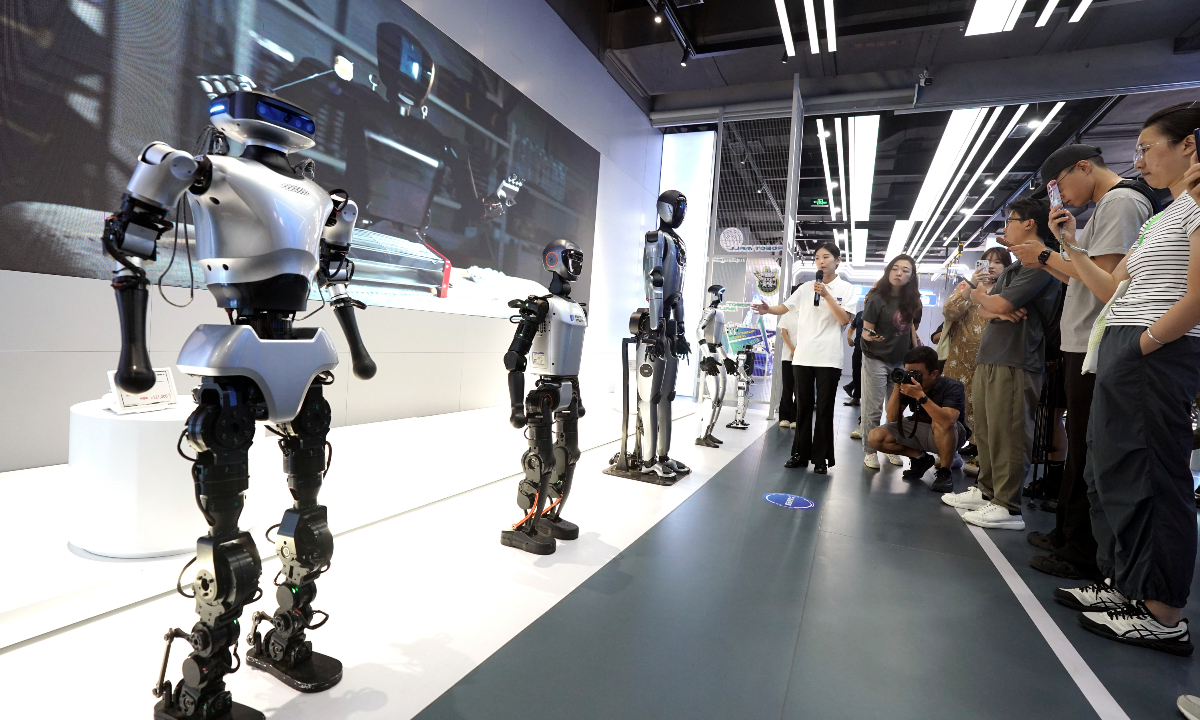
A new store opening in Beijing this Friday will showcase over 100 humanoid and consumer-oriented robots from more than 40 Chinese brands, including Ubtech Robotics and Unitree Robotics. Among the offerings are life-sized replicas of Albert Einstein designed to teach physics, robotic chess partners, and pet robots, highlighting China’s ambition to lead in artificial intelligence and robotics.

The store adopts a “4S” dealership model—providing sales, spare parts, maintenance, and survey services—catering to a growing consumer market with robot prices ranging from around 2,000 yuan ($278) to several million yuan. Wang Yifan, the store director, noted the importance of customized consumer solutions, stating that mass adoption of robots requires more than just manufacturers’ efforts.

China’s aggressive push into robotics aims to mitigate economic challenges such as its ageing population and slowing growth. The sector benefits from government support with subsidies exceeding $20 billion over the past year, alongside a planned one trillion yuan ($137 billion) fund to back AI and robotics startups.

Diligent Robotics Recruits Cruise Executives to Expand Beyond Healthcare

Diligent Robotics, known for its humanoid robot Moxi that supports hospitals by handling tasks like delivering supplies and lab samples, is gearing up to broaden its focus beyond healthcare logistics. On Thursday, the company announced the addition of two senior executives from Cruise, the autonomous robotaxi firm, signaling a strategic push into wider commercial markets.

Rashed Haq, formerly head of AI and robotics at Cruise, has joined Diligent as chief technology officer. He will lead the development of the company’s AI strategy, leveraging his experience in deploying large-scale autonomous systems. Todd Brugger, Cruise’s former chief of operations, steps in as Diligent’s chief operations officer, where he will be responsible for scaling the company’s operations and commercial growth across various industries.

Andrea Thomaz, CEO of Diligent Robotics, highlighted the value of their expertise, stating that Haq and Brugger’s backgrounds in autonomous vehicle technology are vital as the company expands its robotic solutions beyond hospitals.

Since its launch, Moxi has completed over one million deliveries in more than 30 hospitals across the United States, saving nearly 600,000 staff hours. Looking ahead, Diligent plans to be a leader in embodied AI, targeting the deployment of more than 3,000 robots by 2030.

Nvidia and Foxconn in Talks to Deploy Humanoid Robots at New Houston AI Server Factory

Taiwanese electronics manufacturer Foxconn and U.S. AI chipmaker Nvidia are reportedly negotiating to introduce humanoid robots at Foxconn’s upcoming factory in Houston, which will produce Nvidia AI servers. According to sources familiar with the discussions, this would mark the first time Nvidia products are manufactured with the help of humanoid robots and Foxconn’s inaugural use of such robots in an AI server production line.

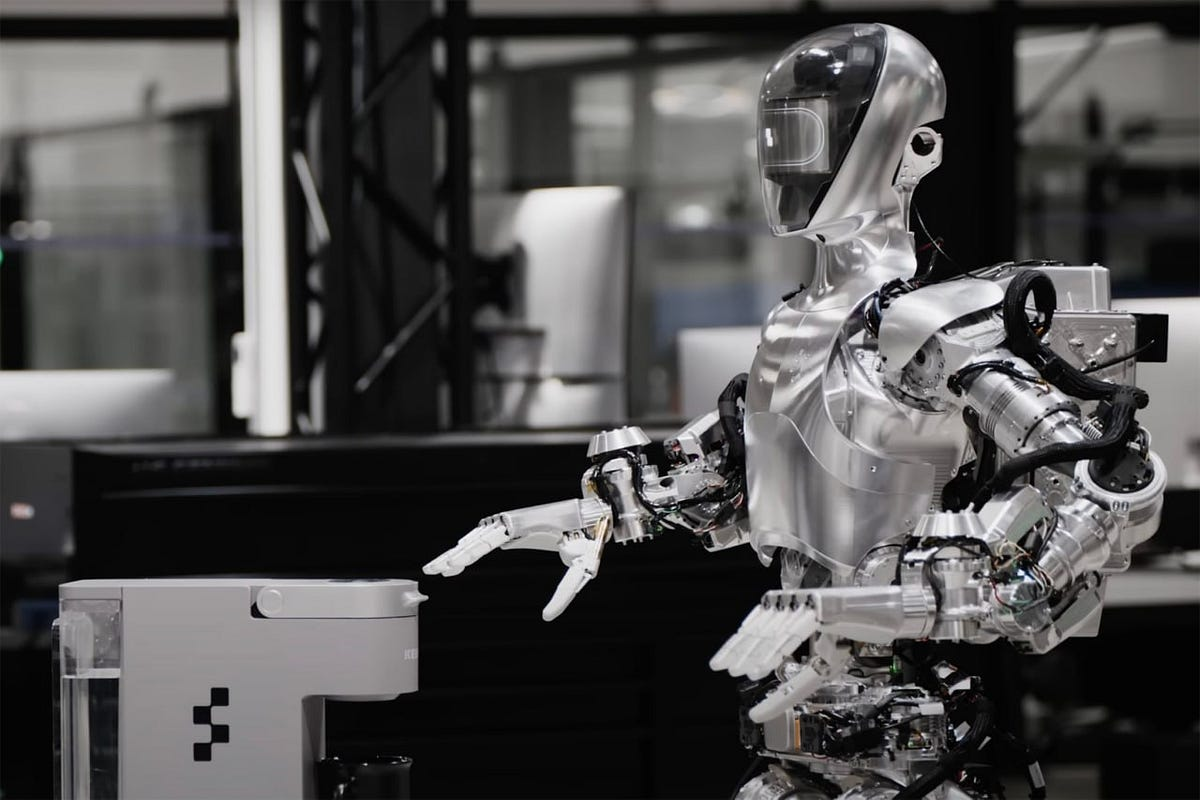
The planned deployment, expected to be finalized within months, represents a significant advancement in the use of human-like robots in manufacturing, potentially transforming factory processes. Foxconn is working on its own humanoid robots in collaboration with Nvidia and has also tested humanoids developed by China’s UBTech. Details on the specific types, appearances, and number of robots planned for the Houston facility remain unclear.

The goal is to have the humanoid robots operational by the first quarter of next year, coinciding with the start of production for Nvidia’s GB300 AI servers at the Houston plant. While precise tasks have not been confirmed, Foxconn has been training humanoid robots for activities such as picking and placing objects, cable insertion, and assembly, according to a May company presentation.

Foxconn’s Houston factory is particularly suited for humanoid robot deployment due to its newness and ample space compared to existing AI server production sites. Nvidia and Foxconn declined to comment on the matter, and sources spoke anonymously due to lack of authorization to speak publicly.

At a recent event in Taipei, Leo Guo, general manager of Foxconn Industrial Internet’s robotics unit, revealed plans to showcase two humanoid robot models at Foxconn’s annual tech event in November—one with legs and another on a wheeled autonomous mobile robot base, the latter being the more cost-effective option.

Nvidia announced in April its plans to build AI supercomputer manufacturing plants in Texas, partnering with Foxconn in Houston and Wistron in Dallas, with production ramp-up expected within 12 to 15 months.

For Nvidia, integrating humanoid robots in AI server manufacturing signifies a deeper commitment to robotics technology, building on its existing platform that supports humanoid robot development. Nvidia CEO Jensen Huang has forecasted that widespread use of humanoid robots in manufacturing is less than five years away.

Several automakers, including Mercedes-Benz and BMW, have experimented with humanoid robots on production lines, while Tesla is developing its own. China also heavily supports humanoid robotics, anticipating that many factory tasks will eventually be carried out by these robots.