Yazılar

Avride Partners with Hyundai to Expand Robotaxi Fleet

Self-driving technology startup Avride has announced a strategic partnership with Hyundai Motor Co to expand its fleet of robotaxis. Under the deal, Avride will incorporate 100 Hyundai IONIQ 5 cars into its fleet this year, with plans to grow further by 2026 as the company seeks to enhance its autonomous vehicle services and expand into new regions.

Avride, based in Texas, is joining a growing group of companies advancing autonomous vehicle technology and expanding their fleet of robotaxis. This includes Tesla, which is preparing to launch its own autonomous ride-hailing service in California and Texas, and Alphabet’s Waymo, which recently rolled out its robotaxi service on Uber’s platform in Austin.

As part of the partnership, Avride’s IONIQ 5 cars will be retrofitted with the company’s self-driving technology and used exclusively on Uber’s platform in Dallas, Texas. These vehicles will be manufactured at Hyundai’s Metaplant facility in Georgia, and the two companies also aim to explore autonomous delivery services using Avride’s technology.

Avride’s connection with Hyundai is not new, as the startup was previously part of Russian company Yandex’s self-driving division and has collaborated with Hyundai’s automotive supply unit in the past to develop systems for autonomous vehicles.

Hyundai Launches $18,000 EV in Japan to Target Market Dominated by Local Brands

Hyundai Motor has unveiled its plans to introduce the affordable Inster compact electric vehicle (EV) in Japan, priced at 2.85 million yen ($18,000). This marks the cheapest electric vehicle in Japan’s compact car market and is part of Hyundai’s strategy to penetrate a market long dominated by local giants like Toyota, Honda, and Nissan, who have well-established petrol and hybrid vehicle technologies.

The Inster, which debuted in Europe last year and was originally launched in South Korea as the Casper Electric, aims to appeal to Japanese consumers by offering an EV at a lower price point than competitors. For instance, BYD’s Dolphin, launched in 2023, is priced at 3.63 million yen, making Hyundai’s new model a more cost-effective alternative. Deliveries of the Inster in Japan are set to begin in May, as announced by Hyundai Mobility Japan CEO Toshiyuki Shimegi during the Tokyo Auto Salon.

The Japanese EV market has been slow to adopt electric vehicles, with the Nissan Sakura, the most popular EV in Japan, priced at 2.60 million yen, seeing a 40% sales drop last year, with fewer than 23,000 units sold. Despite this, Japan’s passenger car market remains sizable, with approximately 4 million vehicles sold annually.

Hyundai, which has set a goal to increase its sales in Japan by tenfold over the next five years, has faced stiff competition in the market. In 2024, Hyundai sold only 607 vehicles in Japan, while BYD sold 2,223 units. Hyundai’s return to Japan’s passenger car market in 2022, focusing exclusively on electric and fuel-cell vehicles, follows its exit in 2009 due to low sales. The Inster is expected to play a pivotal role in helping Hyundai gain recognition and grow its presence in the Japanese market, a sector largely dominated by Toyota and other local manufacturers.


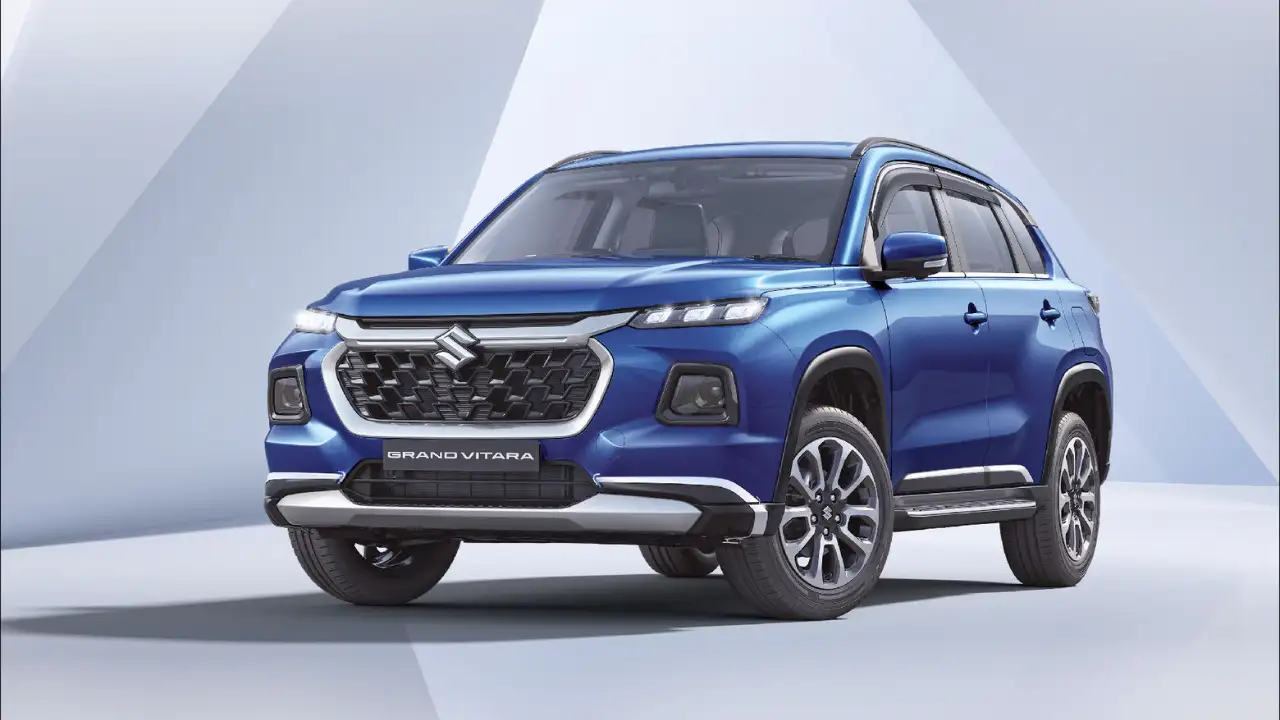
Maruti Suzuki Announces Car Price Increase of Up to 4% in India, Effective January 2025

In response to increasing input costs and operational expenses, Maruti Suzuki India Limited has announced that it will raise prices across its vehicle lineup starting January 2025. The price hike, which could be as high as 4 percent, will vary by model, as stated in the company’s official announcement. This decision comes as part of Maruti Suzuki’s ongoing efforts to navigate the challenges posed by rising manufacturing costs while ensuring that customers continue to receive high-quality vehicles.

Despite the price increase, Maruti Suzuki emphasized that it remains committed to optimizing costs wherever possible in order to minimize the impact on consumers. However, the company acknowledged that it must pass on some of the rising costs to the market in order to maintain its operations and uphold the standards of quality that have become synonymous with the brand. The price hike reflects the broader pressures on the automotive industry due to inflationary factors and other economic challenges.

The announcement follows Maruti Suzuki’s positive sales performance in recent months. In November 2024, the company reported a total of 181,531 vehicle sales, with 144,238 units sold domestically. This marks a solid increase from 134,158 units sold in the same month the previous year. However, the company’s sales figures did show a month-on-month decline from October 2024, when it achieved 159,591 units. Despite this, Maruti Suzuki’s strong growth in passenger vehicle sales highlights the brand’s resilience in a competitive market.

Maruti Suzuki’s price increase comes in the wake of similar moves by other automotive giants in India. On December 5, 2024, Hyundai Motor India Limited (HMIL) announced a price hike of up to Rs. 25,000 for its Model Year 2025 vehicles, effective from January 1, 2025. HMIL attributed the hike to rising input, logistics, and transportation costs, further compounded by unfavorable exchange rates. Like Maruti Suzuki, Hyundai emphasized its efforts to absorb costs where possible but noted that the adjustment was necessary to mitigate the ongoing financial pressures facing the automotive industry.