Yazılar

Apple Pulls ICE-Tracking Apps After Trump Administration Pressure, Sparking Free Speech Debate

Apple has removed ICEBlock and several similar apps from its App Store following direct contact from President Donald Trump’s administration, marking a rare case of U.S. federal intervention in app moderation. The apps, which alert users to the presence of Immigration and Customs Enforcement (ICE) agents, were accused by the Justice Department of potentially endangering law enforcement officers.

Alphabet’s Google also removed related apps on Thursday, citing policy violations, but said it had not been contacted by federal authorities before taking action.

In an emailed statement, Apple confirmed: “Based on information we’ve received from law enforcement about the safety risks associated with ICEBlock, we have removed it and similar apps from the App Store.” The Justice Department later verified that it had formally reached out to Apple, which complied with the request.

Attorney General Pam Bondi praised the removal, calling ICEBlock “a tool designed to put ICE agents at risk just for doing their jobs.” She added, “Violence against law enforcement is an intolerable red line that cannot be crossed.”

Joshua Aaron, the Texas-based developer of ICEBlock, denied those allegations, accusing Apple of “capitulating to an authoritarian regime.” He told Reuters his legal team is considering next steps, arguing that “civilian surveillance of federal agents is a matter of public interest and protected speech.”

Civil liberties experts note that courts have long upheld the right to record and track law enforcement activities in public spaces, as long as those efforts do not obstruct official duties. Six legal scholars told Reuters that surveillance of ICE operations is “largely protected under the U.S. Constitution.”

The crackdown comes amid renewed immigration raids and the expansion of ICE’s enforcement powers under Trump’s second term, backed by $75 billion in funding through 2029. The administration has also targeted visa holders and lawful residents over political activism, particularly pro-Palestinian advocacy, heightening tensions around civil monitoring of ICE activity.

The removal has drawn attention to Apple’s growing compliance with government takedown requests. In 2024 alone, Apple removed over 1,700 apps globally following such demands — most originating from China (1,300+), Russia (171), and South Korea (79). Until now, the United States had not appeared on that list, according to Apple’s transparency reports.

Critics argue the move sets a troubling precedent for state influence over digital speech. “This decision signals a chilling alignment between Big Tech and political power,” said one digital rights advocate. Others suggest Apple’s economic vulnerability—given that most iPhones are manufactured in China and subject to U.S. tariff pressures—may make the company more susceptible to government demands.

Apple removes tens of thousands of apps annually for reasons ranging from fraud to intellectual property violations, but politically motivated removals remain rare. Whether ICEBlock’s disappearance marks a one-time compliance case or a shift in tech–state relations could define the next chapter of America’s digital free speech debate.

Verizon’s Warning on Slow Subscriber Growth Triggers Telecom Selloff

Verizon Communications issued a warning about “soft” wireless subscriber growth in the first quarter, citing off-season promotions by competitors that have continued despite the typically slow post-holiday period. The announcement caused Verizon’s shares to plunge more than 7% on Tuesday, sparking a broader selloff in the U.S. telecom sector.

Chief Revenue Officer Frank Boulben, speaking at Deutsche Bank’s Media, Internet & Telecom Conference, noted that Verizon pulled back on customer incentives after an aggressive December quarter, while rivals maintained their promotional strategies, intensifying competition.

AT&T shares fell 5.3% as the company also reported elevated subscriber churn in January, while T-Mobile US saw a 4% decline. Analysts point to a shrinking pool of potential new mobile subscribers in an increasingly saturated market, with broadband giants like Comcast stepping up competition by targeting wireless customers.

Verizon also flagged a “slow start” for phone upgrades in the first quarter, attributing it to economic uncertainty and a lack of major new smartphone features. However, the company reaffirmed its annual target for single-digit growth in phone upgrades and expects a stronger rebound later in the year. Verizon anticipates adding more monthly-bill paying wireless subscribers in 2025 than the 900,000 it gained in 2024, supported by its customizable myPlan offerings.

Minimal Impact from Immigration Crackdown

Verizon and AT&T downplayed concerns about potential customer losses due to tighter U.S. immigration policies. President Donald Trump’s administration has intensified immigration enforcement, raising concerns about a reduced pool of new telecom customers. However, Boulben stated that any impact would be minimal, primarily affecting the low-end prepaid market rather than postpaid contracts that require formal identification.

Limited Threat from Satellite Internet

Both Verizon and AT&T dismissed concerns over competition from satellite internet providers like SpaceX’s Starlink, emphasizing that traditional wireless services remain more reliable and cost-effective. AT&T CFO Pascal Desroches acknowledged the potential of satellite-to-cell connectivity but described it as a limited business opportunity at present.

Meanwhile, T-Mobile has announced plans to launch its satellite-to-cell service with Starlink in July, priced at $15 per month.

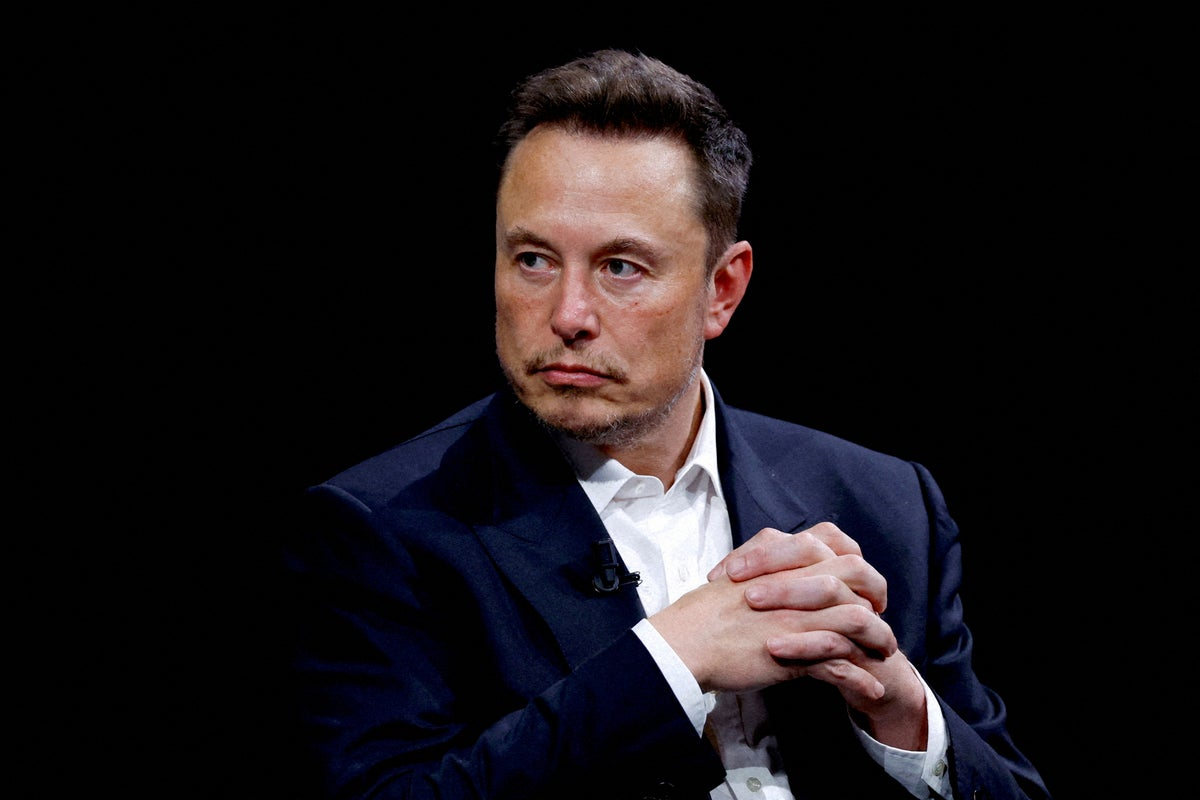
MAGA Figures Accuse Elon Musk of Retaliation Over H-1B Visa Dispute

A rift between MAGA supporters and Elon Musk has escalated into accusations that the tech billionaire is using his platform, X (formerly Twitter), to silence dissent over his pro-H-1B visa stance. Musk’s advocacy for the program, which allows highly skilled foreign workers to enter the U.S., has sparked criticism from prominent Trump allies, including Laura Loomer, Ann Coulter, and former Congressman Matt Gaetz.

Musk, the CEO of Tesla and SpaceX and President-elect Donald Trump’s pick to lead the newly created Department of Government Efficiency, has defended the H-1B visa program, emphasizing its importance for maintaining U.S. competitiveness in technology and innovation. “If you want your TEAM to win the championship, you need to recruit top talent wherever they may be,” Musk posted on X, adding that “bringing in via legal immigration the top ~0.1% of engineering talent” is “essential for America to keep winning.”

The defense of the visa program has drawn backlash from Trump loyalists. Laura Loomer, a far-right activist and outspoken Trump supporter, claimed that Musk retaliated by removing her verification badge on X and blocking her ability to earn revenue from paid subscriptions on the platform. Loomer, who has over 1.4 million followers, called Musk “a free speech fraud” and accused him of silencing her for opposing the H-1B program.

Conservative PAC, led by chairman Preston Parra, also reported that 53 accounts linked to the organization lost their verification badges. Parra expressed outrage, stating, “If anyone thinks the REAL backbone of the right wing and MAGA is gonna stand idly by while these big tech gillionaire Silicon Valley dweebs… steal our country, they’re mistaken.”

Musk has not publicly addressed the removal of badges but dismissed Loomer’s claims, posting that “Loomer is trolling for attention.” CNN has reached out to X and Loomer for comment, but no responses have been received.

The controversy highlights a growing tension within the MAGA movement over immigration policies, particularly as Musk’s pro-immigration stance contrasts with Trump’s critical position on the H-1B program. It also underscores the broader debate about free speech and platform governance, with Musk’s actions drawing scrutiny amid his claims of promoting open dialogue on X.