Yazılar

Austria’s Freedom Party Wins First Far-Right National Election Since World War II

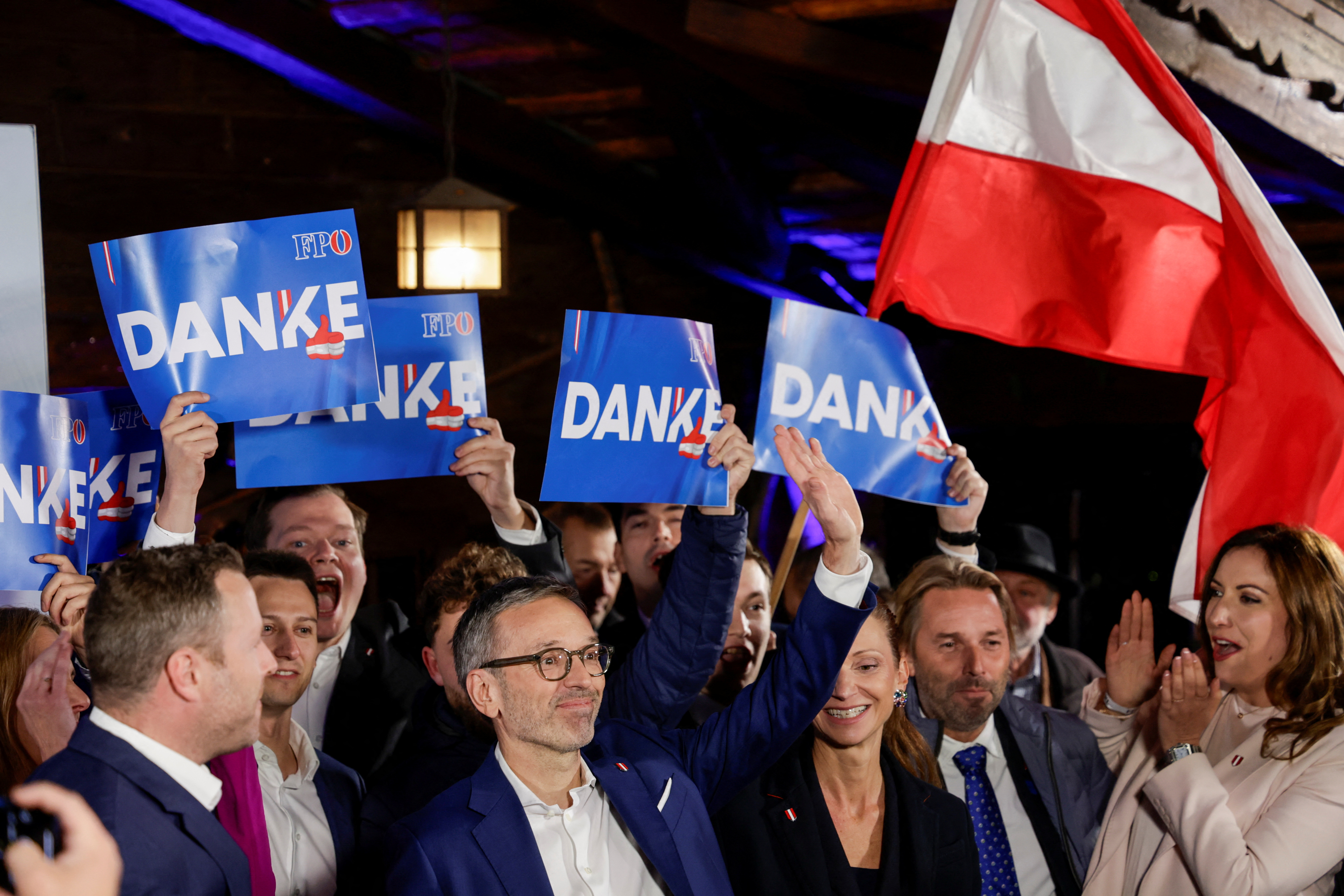
The Freedom Party (FPÖ) has achieved a historic victory in Austria’s national parliamentary elections, marking the first far-right win since World War II. Preliminary results showed the FPÖ capturing 29.2% of the vote, surpassing Chancellor Karl Nehammer’s Austrian People’s Party (ÖVP), which came in second with 26.5%. The Social Democrats (SPÖ) finished third with 21%. The current coalition government of Nehammer’s ÖVP and the environmentalist Greens has now lost its majority in parliament.

Herbert Kickl, the FPÖ leader and former interior minister, aims to become Austria’s new chancellor, but his path to power remains uncertain. He would need a coalition partner to form a majority government, but many political rivals have already indicated they are unwilling to work with him. Nehammer, who previously ruled out a coalition with Kickl, reaffirmed his stance after the election.

The FPÖ’s victory reflects growing public frustration over a range of issues including immigration, inflation, and the war in Ukraine. The party’s nationalist platform, outlined in their manifesto “Fortress Austria,” advocates for stringent border controls, the suspension of asylum rights, and the “remigration” of foreigners. The FPÖ also opposes sanctions against Russia, criticizes Western military support for Ukraine, and seeks to exit the European Sky Shield Initiative, a missile defense project led by Germany.

Despite his controversial views, Kickl’s message has resonated with many voters, especially amid rising concerns over economic instability and the cost of living. His success comes as part of a broader European trend, with far-right parties also gaining ground in countries like the Netherlands and Germany. Geert Wilders, the Dutch far-right leader, and Alice Weidel, co-leader of Germany’s Alternative for Germany (AfD), congratulated the FPÖ on social media following their victory.

This election marks a significant rebound for the Freedom Party after a series of setbacks, including a 2019 scandal involving then-party leader Heinz-Christian Strache, who resigned after being caught in a corruption sting. Despite the fallout, the FPÖ has managed to rebuild its support base under Kickl’s leadership, securing its best-ever national election result.

While Nehammer expressed disappointment in not securing first place, he highlighted that his party had made gains from lower poll ratings. However, forming a stable government now presents a challenge, with limited coalition options available. The possibility of an alliance between the ÖVP and SPÖ has been floated as an alternative to including the far-right in government, though such a partnership could face significant obstacles.

The final election results are expected later this week after the remaining postal ballots are counted, though they are unlikely to affect the overall outcome. Meanwhile, public protests erupted in Vienna, with demonstrators opposing Kickl’s far-right agenda and holding signs accusing him of being a “Nazi.”
 

Trump Repeats Insults About Harris’ Mental State Amid GOP Calls to Focus on Issues

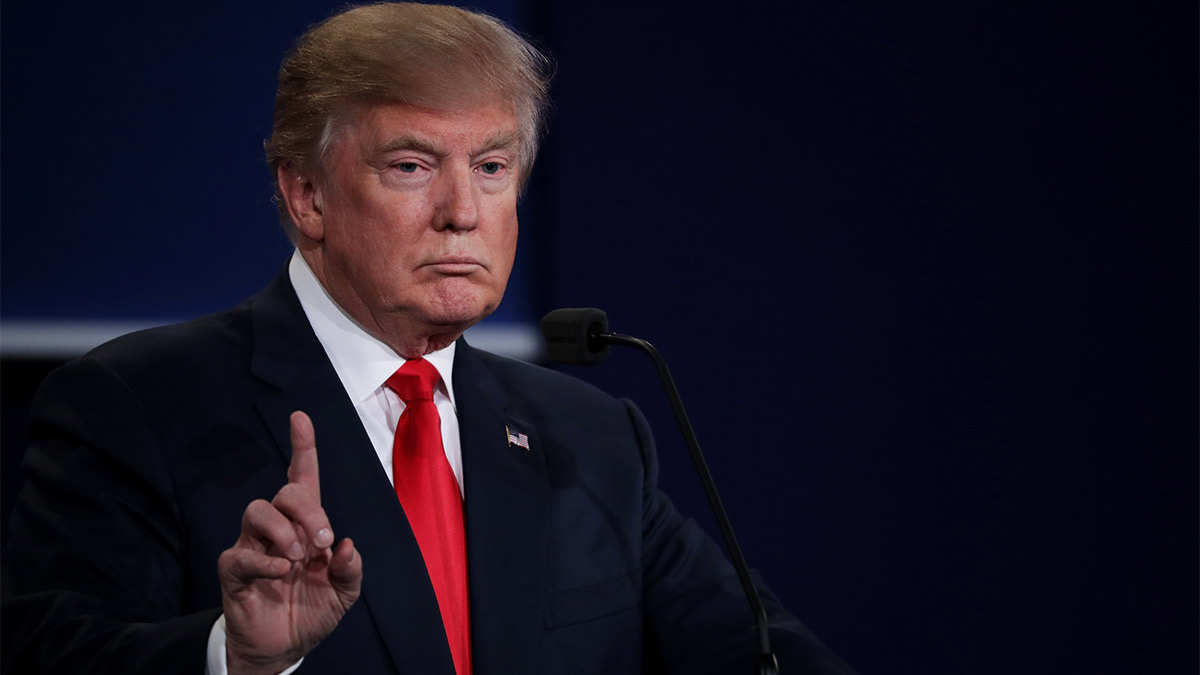
Donald Trump doubled down on his personal attacks against Vice President Kamala Harris, questioning her mental state during a rally in Erie, Pennsylvania, on Sunday. His remarks followed similar comments made the previous night in Prairie du Chien, Wisconsin, where he accused Harris of being “mentally impaired.” Trump linked Harris to illegal immigration under the Biden administration, stating, “Only a mentally disabled person could’ve allowed this to happen to our country.”

These insults have prompted some Republican allies to urge Trump to shift his focus to policy issues. Senator Lindsey Graham, a key Trump supporter, appeared on CNN’s State of the Union, advising Trump to concentrate on the economy, border security, inflation, and foreign policy—areas where voters tend to favor him. While Graham rejected Trump’s characterization of Harris as mentally impaired, he criticized her policies, describing them as “crazy liberal.”

House Majority Whip Tom Emmer echoed this sentiment during an appearance on ABC’s This Week, urging Trump to “stick on the issues.” When pressed on whether he believed Harris was “mentally disabled,” Emmer responded by saying, “Kamala Harris is the wrong choice for America,” without addressing Trump’s specific remarks.

Critics within the GOP, including former Maryland Governor Larry Hogan, voiced their disapproval of Trump’s rhetoric. Hogan, a known Trump critic, called the comments “insulting not only to the vice president but to people who actually do have mental disabilities.” He reiterated his longstanding opposition to Trump’s divisive language.

However, not all Republicans condemned Trump’s statements. Former House Speaker Kevin McCarthy, who continues to back Trump despite their tense past, defended the former president. McCarthy suggested that Harris’ handling of immigration warranted criticism, stating, “Do you think anybody would be mentally stable that would allow 13,000 murders into your own country?” He cited a statistic frequently misrepresented by right-wing commentators in attacks on Harris’ immigration record.

Steven Cheung, communications director for Trump’s campaign, doubled down on the attacks, declaring that Harris is “wholly unfit to serve as president,” while further criticizing her record on immigration. Harris’ campaign spokesperson, Sarafina Chitika, responded by accusing Trump of offering “nothing ‘inspiring’ to voters, just darkness,” in a statement following Trump’s remarks.


Are Immigrants Really Taking Jobs from U.S.-Born Workers? Here’s What Economists Say

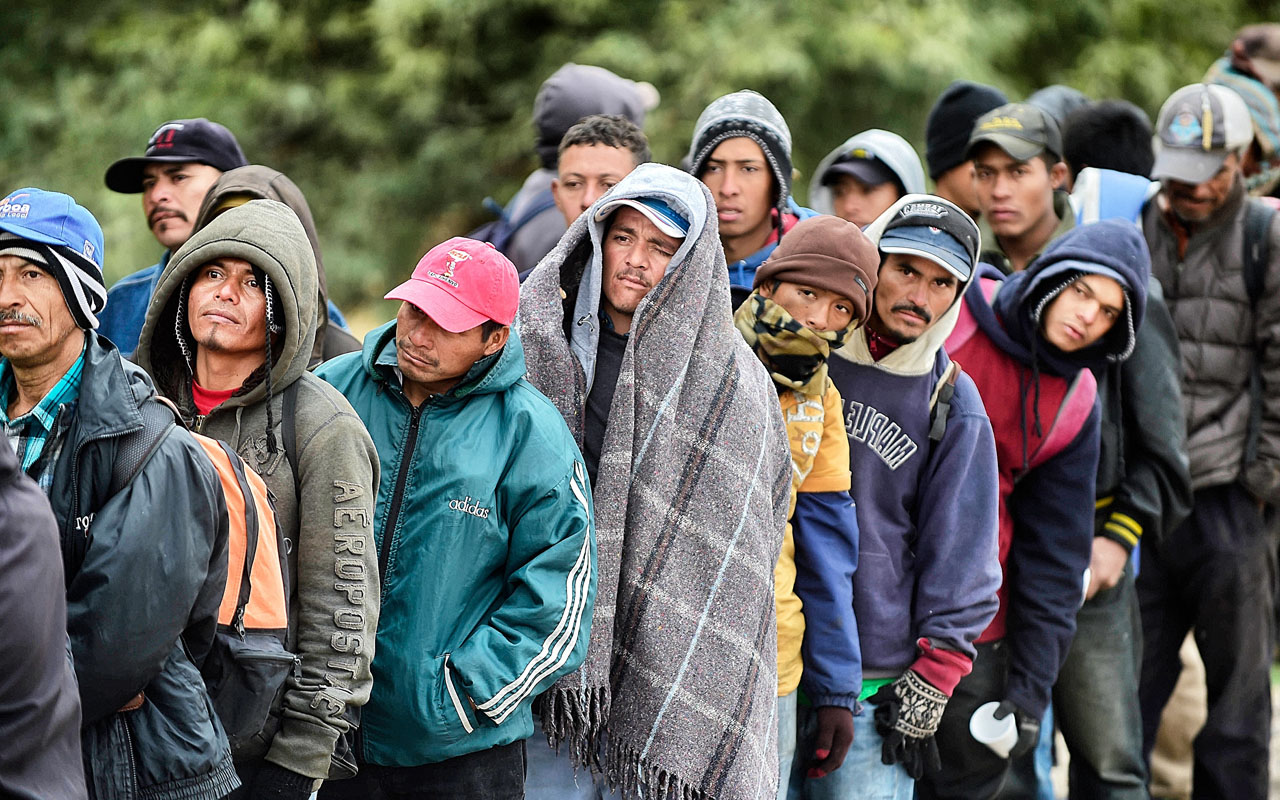
The notion that immigrants are taking jobs from U.S.-born workers is a frequent talking point, especially on the presidential campaign trail. Former President Donald Trump, in particular, has often claimed that immigrants are taking jobs away from Americans. For instance, during a speech in Wilmington, North Carolina, he declared, “They’re taking your jobs.”

For many Republican voters, immigration is a key issue—second only to the economy in importance. According to a recent Pew Research Center survey, 82% of Trump supporters say immigration is a significant factor in their 2024 voting decisions. In contrast, immigration ranks as the lowest-priority issue for Democrats.

However, economists who study the U.S. labor market generally agree that immigrants don’t significantly reduce job opportunities or wages for native-born workers. According to Alexander Arnon, director of business tax and economic analysis at the Penn Wharton Budget Model, “The consensus is very strong that there are not significant costs to U.S.-born workers from immigration, at least the type of immigration we have historically had in the U.S.”

Picture background

Why Immigrants Benefit the Economy Economists point out several reasons why immigrants often help rather than harm the economy. First, the labor market is dynamic, not fixed. Immigrants not only take jobs, but they also create new ones by spending within local economies and starting businesses. A study by the National Bureau of Economic Research found that immigrants are 80% more likely to become entrepreneurs compared to native-born workers. Additionally, the Congressional Budget Office (CBO) estimates that a recent surge of immigrants will contribute $8.9 trillion to the U.S. GDP over the next decade.

As Michael Clemens, an economist at George Mason University, puts it, “That’s enormous. It creates jobs, raises pay, and increases the complexity of the U.S. economy.”

Moreover, immigrants and native workers often complement each other in the workforce. For example, in industries such as food service or agriculture, native-born workers might handle customer-facing tasks, while immigrants perform roles that don’t require advanced language skills.

Short-Term Impacts on Wages Some research does suggest that immigrants can have a short-term effect on the wages of less-educated native-born workers, particularly those without high school diplomas. One notable study by Harvard economist George Borjas analyzed the impact of the Mariel boatlift, when over 125,000 Cuban refugees arrived in South Florida in the 1980s. Borjas found that this sudden influx of workers reduced wages for high school dropouts in Miami by 10% to 30%.

However, other economists, such as Nobel laureate David Card, have disputed Borjas’ findings, arguing that the Mariel boatlift didn’t significantly impact wages or unemployment. Card’s research suggests that the influx of workers did not lead to job losses or wage reductions for non-Cuban workers in Miami.

Clemens also disagrees with Borjas’ conclusions, emphasizing that while sudden immigration surges can temporarily impact the job market, immigrants tend to create jobs over time. He asserts, “The job creation effect overwhelms the competition effect, even in the short term.”

Long-Term Economic Benefits Over the long term, immigrants contribute to economic growth by filling labor shortages and helping to “cool” overheated markets. This was particularly true during the pandemic-era economy, when immigrant workers alleviated staffing shortages in industries like leisure and hospitality. Economist Elior Cohen, writing for the Federal Reserve Bank of Kansas City, notes that immigrant labor helped ease inflationary wage pressures in 2021 and 2022.

Additionally, research shows that immigration tends to boost wages for native workers in the long run. For instance, a study by economists Giovanni Peri and Alessandro Caiumi found that between 2000 and 2019, native workers in direct competition with immigrants for jobs often experienced “occupational upgrading,” which ultimately led to higher wages.

In conclusion, while the impact of immigration on the job market may vary depending on the economic environment, the consensus among economists is that immigration benefits the economy more than it harms it. Immigrants are not simply taking jobs—they are creating new opportunities, increasing GDP, and helping stabilize labor markets during times of economic strain.