
Yazılar

Samsung Black Friday Sale: Incredible Discounts on Galaxy S24 Ultra, S24, and S24 Plus

Apple’s recent proposal to invest $100 million in Indonesia has been met with disappointment from the country’s government. According to Industry Minister Agus Gumiwang Kartasasmita, the proposed amount does not align with the fairness principles that Jakarta expects in terms of investment size and commitment. The official pointed out that while Apple’s investment in Indonesia is relatively modest, the company has made significantly larger investments in other countries, particularly in Vietnam.

For context, Apple’s investment in Vietnam stands at a substantial IDR 244 trillion (roughly $15 billion), which has helped establish large manufacturing facilities in the country. Despite this, Apple’s sales in Vietnam remain relatively low, with only about 1.5 million units sold. This stark contrast to its performance in Indonesia, where Apple sells around 2.5 million units, has raised concerns within the Indonesian government about the disparity in investment.

The Indonesian government has made it clear that it expects Apple to reconsider its investment levels to ensure a more equitable contribution to the local economy. Currently, Apple’s investment in Indonesia has primarily been directed towards the establishment of developer academies, which amounts to around IDR 1.5 trillion. This is seen as insufficient compared to its broader manufacturing investments in other regions, especially when considering the volume of sales in the country.

Given these concerns, Indonesia has signaled that further negotiations are necessary before it will consider lifting the ban on domestic sales of the iPhone 16. The government is seeking a more substantial and balanced approach that not only aligns with Apple’s market presence in the country but also provides long-term benefits for the Indonesian economy.
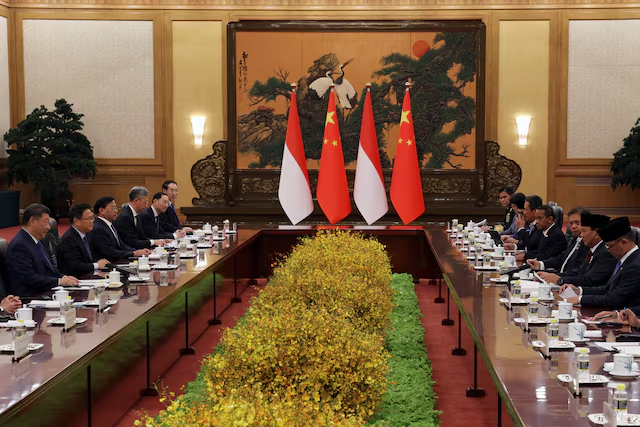
China and Indonesia Ink $10 Billion Deals Focusing on Green Energy and Technology

China and Indonesia signed agreements worth $10 billion during the Indonesia-China Business Forum held in Beijing on Sunday, marking a significant step in their growing bilateral relationship. The deals cover a wide range of sectors, including green energy, technology, food, and biotechnology. This event followed a key meeting between Chinese President Xi Jinping and Indonesian President Prabowo Subianto, who is visiting China for the first time since assuming office in October. Notably, Prabowo’s choice of China as his first official visit as president emphasizes Indonesia’s commitment to strengthening its strategic ties with Beijing.

In a joint statement released after the leaders’ discussions, China and Indonesia outlined plans to enhance cooperation in emerging sectors such as new energy vehicles, lithium batteries, photovoltaics, and the digital economy. They also agreed to work together to ensure the security of global mineral supply chains and support the global energy transition. These agreements align with both countries’ broader efforts to address climate change and secure sustainable growth.

One of the key deals signed during the forum was between Chinese battery materials producer GEM and PT Vale Indonesia. The agreement, witnessed by President Prabowo, involves the construction of a high-pressure acid leaching plant in Central Sulawesi, a crucial step in securing nickel resources. Indonesia, as the world’s largest nickel producer, plays a pivotal role in the global electric vehicle supply chain, with Chinese companies such as Tsingshan Holding Group and Zhejiang Huayou Cobalt dominating the sector.

In the technology space, Indonesian tech giant GoTo Gojek Tokopedia formed partnerships with China’s Tencent and Alibaba to advance cloud infrastructure and foster digital talent development in Indonesia. These collaborations are expected to boost Indonesia’s digital economy and increase its technological capabilities.

The two countries also agreed on several measures to improve connectivity, including the introduction of multi-entry long-term visas and the expansion of direct flights between the two nations. Additionally, the agreements included cooperation in the housing sector and initiatives to increase exports of fresh coconuts from Indonesia to China.

These developments reflect the deepening ties between China and Indonesia, positioning them as key partners in the global push for green energy solutions and digital innovation.


Indonesia’s State-Owned Postal Service Introduces NFT-Linked Stamps Despite Market Challenges

Pos Indonesia Describes NFT Stamps as a Revolutionary Leap in Postal Services in Recent Instagram Announcement. Devamını Oku