Yazılar

Apple Receives Local Content Certificates in Indonesia, Still Needs Additional Permits to Sell iPhone 16

On Friday, Indonesia issued local content certificates for 20 Apple products, including the highly anticipated iPhone 16. However, the company still requires additional permits from other government ministries before it can begin selling these devices in the country.

The issuance of these certificates follows Apple’s recent announcement of more than $300 million in investments in Indonesia, including funding for plants producing components for its products and establishing a research and development center. This move comes after Indonesia imposed a ban on iPhone 16 sales last year due to Apple’s failure to meet local content requirements.

Apple was granted certificates for 11 phone models and 9 tablets, having successfully met the necessary criteria, according to industry ministry spokesperson Febri Hendri Antoni Arief. However, Apple still needs permits from the communications and digital ministry as well as the trade ministry to begin selling its products in Indonesia.

Despite making progress, Apple has yet to receive a response from the relevant Indonesian ministries regarding its requests. Negotiations between the tech giant and Indonesia’s government had been described as “tricky” by the country’s industry minister.

According to research firm Canalyst, Apple was not among the top five smartphone brands in Indonesia in the third quarter of the previous year, highlighting the challenge the company faces in regaining market share.
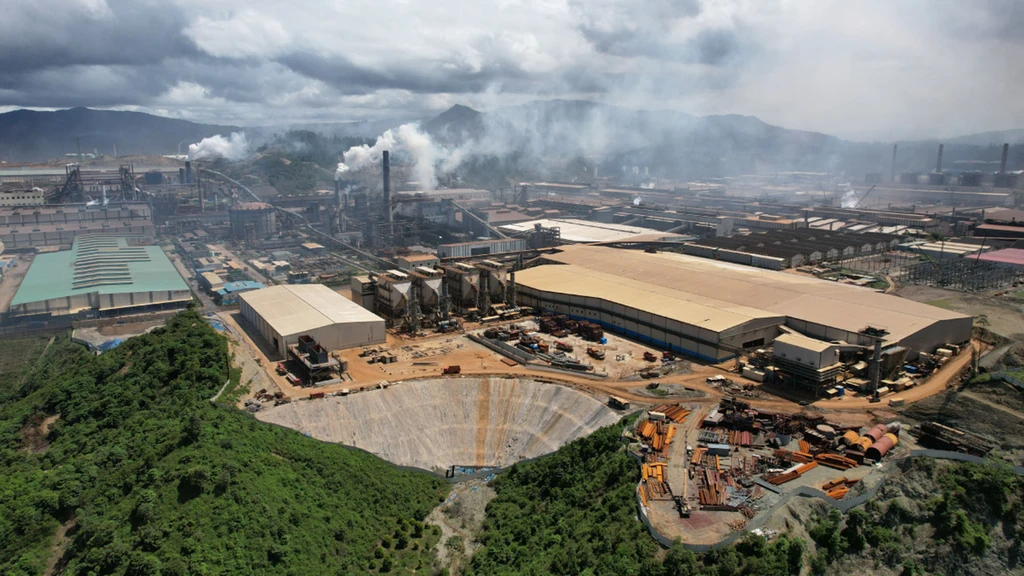
Chinese Firms Control Around 75% of Indonesian Nickel Refining Capacity, Report Finds

A report from C4ADS, a global security nonprofit based in Washington, has revealed that Chinese companies control approximately 75% of Indonesia’s nickel refining capacity, raising concerns about supply chain control and environmental risks. As of 2023, Indonesia’s refining capacity, which totals 8 million metric tons, is distributed across 33 companies. However, shareholder overlap shows that Chinese firms effectively control about three-quarters of the smelting capacity.

The report highlights that, while Indonesia aims to use its nickel industry as a key driver for economic growth, the substantial foreign influence could limit the country’s ability to fully control and shape the industry for its own benefit. The dominance of Chinese-controlled nickel production is also seen as a competitive disadvantage for U.S. and European automakers, especially in the growing electric vehicle (EV) market. Nickel, a key component in EV batteries, is crucial for the development of green technologies, but increasing restrictions on trade with China could affect access to this vital resource.

An Indonesian official noted last year that Chinese companies were seeking partnerships with Indonesian and South Korean firms to reduce their stakes in smelters, making their products more accessible to the U.S. market. To address these concerns, President Prabowo Subianto formed a task force to develop Indonesia’s downstream mineral industry with domestic financing, aiming to reduce the perception that foreigners benefit the most from the country’s resources.

The C4ADS report pointed out that two Chinese companies, Tsingshan Holding Group and Jiangsu Delong Nickel Industry Co Ltd, were responsible for over 70% of Indonesia’s refining capacity as of 2023. These companies were among the first investors in Indonesia’s push for domestic processing of nickel ore, a move that has helped make Indonesia the world’s dominant producer of nickel.

The report also mentions safety issues tied to Chinese-owned facilities. In December 2023, two workers at a Tsingshan Stainless Steel facility in Central Sulawesi were sentenced to jail for negligence related to a fire that caused fatalities. Additionally, in early 2023, two workers died in clashes at the PT Gunbuster Nickel Industry smelter in North Morowali, owned by Jiangsu Delong Nickel Industry.

Despite these concerns, Tsingshan has been selling stakes in some of its smelters. In October 2023, the company reached a deal with Indonesian state miner Aneka Tambang to sell 30% of PT Jiu Long Metal Industry.


Indonesia and Apple Discuss Investment Proposal Amid iPhone 16 Sales Ban

Indonesia’s Industry Minister Agus Gumiwang Kartasasmita met with Apple executives on Tuesday to discuss the company’s potential investment in the country, which is necessary for Apple to resume the sale of the iPhone 16 locally. The Indonesian government imposed a sales ban on the iPhone 16 last year after it did not meet the local content requirement, mandating that smartphones sold in the country contain at least 40% locally-made parts.

Apple does not currently have manufacturing facilities in Indonesia, which has a population of 280 million, but the company has been operating application developer academies in the country since 2018, allowing it to sell older iPhone models.

Minister Kartasasmita confirmed he met with Apple’s vice president of global government affairs, Nick Ammann, and other executives to discuss Apple’s new investment proposal. While the minister did not specify a timeline for a deal, he emphasized that the substance of the agreement was a key focus.

Apple had reportedly offered to invest $1 billion in a local manufacturing plant to meet the regulations, but Kartasasmita suggested that amount might not be sufficient. He declined to confirm the details of Apple’s proposal, but stressed that a new investment commitment is needed for 2024-2026 to fulfill Indonesia’s local content mandate.

In the past, Indonesia has pointed out that Apple still has an outstanding $10 million investment commitment from a previous three-year plan that ended in 2023.

Ammann described the meeting as productive but did not provide further details on the discussions.