Yazılar

Aeva Sells 6% Stake for $50M and Inks Manufacturing Deal, Shares Rise 3%

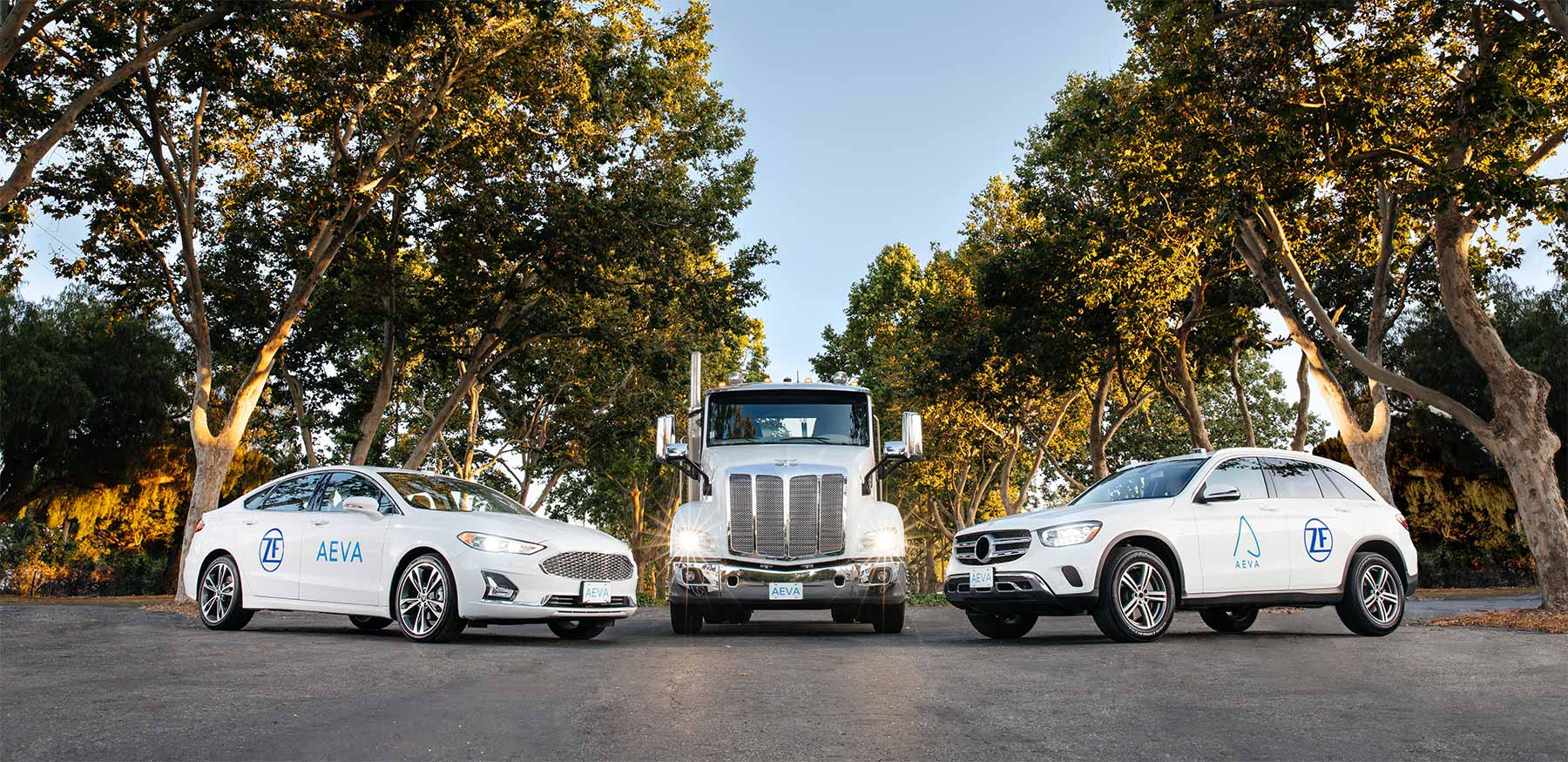
Aeva Technologies, a Silicon Valley-based lidar sensor maker founded by ex-Apple engineers, announced on Wednesday that it has sold a 6% equity stake for $50 million to an unnamed strategic partner. The partner—described only as a technology-focused affiliate of a Global Fortune 500 companywill also take on future manufacturing responsibilities for Aeva’s passenger vehicle sensor production.

The announcement boosted Aeva’s stock by 3%, signaling investor optimism around the new cash injection and potential production scalability.

🔍 About Aeva’s Technology

  • Aeva develops lidar (light detection and ranging) sensors that offer 3D mapping capabilities for autonomous vehicles and industrial automation.

  • Unique to Aeva’s sensors is the ability to measure velocity, not just distance, enabling systems to differentiate between moving and stationary objectscritical for autonomous driving and factory robotics.

🤝 Strategic Manufacturing Partnership

  • The unnamed partner will support sensor production for passenger vehicles, suggesting a scaled manufacturing plan to meet automotive industry demand.

  • While not confirmed, the deal could accelerate Aeva’s entry into commercial automotive fleets, expanding beyond its current testing and pilot phases.

🚗 Existing Industry Collaborations

Aeva already has:

  • A partnership with Daimler Truck AG for autonomous driving.

  • Sensor applications in Japanese and German manufacturing firms to detect defects in fast-moving production lines.

💼 Financial Implications and Outlook

  • The $50 million stake sale gives Aeva additional runway as it gears up for broader deployment and earnings season.

  • The company was scheduled to report quarterly results after Wednesday’s market close, which could further illuminate growth strategy and customer traction.

This move aligns Aeva with an influential manufacturing player, potentially increasing its supply chain resilience and giving it the edge to compete in the intensifying lidar and autonomous tech markets.
Rockwell Automation Raises Annual Profit Outlook After Margin Gains, Shares Surge 8%

Rockwell Automation (ROK.N) raised its annual profit forecast on Wednesday following cost-cutting measures that boosted margins in the second quarter, driving an 8% surge in premarket trading. Despite a broader slowdown in U.S. manufacturing activity triggered by President Donald Trump’s newly implemented global tariffs, Rockwell has seen resilient demand for industrial automation and software solutions.

The company now expects adjusted earnings per share (EPS) between $9.20 and $10.20, up from its earlier guidance of $8.60 to $9.80. In the second quarter, Rockwell reported:

  • Adjusted EPS of $2.45, surpassing analyst expectations of $2.09 (LSEG data)

  • Revenue of approximately $2 billion, a 6% year-over-year decline, but slightly above the $1.96 billion consensus estimate

Rockwell said it would offset current and future tariff impacts through a combination of price adjustments and supply chain optimizations, a strategy designed to safeguard profitability amid rising input costs.

The company’s outlook aligns with broader trends in the sector, as Emerson Electric (EMR.N) also raised its full-year earnings forecast on Wednesday, reflecting stable demand for industrial upgrades.

Corporate investment in factory automation and digital transformation continues to outpace expectations, as firms seek to improve productivity and cost efficiency, even in a challenging trade and economic environment.

Honeywell Partners with Google to Bring Gemini AI to Industrial Sector

Honeywell is teaming up with Alphabet’s Google to leverage its Gemini generative AI to revolutionize the industrial sector. This partnership aims to enhance operational efficiency, cut maintenance costs, and empower workers by analyzing Honeywell’s extensive data. The collaboration marks a step towards autonomy in industrial processes, with the generative AI platform scheduled to be available for industrial clients by 2025.

Honeywell CEO Vimal Kapur highlighted the pressing issue of a generational labor shortage in the industrial sector, caused by declining birth rates and fewer available workers. He noted that AI will play a pivotal role in helping less experienced employees achieve productivity levels comparable to those with decades of experience. At a CNBC event, Kapur explained that generative AI will equip workers with AI-powered co-pilots to manage tasks more efficiently, alleviating the strain of workforce shortages.

Google’s AI tools will automate routine tasks for engineers and technicians, allowing them to address maintenance and operational challenges with enhanced precision. Honeywell also plans to use predictive maintenance for jet engines, a key area where AI could drive substantial savings and improvements. “We’re moving from automation to autonomy,” said Honeywell’s Chief Technology Officer, Suresh Venkatarayalu, emphasizing the goal of deploying real-time AI agents on factory floors and in other industrial settings.

Honeywell’s existing platform, Honeywell Forge, will integrate with Google Cloud’s Vertex AI and Gemini models, allowing workers to ask the AI practical questions about system performance, equipment diagnostics, and more. This AI-driven tool will go beyond simple predictions, providing images, videos, text, and sensor readings to offer actionable insights.

In addition to the large-scale deployment of Google Gemini, Honeywell is also exploring the use of Gemini Nano, a compact version of the AI, for use in data centers, hospitals, and refineries. This version of AI can function directly on-site, operating through scanners, sensors, and controllers to further optimize industrial processes.

For Google, this partnership with Honeywell represents a crucial move to bring generative AI into mainstream industrial applications. As generative AI adoption remains relatively low across industries, Honeywell’s data indicates that only 17% of industrial companies that consider themselves AI leaders have fully implemented their AI strategies.

The growing importance of data in AI development was underscored by Clément Delangue, CEO of Hugging Face, who spoke at the same CNBC event. Delangue emphasized that data sets are becoming a critical frontier for AI evolution, with thousands of public datasets being shared globally to advance AI capabilities.

Kapur is optimistic about the AI adoption trajectory in the industrial sector, predicting that 2025 and 2026 will be critical years for growth in AI-driven industrial solutions. He believes that AI, particularly through this partnership with Google, will create new revenue opportunities and transform the way industrial operations are managed.