Yazılar

UK Businesses Voice Concerns Over Labour Government’s Tax-Hiking Budget and Potential Economic Impact

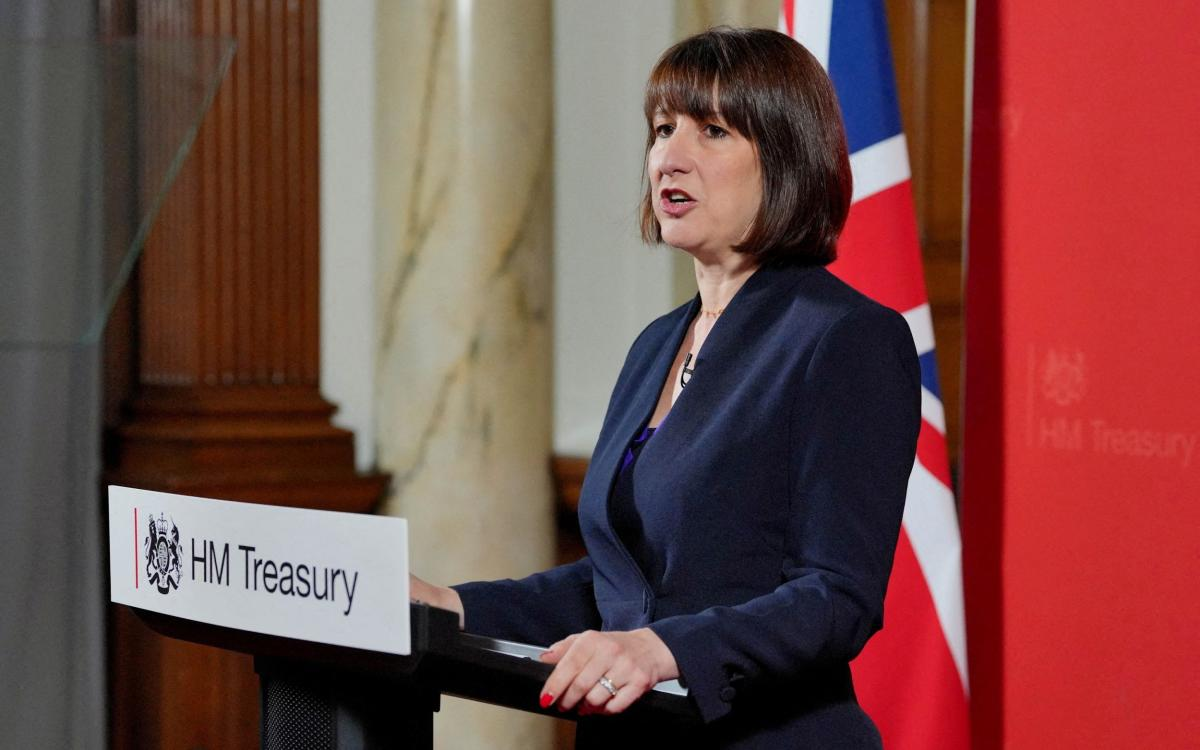
British businesses are expressing concerns over Finance Minister Rachel Reeves’ recent tax-raising budget, which they argue could hinder hiring efforts and contribute to inflationary pressures. Among the primary measures is an increase in the National Insurance (NI) payroll tax for employers, aimed at generating £25 billion annually over the course of Parliament. From April 2025, employer NI rates will rise by 1.2 percentage points to 15%, and the threshold at which employers begin paying NI will drop from £9,100 to £5,000.

This policy enables the Labour government to uphold its commitment to avoid taxing “working people” directly, while seeking to address what Reeves calls a £22 billion “black hole” in public funding. However, business groups and opposition politicians contend the policy will ultimately affect employees indirectly by reducing business capacity to raise wages and expand hiring, challenging Labour’s pro-growth agenda.

Roger Barker of the Institute of Directors called the budget a “major blow” for businesses, emphasizing that higher NI costs will likely impact profits, subsequently limiting wage growth and hiring opportunities. This sentiment is echoed by the Confederation of British Industry’s CEO Rain Newton-Smith, who described the budget as particularly challenging for businesses already facing increased operational costs.

The budget also includes an increase to the UK’s minimum hourly wage, set to rise 6.7% to £12.21 for workers over 21 and 16% to £10 for workers aged 18 to 20, starting next April. The corporation tax threshold will remain capped at 25%. To cushion smaller businesses from these changes, Reeves proposed raising the employment allowance to £10,500, enabling firms to hire up to four minimum wage employees full-time without incurring employer NI costs. However, industry leaders like Andrew Martin, CEO of SMEB, argue that these measures fall short of supporting the UK’s 5.5 million small and medium-sized enterprises.

Economic analysts suggest the budget’s tax increases could impact inflation. The Office for Budget Responsibility (OBR) and other institutions predict that businesses may pass the added costs to consumers through higher prices, potentially leading to increased inflation. Morgan Stanley’s Andrew Sheets noted that while the budget may boost short-term growth, it is likely to add pressure on inflation.

Reflecting this, Goldman Sachs has adjusted its UK inflation forecast, predicting a 0.2 percentage point rise in core inflation through 2025, with an anticipated rate of 2.5% by December 2025. Despite a fuel duty freeze that could moderate inflation slightly, the bank also raised its 2025 GDP forecast from 1.5% to 1.6%.

In light of these developments, analysts foresee potential implications for the Bank of England’s (BOE) monetary policy. While the BOE is expected to implement a 25-basis-point rate cut soon, experts suggest Reeves’ tax strategy could prompt a slower pace of future cuts. Goldman Sachs anticipates that while inflation will cool, the Bank Rate may only decrease to 3% by late 2025, slightly above prior expectations.


 

Europe’s Economic Rebound Hindered by Rising Savings Rate and Economic Uncertainty

European households are accumulating savings at a significant rate, dampening the expected boost to the economy despite recent income growth. This savings trend, which counters typical consumer spending behavior during periods of income increase, has economists questioning whether a long-term change may be underway, one that could stall Europe’s economic recovery.

Currently, households in the eurozone save an average of 15.7% of their disposable income, a notable rise from pre-pandemic levels of around 12%. This increase has been observed across Europe, including in the UK, where the savings rate is at 10%. By contrast, U.S. consumers have been spending more confidently, with savings rates there declining, driven by confidence in growth.

Some experts believe this savings increase is temporary, motivated by consumers looking to rebuild financial stability after recent high inflation rates. Heightened living costs, energy price volatility, and war in Ukraine have created ongoing financial uncertainty, prompting families to hold more cash as a buffer. Others suggest structural shifts might underlie this trend, with recent crises like the pandemic and geopolitical instability prompting more conservative long-term saving behavior.

Moreover, cautious economic outlooks and fears around climate change, deglobalization, and aging workforces add to consumer hesitation. A survey by the German Savings Banks Association illustrated this sentiment: when asked what they would do with an unexpected 500 euros, most consumers indicated they would save it, reflecting an ingrained cautious outlook that spans both younger and older generations.

Despite a generally slow rise in household spending (just 0.1% in the EU for the last quarter), some positive signs are emerging. Lower interest rates and reduced inflation—now nearing 2%—might encourage consumers to reduce savings and spend more. Meanwhile, labor market stability, characterized by steady demand for skilled workers and manageable vacancy rates, supports consumer confidence. European Central Bank officials have noted these trends, with ECB member Martin Kazaks suggesting that current household confidence could indicate a peak in savings rates.

While Belgium’s central bank governor Pierre Wunsch sees a potential economic recovery beginning by 2025, possibly exceeding expectations, much hinges on whether consumers regain confidence in their financial outlook.


Wall Street Sees Gains Ahead of Megacap Earnings and Presidential Election

Wall Street closed on a positive note on Monday, buoyed by anticipation of key earnings releases from major tech companies and the nearing U.S. presidential election on November 5. Additionally, market sentiment improved as recent developments in the Middle East did not affect global energy supplies. Although Israel responded to an Iranian missile strike earlier this month, the targeted sites focused on missile facilities around Tehran rather than on energy infrastructure, alleviating immediate supply concerns.

Tech Stocks Drive Market Gains

The “Magnificent Seven” group of megacap tech stocks, which have been pivotal to Wall Street’s recent highs, saw modest gains as Alphabet, Meta, and Apple rose ahead of their earnings reports. Nvidia’s recent ascent as the world’s most valuable company added to the focus, with investors closely watching for AI-related spending trends in the upcoming earnings.

In total, 169 S&P 500 companies are expected to report earnings this week, with guidance on capital expenditures anticipated to provide insights into future tech investments. Microsoft and Amazon are also scheduled to release earnings, adding to the week’s tech-heavy reporting.

Market Performance by the Numbers

  • S&P 500: Up 15.4 points (0.27%) to 5,823.52
  • Nasdaq Composite: Up 48.58 points (0.26%) to 18,567.19
  • Dow Jones Industrial Average: Up 273.17 points (0.65%) to 42,387.57
  • Russell 2000: Outperformed major indexes with a 1.63% jump, showing strength in small-cap stocks, which often lead during economic rebounds.

Paul Christopher, head of Global Investment Strategy at Wells Fargo, noted that gains in small-cap stocks may indicate market optimism for a “soft landing,” or recovery with minimal recessionary impact. He also observed potential investor shifts in response to expectations surrounding a possible Trump administration return.

Sectoral Performance and Corporate Highlights

  • Energy Sector: Fell 0.65%, as crude prices dropped 5% amid eased supply worries.
  • Financial Sector: Led sectoral gains, benefiting from stable economic indicators.

Other significant moves included Boeing, whose shares fell 2.8% after the company announced a stock offering worth up to $22 billion. This move aims to bolster Boeing’s finances as it faces financial pressure from an ongoing worker strike. Meanwhile, industrial giant 3M saw a 4.4% increase after JP Morgan raised its price target on the company’s stock, positively impacting the Dow.

Economic Data and Election Impact

Investors are also awaiting economic data this week, particularly the Personal Consumption Expenditure Price Index due on Thursday, a key inflation gauge for Federal Reserve policy assessment. The broader market is also factoring in election dynamics, with some anticipation of a second term for former President Donald Trump, though the race remains close.

Advancing issues led decliners on the NYSE by a ratio of 1.88-to-1, reflecting a generally optimistic market sentiment. The S&P 500 posted 15 new 52-week highs, while the Nasdaq Composite recorded 101 new highs, signaling investor confidence despite economic and geopolitical uncertainties.