Yazılar

Infosys Shares Jump on Strong FY2026 Outlook, Lifting IT Stocks

Shares of Infosys rose about 5% on Friday after the company unexpectedly raised its fiscal 2026 revenue forecast, boosting sentiment across India’s IT sector.

Infosys now expects revenue growth of 3%–3.5% in the year ending March 2026, up from its earlier 2%–3% outlook. The stock led gains on the Nifty 50, while the Nifty IT climbed 2.2%.

Analysts said AI-led partnerships and vendor consolidation are strengthening Infosys’s competitive position. The company has won AI-driven deals with Adobe and Siemens AG, and its large-deal order book rose to a two-year high of $4.8 billion.

At least three brokerages, including Jefferies, raised target prices after the results. The upbeat outlook follows comments from Tata Consultancy Services earlier this week pointing to solid demand in 2026, helping lift broader IT stocks, including Wipro.

India’s IT sector rebounds as clients boost spending on AI and automation projects

India’s leading IT firms — Infosys, Wipro, and LTIMindtree — beat quarterly revenue forecasts on Thursday, signaling a turnaround in demand as global clients begin investing again, especially in artificial intelligence (AI) and automation projects.

The upbeat results follow a strong performance by Tata Consultancy Services (TCS) last week, raising optimism for India’s $283 billion IT industry, which had been struggling with weak discretionary spending and tariff-related uncertainty.

“We are benefiting from consolidation plays on automation and on using AI for efficiency,” said Infosys CEO Salil Parekh, highlighting “huge opportunities in enterprise AI.” Infosys now expects full-year revenue growth of 2–3%, narrowing its earlier forecast of 1–3%, supported by strong deal bookings.

Wipro CEO Srini Pallia noted a similar trend: “New demand that’s picking up is AI. Clients want to move away from proofs of concept to implementing AI across business processes and workflows.”

Analysts say the results mark a stabilization in the IT sector, with demand returning from industries such as banking and financial services. StoxBox analyst Sagar Shetty said the numbers show “a sector gradually regaining traction amid shifting client priorities toward AI and digital acceleration.”

Smaller rival LTIMindtree also exceeded revenue estimates, driven by strength in its banking portfolio, while analysts at Anand Rathi said “most Indian IT firms are showing green shoots,” indicating that the worst of the slowdown may have passed.

Trump slaps $100K annual fee on H-1B visas, rattling U.S. tech sector

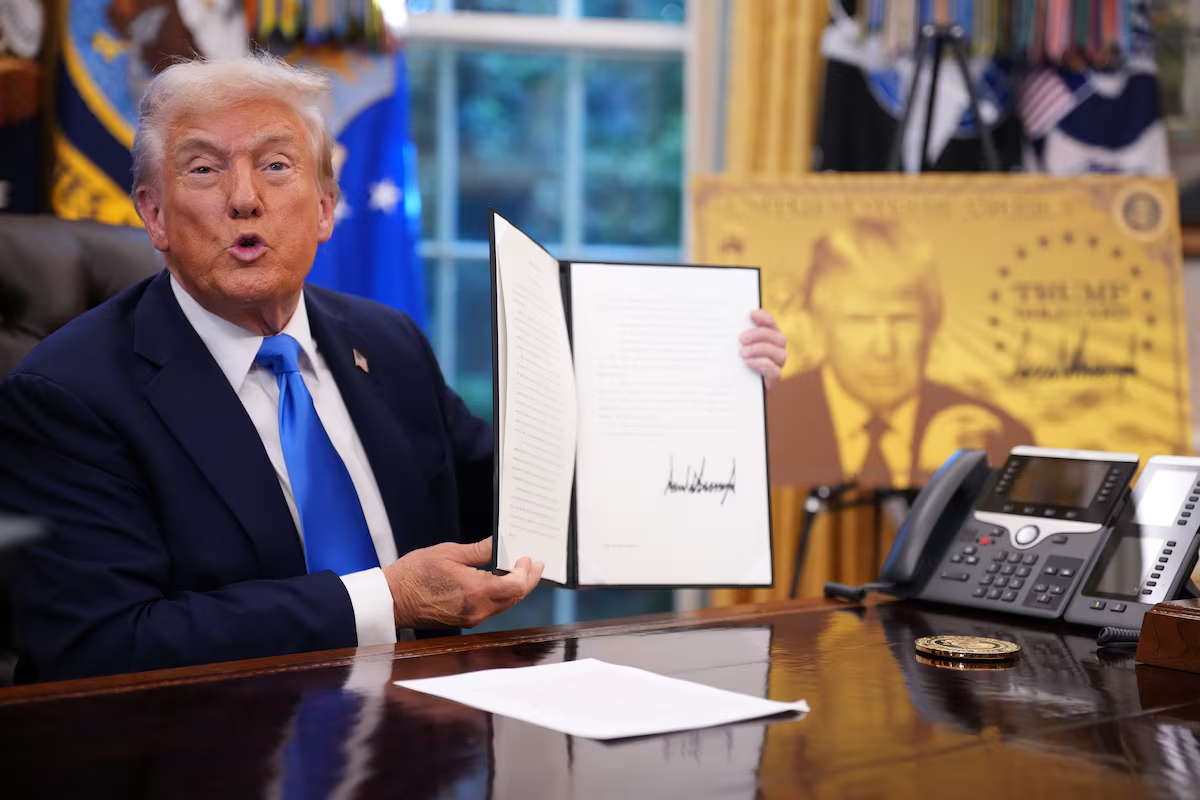
The Trump administration on Friday announced a sweeping change to the H-1B visa program, saying companies will now have to pay $100,000 per year per visa—a move critics warn could devastate the U.S. tech industry’s access to global talent.

Commerce Secretary Howard Lutnick framed the move as part of Trump’s broader immigration crackdown, urging firms to “train Americans” instead of hiring foreign workers. But tech giants including Microsoft, Amazon, and JPMorgan quickly advised employees on H-1B visas to remain in the U.S. or return before the new fees take effect at midnight Saturday.

The H-1B program, which provides 85,000 visas annually for specialized workers, has long been dominated by Indian nationals (71% of approvals in 2024) and Chinese professionals (11.7%). In the first half of 2025 alone, Amazon received approval for more than 12,000 H-1B visas, with Microsoft and Meta securing over 5,000 each.

Under the new rules, the cost of a three-year H-1B stint would balloon to $300,000 per worker, compared with just a few thousand dollars under the current system. Analysts say this could force smaller firms and startups to offshore high-value work, weakening the U.S. in the global AI and tech race against China.

Industry figures voiced alarm. Venture capitalist Deedy Das warned the change “creates disincentive to attract the world’s smartest talent,” while eMarketer analyst Jeremy Goldman said Washington risks “taxing away its innovation edge, trading dynamism for short-sighted protectionism.”

The announcement sparked immediate financial fallout: shares of Cognizant sank nearly 5%, while Infosys and Wipro slipped 2–5% in U.S. trading.

Meanwhile, Trump also signed an executive order creating a “gold card” residency program, offering permanent U.S. residency for those who can pay $1 million upfront.

Legal experts questioned the fee’s validity, noting Congress only authorizes visa fees to cover administrative costs, not as a revenue generator. Still, the administration insists “all the big companies are on board.”