Yazılar

Texas Instruments Warns of Cooling Demand After Tariff-Driven Surge

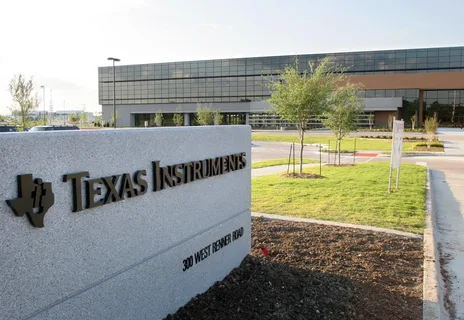
Texas Instruments (TXN.O) said on Thursday that customer demand has slowed following a sharp spike in April, when buyers rushed to place orders ahead of U.S. President Donald Trump’s “Liberation Day” tariff announcement. Shares of the chipmaker fell nearly 4% after the update, delivered at the Citi Global TMT Conference by Chief Financial Officer Rafael Lizardi.

Lizardi explained that January-to-April demand was temporarily lifted by tariff-related market dynamics but noted that “things did slow down after April, or at least didn’t grow as they normally would have.”

The finance chief also addressed speculation about potential government stakes in semiconductor firms, clarifying that TI has not been approached about equity participation in exchange for CHIPS Act incentives. The Trump administration’s decision to take a 9.9% stake in Intel (INTC.O) has fueled debate about government involvement in the industry, but Lizardi said, “Nothing along those lines has been discussed or proposed” for TI.

Under the CHIPS and Science Act, the Commerce Department has earmarked up to $1.6 billion in funding for Texas Instruments. Lizardi said the agreement, initially signed under the Biden administration and later adjusted under Trump, saw only “minor, favorable changes.”

TI’s free cash flow remains under pressure from elevated capital expenditure, with share repurchases continuing but at a reduced pace. In July, the company issued a profit forecast that signaled weaker-than-expected demand for its analog chips, particularly from the automotive sector, which has been slow to rebound. Despite challenges, TI reiterated that four of its five end markets are showing recovery, with autos lagging due to broader economic uncertainty.

Intel Faces Challenges in Manufacturing Critical Next-Gen PC Chip Process

Intel Reports Low Yield Rates for 18A Panther Lake Chips Impacting Availability Devamını Oku

Trump Administration Explores Potential Stake in Intel Amid Push for Domestic Chip Manufacturing

The Trump administration is reportedly in discussions with Intel (INTC.O) to potentially acquire a stake in the U.S. chipmaker, Bloomberg News reported on Thursday, citing sources familiar with the talks. The move would be another example of President Donald Trump’s interventions in industries considered critical to national security. In the past, Trump has promoted multibillion-dollar government partnerships in semiconductors and rare-earth minerals, including a deal with Nvidia (NVDA.O) and an arrangement with MP Materials.

Intel declined to comment on the report but reaffirmed its commitment to supporting the administration’s efforts to bolster U.S. technology and manufacturing leadership. White House spokesman Kush Desai cautioned that discussions about “hypothetical deals” should be viewed as speculation until officially announced.

Intel shares rose more than 7% during regular trading and added another 2.6% in after-hours trading. The discussions follow a recent meeting between Trump and Intel CEO Lip-Bu Tan, occurring just days after Trump publicly called for Tan’s resignation over his investments in Chinese technology firms, some of which have ties to the Chinese military. Details about the size of the stake and pricing are still under negotiation.

Analysts suggest the government stake would likely aim to support Intel’s domestic manufacturing expansion and job creation. Intel has previously warned it may need to exit chip manufacturing without sufficient external customers and has planned to slow construction on new Ohio factories. CEO Lip-Bu Tan, in his role for just over six months, has been tasked with reversing years of setbacks that left Intel behind in the fast-growing AI chip market dominated by Nvidia.

Market experts note that any potential deal could include tariffs designed to encourage major clients like Nvidia, AMD (AMD.O), and Apple (AAPL.O) to utilize Intel Foundry services. While government stakes in companies are not unprecedented, some investors question whether Intel, with stable revenue exceeding $50 billion annually despite a loss in industry leadership, requires direct government investment.